What the Nordics can teach Europe about energy security
Kelvin Ross
Posted on: 9 June 2026
Finland and Norway have a mindset around energy security and sovereignty that offers invaluable lessons for the rest of Europe.
Few countries in Europe know more about national security – and in turn energy security – than the Nordics.
So it was fascinating in recent weeks to spend time in Norway and Finland listening to politicians and sector experts outline how these countries have conflict-preparedness ingrained into their national DNA.
And yet both concede that they have had to rethink those best-laid plans in the wake of Russia’s invasion of Ukraine and the conflict in Iran.
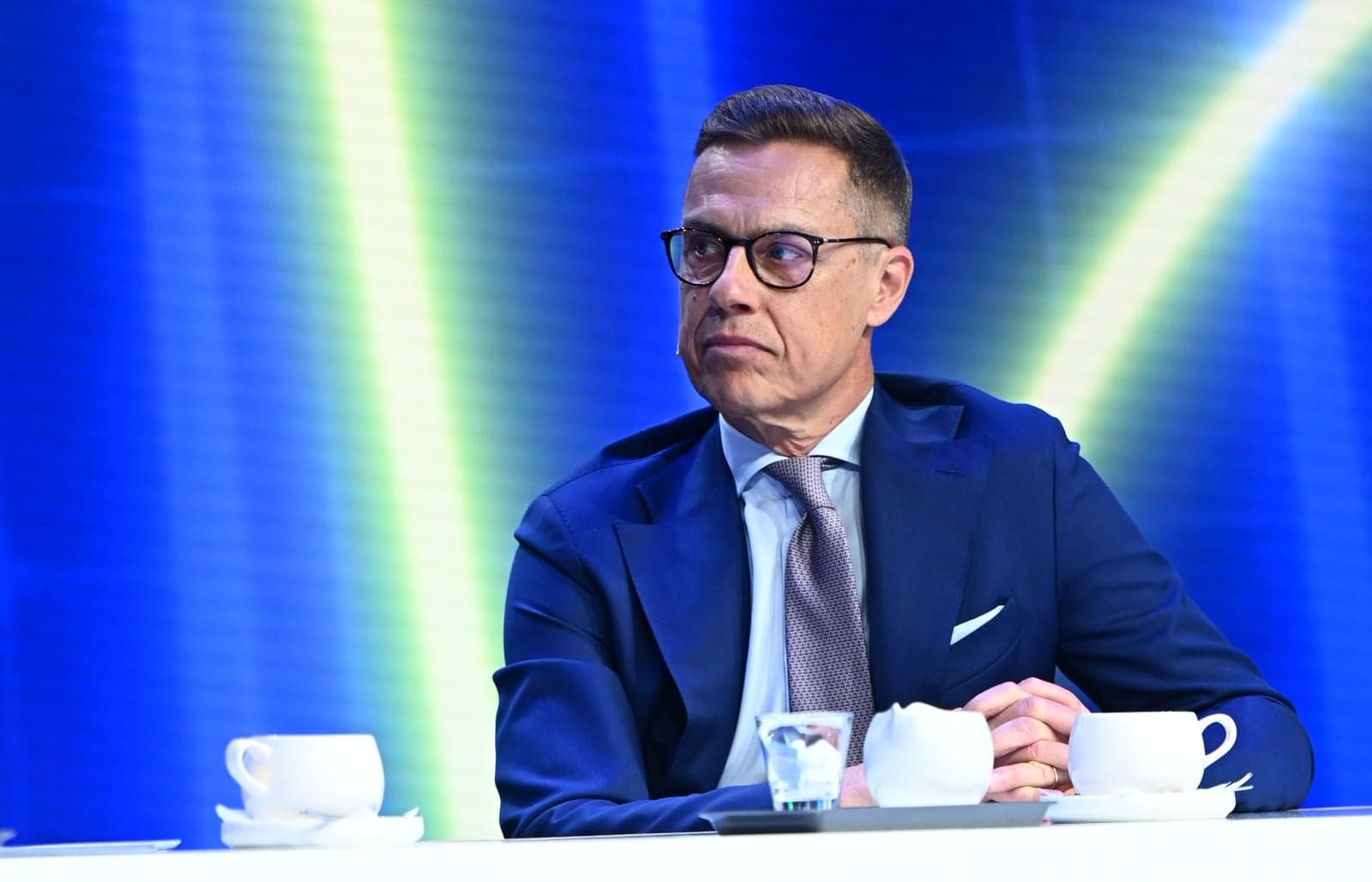
At the Eurelectric Power Summit in Helsinki last week, Finland’s President Alexander Stubb succinctly outlined how the geopolitics of the past half-decade have collided with the climate change debate to give the energy sector – and politicians across Europe – the mother of all wake-up calls.
“The era of Western dominance is over,” he said. “We have to realise that. Most of us have been growing up in a post-Cold War era where we had this feeling of an end of history: nation states would converge towards liberal democracy, market economy, globalisation, and interdependence based on rules would win the day.
“The idea was very functional, so integration and interdependence in one area led to pressure to integrate in another. Therefore, Europe became very reliant on Russian energy; therefore, Europe became very reliant on American security and technology; therefore, Europe became very reliant on Chinese economy.”
Weaponized instruments
Those times have, as we are all acutely aware, changed. “Now we've seen the instruments that were supposed to bring us together – energy, currency, technology and information – weaponized and used against us,” said Stubb.
“That's what Russia did in the beginning of the war with energy. That's what we have done with Russia on currency.”
And he added on top of this is the emergence of “a new American administration which is basically saying ‘no’ to the old world order”.
However, Stubb believes “this is an opportunity for Europe, and I say this as someone who is very pro-European and pro-American. I'm pro-transatlantic. I don't think we should throw the baby out of the bath water.
“From Europe's perspective, we feel security pressure coming from Russia, and we feel political pressure coming from the United States. This means that we need to get our act together. And we usually do: we did after Brexit; we did, after COVID.”
You fight wars on the battlefield but you win them at home. This creates a comprehensive security framework.
He outlined Finland’s long-standing preparedness, stemming from the simple fact of geography that “we have a 1340 kilometre border with Russia and from the 1300s we've had roughly 30 wars or skirmishes with Russia”.
The Finnish philosophy is, he said, “that you fight wars on the battlefield, but you actually win them at home. This creates an idea of a comprehensive security framework.”
He explained Finland and its security services have identified “20 hotspots which we make sure would function in a case of a climate weather catastrophe all the way up to war”.
More from Eurelectric in Finland:
Jørgensen says Europe must ‘transform into electro continent’
Twin Transition initiative targets data centre planning
Why industrial electrification is Europe's competitiveness key
And the country also ensures that its energy suppliers such as Fortum and Neste “store energy for a crisis situation. We are quite rare in Europe in that we are completely self-reliant for six months, come hell or high water. Not many other countries can do that.”
“Secondly, in food, we are 80% self-reliant. The farmers do deals, and the big food companies do deals. And on top of that, we have over 50,000 civilian shelters. We can house 4.4 million out of 5.6 million in these shelters.”
Finnish pragmatism
Stubb stressed that Finland does not do all this “because of ideology. We do it because we're very pragmatic and we realise that, when the shit hits the fan, we need to be prepared... and I feel we're very prepared.”
Yet he also highlighted that Finland was “not self-reliant enough when the war in Ukraine began”, as the country imported some Russian gas. “We learned a harsh lesson,” added Stubb.
So how does Europe move forward and in the process, lock in competitiveness, security and sovereignty?
Again, he injects a dose of Finnish pragmatism. “The starting point is to understand that the European Union is not utopia. We always try to juxtapose Europe as some kind of perfect system. But the truth is that it always advances in three phases: first, there is a crisis; second, there is chaos; and finally there's some optimal solution.
“So we need to admit to ourselves we're never going have a perfect European energy market – but it's always noble and useful to strive towards it.”
He said that “there's a really stupid saying in the Finnish language – that a pessimist will never be disappointed. I want to turn that around: an optimist will live a much more fun life. So, I'm a realistic optimist.”
He said human beings make three mistakes: “We over-rationalize the past, so we think that something happened in a certain way. Secondly, we overdramatise the present: we think we live in the most turbulent times of mankind, without understanding that if we look at all the metrics throughout history, we are much better off than ever before.
“And when we make these two mistakes… we underestimate the future.”
The Norwegian approach
Two weeks before Helsinki, I was in the county of Vestland in Norway, where Enlit organised a one-day conference examining the region’s energy trends.
The day was not focused on energy security… yet the topic permeated most of the discussions and was front and centre of a presentation from Commander Senior Grade Ingrid Kvamme, Deputy Commander of Bergenhus Home Guard District.
She told the audience in Bergen that “energy itself isn’t just a sector – it is the foundation for everything we do. And that makes energy infrastructure both critical and also vulnerable”.
She emphasised that Vestland is one of Norway’s most important regions for energy infrastructure. “This is critical, not only for us, but also for our allies and for our ability to be supportive in a crisis.
Energy is the foundation for everything we do. And that makes energy infrastructure critical and also vulnerable.
“But what makes this especially challenging from a security point of view is the interdependencies between the power, telecommunications, and oil and gas sectors. If one of these fails, the others quickly follow.
“Energy is the foundation: everything depends on it – telecoms, data, control operations… everything depends on electricity. And without power, society also loses situational awareness of time.”
She added that the Norwegian society “is strong, but also independent. Preparedness is not only a military responsibility, it belongs to all of us, across all sectors, levels, and organisation.
“We must understand interdependencies; we must strengthen cooperation. We must train and prepare. We do not know when we will need it: but we know one day we will.
“Resilience is engineered. It is not improvised. We cannot wait until crisis occurs.”
Lessons from Ukraine
The Bergen conference also heard from Natalia Golis, Secretary General, Fritt Ukraina, one of the largest NGOs in Europe that provides funds for equipment for Ukrainian forces and civil defence.
The organisation delivers clothing, vehicles, surveillance drones, and power generators and transports them all directly to Ukraine.
Golis is a former deputy mayor of Vestland County and felt compelled to start Fritt Ukraina – or Free Ukraine – after the country’s invasion by Russia.
She told the conference: “We are definitely not living in times of peace anymore. War on Ukraine is a war on Europe. And it’s really important that we in Norway start realising that and start being careful.”
“Intelligence threats for Norway are here, and they are very, very serious. And the energy systems are very vulnerable.”
She said energy security starts at every individual’s front door: “That's me and that’s you. The solutions for Bergen are in Bergen. The solutions for Vestland are in Vestland. Of course, we're going to be supported on a national level, but the decentralised energy way of structure in Ukraine has been their saviour.”
And she added that the Nordics are the Baltics are “the last stronghold in Europe”.
More Nordic content:
Statkraft boss on customer acceptance and PPA success
Finnish EV pilot shows flexibility can ease grid strain