Technology Trending: C-O battery, energy harvesting, quantum energy thermometer
Jonathan Spencer Jones
Posted on: 30 January 2023
A novel carbon-oxygen battery for long duration storage, harvesting energy in space and a thermometer that measures energy changes in semiconductors are in the week’s technology radar.
A novel carbon-oxygen battery for long duration storage, harvesting energy in space and a thermometer that measures energy changes in semiconductors are in the week’s technology radar.
Novel carbon-oxygen battery for long duration energy storage
Noon Energy is developing a novel carbon-based battery that is intended as a low cost alternative to other battery options for long duration energy storage and without the need for critical metals such as lithium or cobalt.
Details of the technology are limited and Noon Energy founder and CEO Chris Graves simply explains that the carbon-oxygen battery stores energy by splitting CO2, similar to how nature stores energy by photosynthesis.
“Storage in the same air-abundant molecules that nature itself uses, rather than rare metals, is key to our fundamental advantages in cost, sustainability and energy density,” he says.
Have you read?
Long Duration Storage, the solution to the energy crisis
Space-based carbon emissions tracking gaining ground
Noon Energy has just achieved a Series A $28 million funding, led by Clean Energy Ventures and Aramco Ventures, to grow its team and undertake demonstrations towards commercialising the technology within the next two years.
In the meantime and with a 50x scaleup of the core technology achieved over the last year, core components of the technology are operating as a proof of concept aboard NASA’s Mars Perseverance rover in its MOXIE device, which Graves helped to develop as part of the NASA team to extract oxygen from Mars’ CO2 atmosphere.
Compared with Li-ion batteries, Graves anticipates that the CO battery will have a cost of about one tenth and a footprint three times smaller.
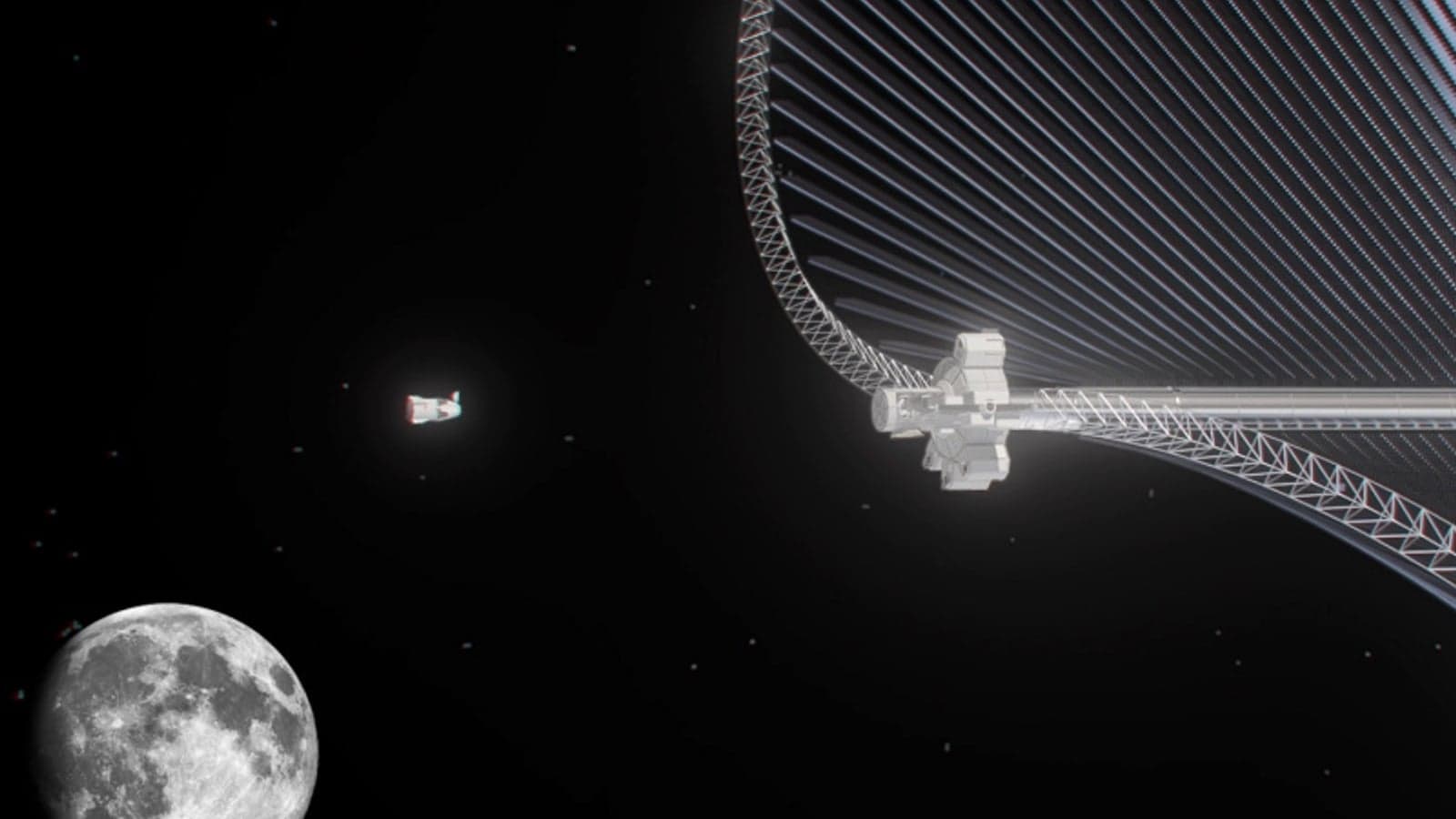
Harvesting energy in space
Two challenges faced when designing spacecraft are protecting the craft from solar radiation and generating energy for onboard use.
Now the University of Surrey have developed a solution that they believe can solve both challenges simultaneously and in essence, is a multi-layered nanocoating ‘skin’ that covers the satellite.
The multifunctional nanobarrier structure as it’s called consists of a buffer layer made of poly(p-xylylene) and a diamond-like-carbon superlattice layer to give it mechanical and environmental stability and able to protect a craft from both atomic oxygen and UV radiation.
Its dielectric nature means it can also be coated on sensitive payloads and structures, such as antennas, without interfering significantly with performance.
And also is possible to modify how much atomic oxygen and UV a craft can absorb and harvest while it is in low-earth orbit.
Professor Ravi Silva, Director of the Advanced Technology Institute at the University of Surrey, says that while solutions already on the market offer protection, they are bulky and can be restrictive when it comes to thermal control.
"Our new nano barrier is able to not only provide radiation and thermal protection but also harvest energy for use at a later date," he says.
A thermometer to measure energy changes
All PC users know that the harder their device is working the hotter it can become, and similarly with larger and more sophisticated devices such as quantum computers.
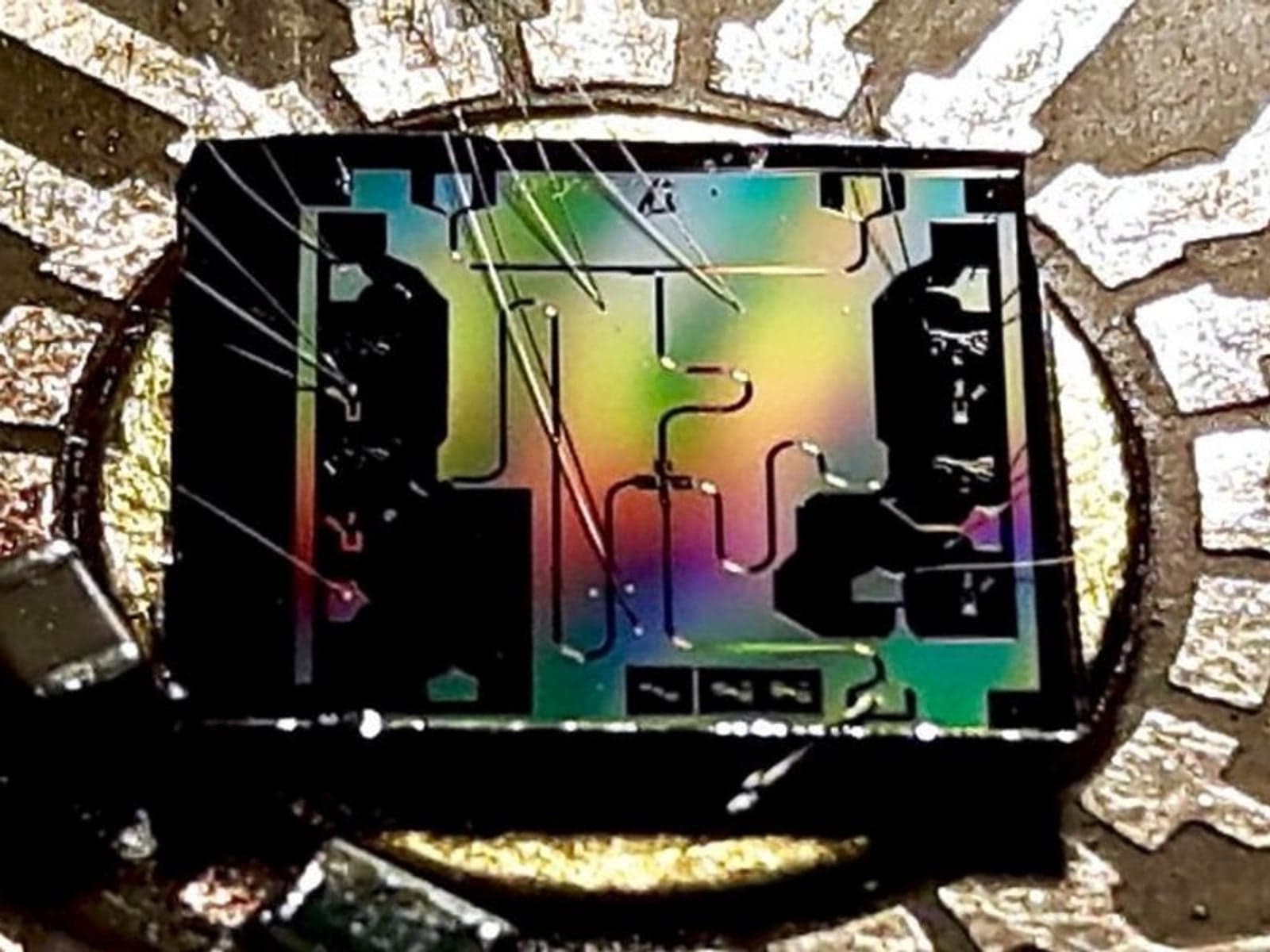
Central to developing more stable quantum computers is detecting and controlling heat dissipation, which was what researchers at Aalto University in Sweden along with colleagues at the universities of Grenoble Alpes and Konstanz set out to do.
Since as far back as 2018, Jukka Pekola, director of the quantum community InstituteQ has been developing a new kind of thermometer for measuring tiny energy changes. This was applied to detect the heat dissipation of a phase slip in a Josephson junction, a key quantum occurrence in a superconducting circuit, measuring the instantaneous heat production caused by the slip.
The experiment represents the first time that these quantum thermodynamical ideas were realised in practice. With better detection and control of heat dissipation, the discovery also has the potential to lead to more stable and higher fidelity quantum computers.
Pekola says that the work at Aalto focuses on getting to the heart of heat in quantum devices.
"We provided the idea about how to measure small energies with this thermometer of ours. Experimental results like these represent great strides forward in our understanding of thermodynamics in the quantum world.”
Latest content
+5
Technology Trending: Energy communities, hydrogen train and photosynthesis in space
A new type of energy community in Finland, North America’s first hydrogen train and the potential of photosynthesis for life support on the Moon and Mars are in the week’s technology radar.
- Jonathan Spencer Jones
- 03/07/2023