Oncopole: From tragedy to urban solar renewal
Pamela Largue
Posted on: 25 May 2026
Enlit On The Road visited the Oncopole project in Toulouse, a solar land art installation built on the site of the AZF factory disaster.
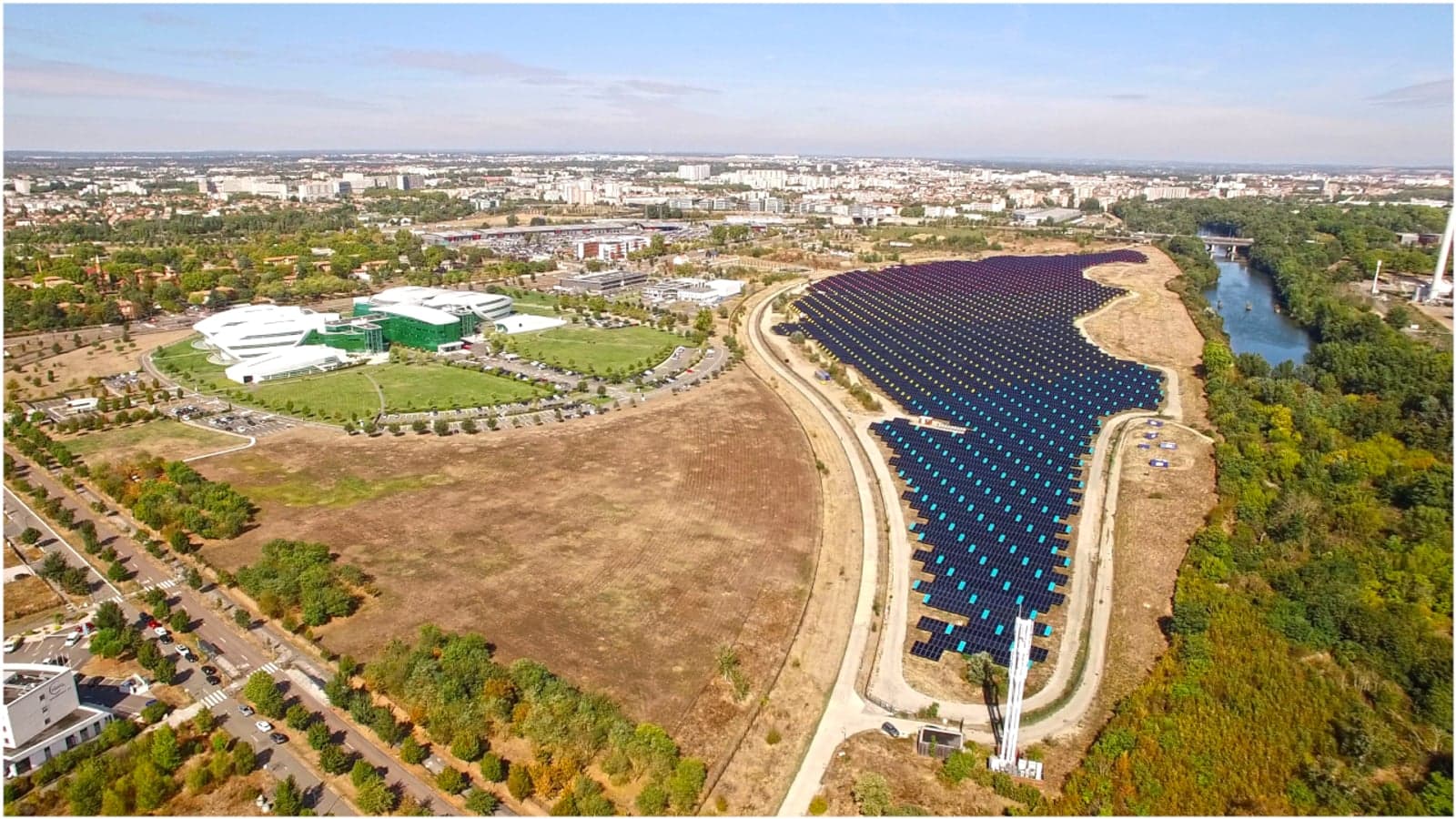
The 15MW Oncopole solar PV project in Toulouse, France, stands as one of Europe’s most symbolic urban renewable energy developments — transforming the site of a devastating industrial disaster into a landmark of regeneration.
Spread across 25 hectares, the project comprises 35,000 solar panels and was developed on the site of the 2001 AZF factory explosion, a chemical disaster that devastated the surrounding community and left the land too contaminated for agricultural or residential use.
Enlit On The Road visited the Oncopole project to speak with Alex Roux, Prospecting Manager at developer Urbasolar, about the challenges and significance of building one of France’s largest urban solar installations at the time of construction.
For Roux, the project represents far more than clean energy generation. “It is emblematic,” he said. “It gives new life to this place.”
Rainbow Blast
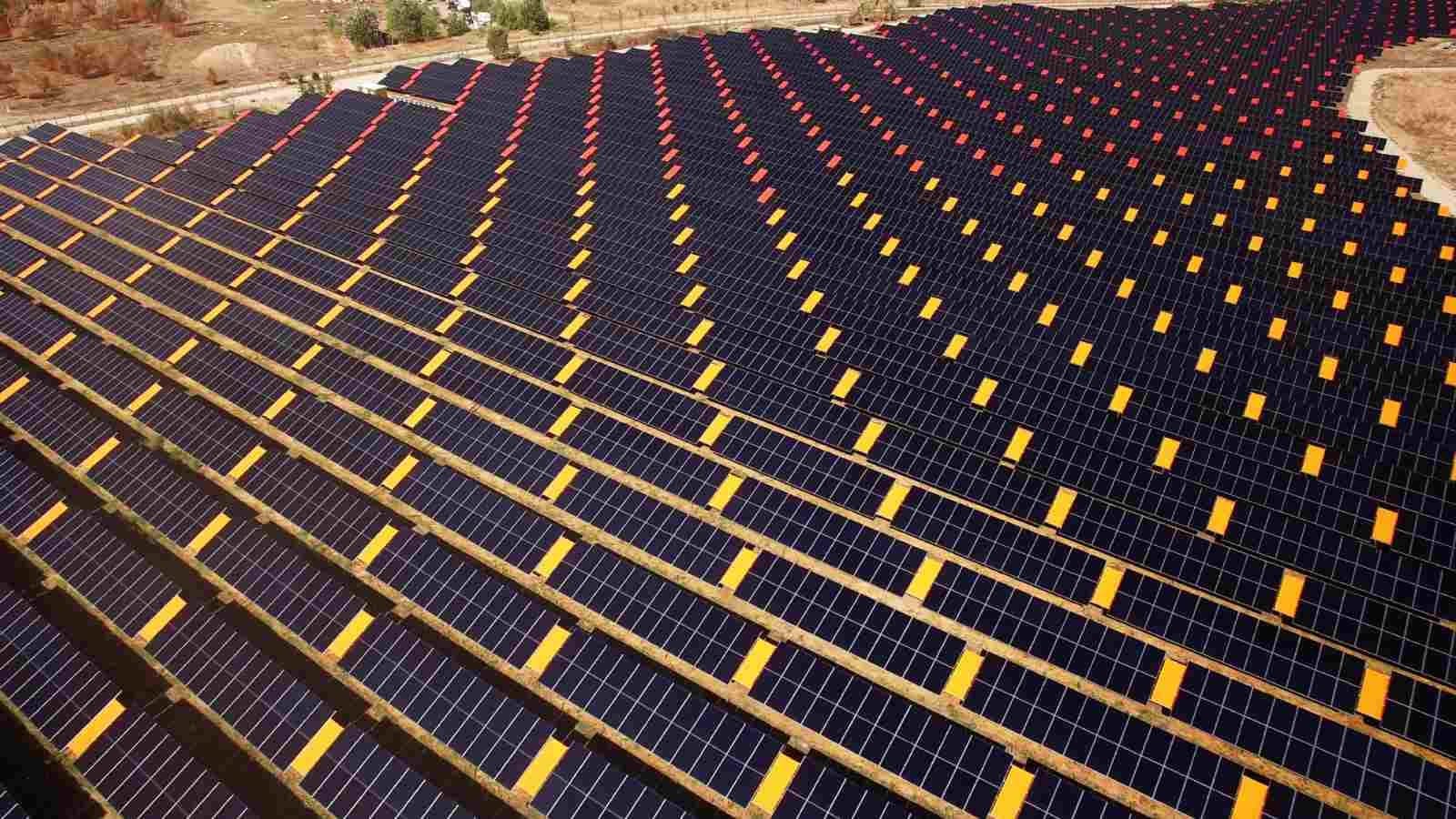
That sense of renewal is reflected in Rainbow Blast, a striking land art installation created by local artist Damien Aspe. The artwork features 1,500 coloured solar panels arranged according to the intensity of the original explosion, with red panels marking the area closest to the epicentre.
More from Enlit On The Road Toulouse
France anchors its future in floating offshore wind
How Terega is greening gas molecules in southwest France
Today, the solar plant generates approximately 19,000MWh of electricity annually, enough to power more than 4,000 homes, while also supplying nearby facilities, including a hospital and cancer research institute.
The solar project also demonstrates what can be achieved through strong collaboration between public and private stakeholders, which Roux described as a “win-win” for the region.
Building the plant, however, came with technical challenges. Because the site lies within a flood zone, overhead cabling was required, and contaminated ground conditions made excavation impossible.
Its urban location added further complexity during construction. “We are in an urban area, so it’s difficult during construction,” Roux explained.
Yet that same proximity to the city ultimately became one of the project’s greatest advantages: generating renewable power close to where it is consumed.