Did the Paris Olympics set a new bar for sustainability?
Yusuf Latief
Posted on: 28 November 2024
Read into some of the initiatives and energy technologies tapped by the this year's Paris Olympics in their quest for sustainability.

The Paris 2024 Olympics were an opportunity for the City of Lights to demonstrate innovative technology and sustainability initiatives that will leave a legacy for the energy transition. Yusuf Latief finds out if this goal has been met.
In 1924, an array of three temporary wooden cabins were built near the Stade Olympique in Colombes, northwest of Paris. Although makeshift – they were razed soon after the Olympic Games finished – these cabins are of historic significance, forming (alongside several amenities) a legacy as the first ever Olympic village.
Fast forward a century, and history has repeated itself.
Paris has again played host to the Olympic Games, although this time the city has taken a different approach, both to the village itself and to managing the most important global sporting event’s energy use.
According to the International Olympic Committee (IOC), this year’s Olympic Village has been conceived as an econeighbourhood.
Set to be transformed into a new residential and business district, it will provide workplaces for 6,000 people and apartments for an additional 6,000.
Rather than razing, this reuse signals a turn in how the IOC and the multiple bodies responsible for the Olympics have approached the Games, which come with a somewhat sour reputation of immense carbon emissions and waste.
Specifically, the IOC stated its goal of reducing the event’s carbon footprint down to 1.58 million tonnes. If successful, this would be less than half the average of the London 2012 and Rio 2016 Games and just shy of the 60% reduction they need by the 2036 Games to align with the Paris Agreement.
Have you read:
Project DECODIT: Bringing the energy transition home
Meet the rocketman of AI: Accenture’s Stuart Brown
Power infrastructure
There are several ways the Games have attempted to reach this goal, and the majority relate to power consumption.
Nearly a year before the Games began, announcements were already being made about how the power system had been adapted to cope with the immense 57 energy demand that the Olympics would undoubtedly bring.
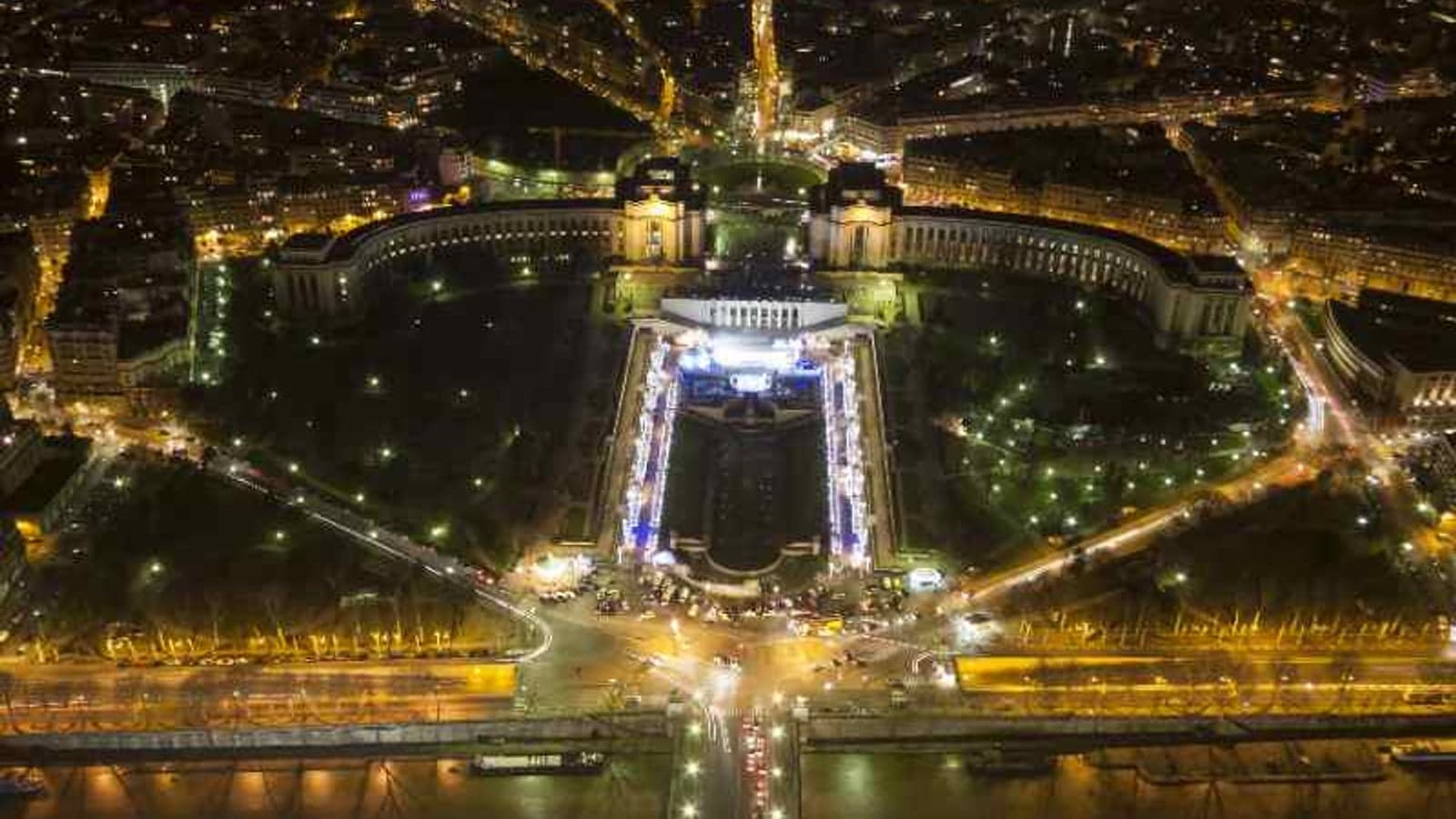
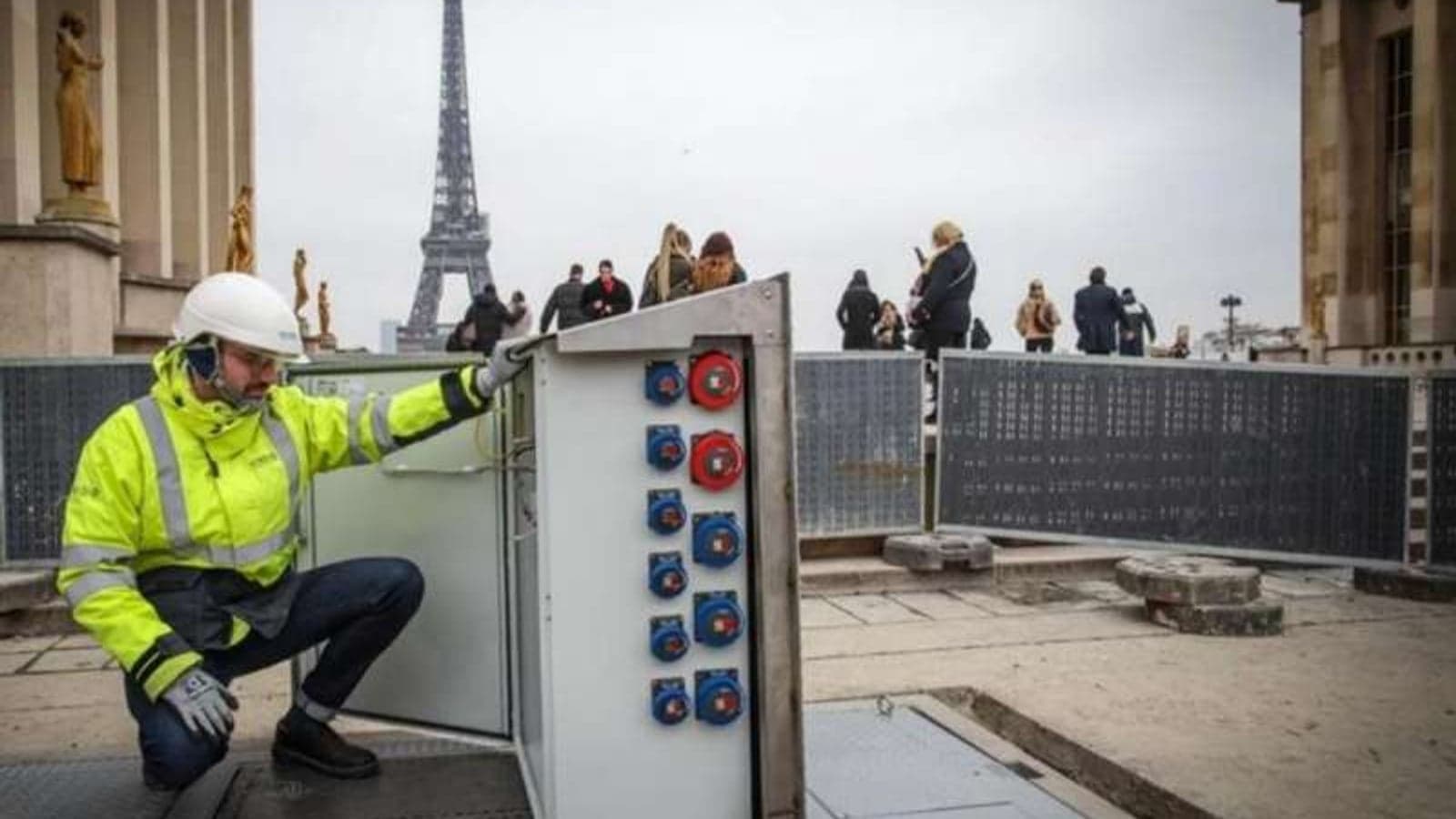
In July 2023, during the buildup to the Games, French DSO Enedis announced the rollout of new electric terminals. These were used to connect temporary sites, such as Place de la Concorde and Place du Trocadéro in Paris, to the power network.
The terminals were selected as a ‘simple and quick connection solution’, fitting perfectly into the urban environment as a retractable system.
Enedis and the City of Paris began experimenting with the first of these electric terminals in April 2024, three months before the Games, to ensure that the event would meet its high power needs without tapping diesel generators.
Whereas traditionally, cultural and sporting events would rely on such generators, all Olympic venues, both old and new, have been connected to the electricity grid.
According to Enedis’ spokesperson Audrey Boissonot, connecting an event to the grid rather than relying on generators reduces CO2 emissions by 90%.
To be safe, Enedis implemented a three-step connection system to mitigate potential grid connection failures and outages. If a grid connection failed, a backup to the grid was in place. If the backup failed, a battery-powered generator could be accessed.
Said Boissonot: “To reach these connection schemes, there are different solutions, depending on the physical configuration of the stadium or sport venue. Enedis can locally reinforce the grid to distribute more power to the venue and connect it temporarily to the grid.
“The large batteries can be used when grid connection is not possible or would not be relevant. Ten of these generators [were] deployed for the Cross-Country event in Versailles on 28 July.
“The Paris Games are an exceptional showcase for our know-how and the quality of our network.
“It’s an opportunity for Enedis to set the standard for a new model in the events sector. It’s also a source of pride for all our employees, to be the backbone of the ecological transition at the heart of the most responsible Games.”
Also of interest:
A green Paris 2024 Olympics vision
How genAI can help accelerate the energy transition
Data centres supplying heat
With the Games connected and the groundwork set, then came the issue of managing consumption in real time. Several initiatives were tapped, including a project from Equinix, an internet services company based in the US with data centre operations at nine sites in Paris.
During the Games, the company’s PA10 data centre transferred its heat to the Plaine Saulnier urban development zone and the Olympic Aquatic Centre – meaning that the temperature of the venue used for artistic swimming, water polo and diving was balanced by internet-generated heat.
While this was just one initiative taken by Equinix, which has implemented several heat export projects across Europe and the Americas, it serves as a showcase for how the IOC and Paris looked at buildings through an innovative lens in their bid for sustainability.
In the Paris Games, where new buildings have been one of the primary sources of carbon emissions, the Aquatics Centre was one of only two new builds. The IOC goes so far as to call the Centre the ‘flagship project’ in France’s drive for new buildings to use 50% wood or biomaterials.
Additionally, this edition of the Games leaned heavily on renewable power, with the Aquatics Centre one of the key sites to which PV panels were attached.
Beyond generation, steps were also taken to optimise power measurement, not only during the Games, but also to inform how power is handled at future events.
Two weeks prior to the start of the Games, the IOC made an announcement alongside Alibaba Cloud, a software company operating in Silicon Valley in the US as well as in Hangzhou and Beijing in China.
The IOC deployed Alibaba’s Energy Expert – an AI-powered sustainability software platform launched in 2022 – to help measure and analyse smart meter-gathered power consumption data from across all 35 competition venues.
In an email, William Xiong, Alibaba’s Vice President of Alibaba Cloud Intelligence and General Manager for International Industry Solutions, explained how all energy-related data during the Olympics and Paralympics would be consolidated through the solution.
This extends to such data as electricity consumption, power demand contingency, venue capacity, competition-related information and onsite weather conditions.
The data came from areas such as playing fields, broadcast and media working areas, technology operational spaces and specific equipment, food and beverage equipment, as well as a host of other temporary operational areas and equipment.
Said Xiong: “Datasets collected will vary, taking into account temperature conditions and real-time occupancy of the areas at different times of the day.
“Collection of these detailed datasets will enable a more accurate context for Organising Committees for the Olympic Games when referring to the energy consumption data from the Paris Games.
“Looking to the future, it’s clear that the intersection of technology and sustainability will redefine the sporting world.”
Determining how successful these endeavours were will be a lengthy process, fraught with different opinions on what marks a truly sustainable Games.
But it is hard to deny that proactive steps were taken – before, during and after the Games – to establish a legacy of technological innovation.
Said French President Emmanuel Macron on his hopes for the Games: “We want to welcome the world, our athletes to win a lot of medals and [for] it to be an incredible moment of French pride.
“But we also want these structures to remain, as with the Olympic and Paralympic Village. For us, this is one of the big elements of legacy."