Partner content
Eastern Europe's systemic blueprint for replacing coal
Kelvin Ross
Posted on: 15 July 2026
Replacing coal in Eastern Europe offers an unprecedented decarbonisation opportunity while locking-in affordability, reliability and resilience.
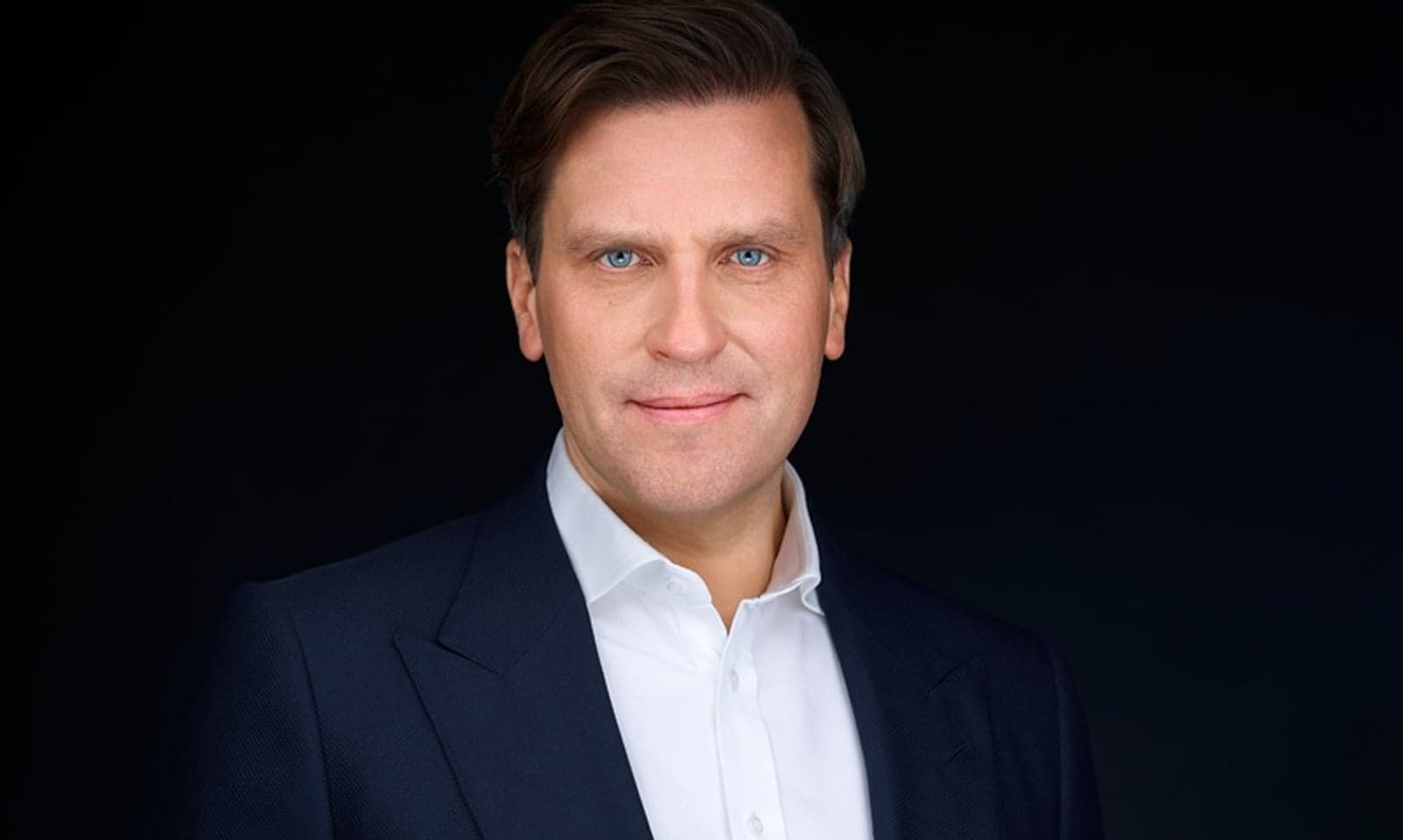
Few people have a better perspective on this transformation than Grzegorz Należyty, managing director of Siemens Energy Poland.
Pragmatic and proud would be how I would describe Nalezyty. Or, to be specific, I’d say that, as a Pole, he is proud of the pragmatism that Poland has shown in its energy transition strategy.
We are meeting as Eastern Europe is moving into a more demanding phase of the energy transition. Countries like Poland, Hungary, Romania and the Czech Republic need to diversify from coal, and this means playing to their various strengths while adopting a process of systemic modernisation.
It is also a time when fears over energy security and competitiveness in Europe have reached fever pitch, prompting repeated calls for holistic, inclusive and energy-realistic solutions.
So, it’s interesting that those three attributes crop up again and again in our interview. Poland – seen by many as the new frontier of Europe’s energy evolution – is clearly doing something right… and the rest of Europe is watching.
As the boss of Siemens Energy in Poland, Nalezyty is well placed to talk about his country’s shift away from decades of coal-fired generation to a 21st century energy mix. The company has had a presence in Poland for 173 years and currently has 1,050 employees.
Energy transformation
One of the first things he says is to note that seeing Poland and its eastern European neighbours through the lens of a move away from coal is a “shortcut” and is looking at the journey from the wrong direction: the emphasis should not be on where it’s been – it’s about where it is going.
“It’s not a transition from coal but instead a transformation of the energy sector,” he says.
“These days, we are talking about a serious number of different energy technologies, like on-and-offshore wind, solar, gas and storage, which are all part of the new energy mix.”
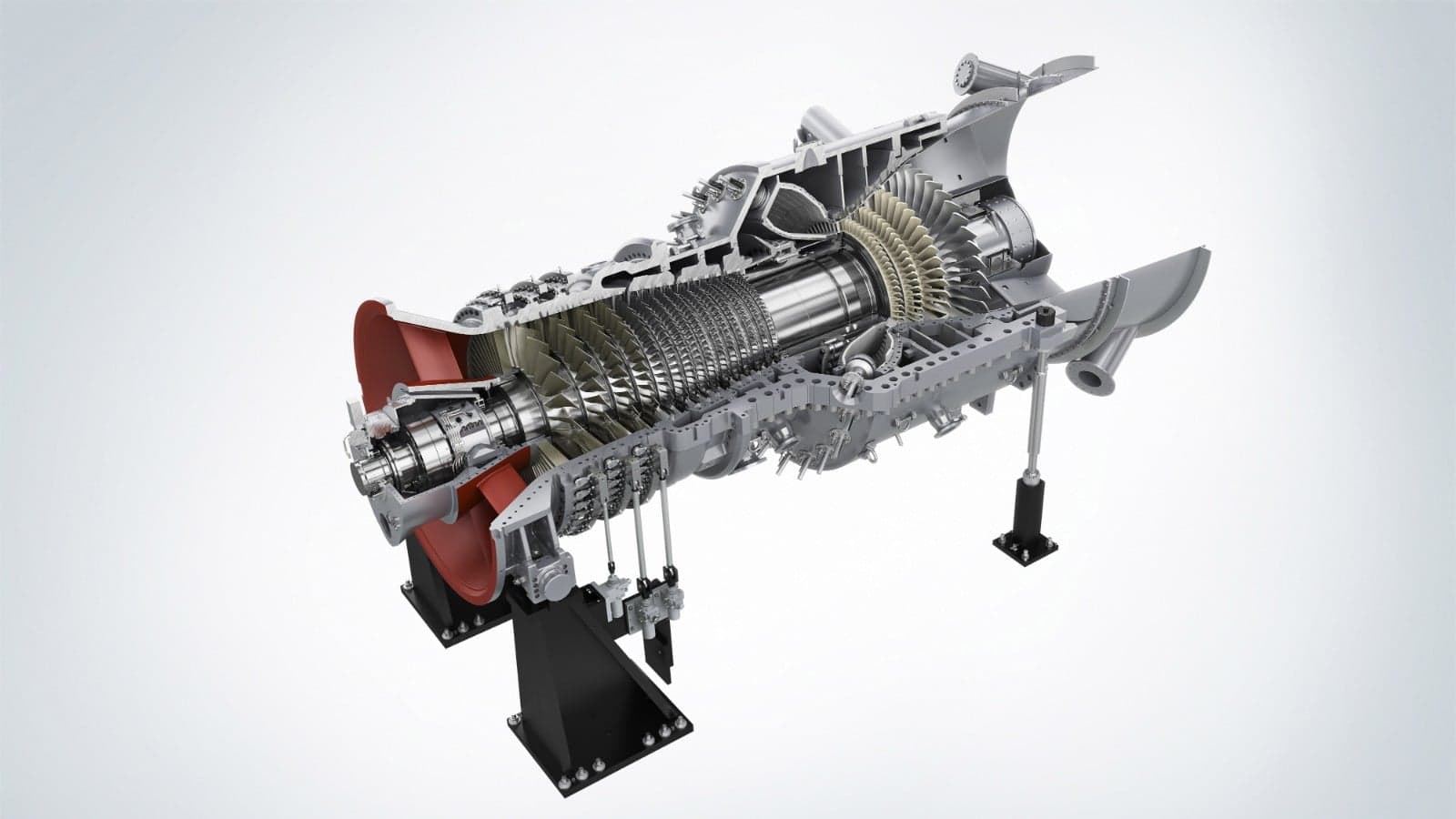
Nalezyty knows this suite of technologies intimately, because he oversees most if not all of them within his portfolio. Siemens Energy operates a Polish fleet of gas-fired plants, including two new 600 MW peakers in Rybnik and Gryfino, as well as 570 MW in Gdansk and Grudziadz, and is delivering the turbines for the Bałtyk II and III, Baltica 2 and BC-Wind offshore wind farms.
Success depends on building a diversified and resilient energy system rather than simply replacing one technology with another.
“So, we’re not talking about switching from coal to gas, or coal to one single something else, but to a transformation to the new energy mix," he says.
"And while there is no single technology that can drive this transformation, replacing coal remains Europe’s single largest opportunity to decarbonize the power sector. But success depends on building a diversified and resilient energy system rather than simply replacing one technology with another.”
He’s keen to emphasise the word ‘mix’: “There is no single technology which can drive this,” adding that instead Poland’s energy transformation will be a parallel rollout of dispatchable, flexible energy.
He stresses that this holistic approach extends to the wider energy system to embrace the grid. Despite the well-worn maxim that ‘there’s no transition without transmission’, this seems to have eluded some countries who have ploughed ambition and money into renewables but not done the same for their grid.
Grid re-engineering
Not so in Poland, says Nalezyty. He explains the country’s energy transformation will be a “re-engineering of the grid” and adds that this is also much needed to rebalance the energy geography of the country.
He outlines that historically Poland’s coal plants were predominantly in the south or southwest of the country, and as such were pushing their power north.
Now, says Nalezyty, the potential roll out of new nuclear and further expansion of existing offshore wind will all be in the north, hence the need for the grid “re-engineering”.
He jokes that this huge re-engineering project has made Poland “one of the biggest construction sites in the Europe... because everything is happening at the same time”.
“We have a massive introduction of gas technology, massive introduction of offshore wind, PV is developing, and we’ve nuclear power plants in the execution as well. So, we see this energy transformation more or less on a daily basis from the highways.”
And again, he points out: “We cannot disconnect the generation transformation from the grid transformation – they go hand-in-hand.”
Two other things that he believes should go ‘hand in hand’ are renewables and gas-fired power. Nalezyty wants to banish the notion of gas as a ‘bridging fuel’ to renewables and instead suggests it is a companion.
“Gas needs to go hand in hand with renewable energy development to ensure stability of supply and as a backup technology. So, going forward, we will have renewable energy supported by a flexible and dispatchable energy supply. Gas is going to stay with us as a part of the energy mix.”
We cannot disconnect the generation transformation from the grid transformation – they go hand-in-hand
He explains that in Poland, gas is best-placed to fulfil several functions and cites two of the biggest as being district heating – Poland has the second-biggest district heating market in Europe – and also powering the country’s expected rise in data centres.
With energy security – and indeed energy sovereignty – now the biggest talking point for the industry, I’m keen to get Nalezyty’s take on the topic, not least because Poland has been alive to the potential dangers for years.
Energy security
However, Nalezyty says decisions are now about “not only what is right for Poland, but for rest of Europe”.
“Energy security needs to be embedded in every decision taken. We as Europeans have made a great and important change in our understanding of energy security: that it can have a price; it's important; it's a value.
"Therefore, we are embedding in our energy mix not only climate targets but energy security targets. Ultimately, the energy transition must balance affordability, reliability, resilience and sustainability. That is what a pragmatic and energy-realistic transition looks like.”
“Europe is one of the last continents which is still energy dependent. And electrification is the way to get that independence. Europe is relatively lacking reservoirs of gas and oil – we need to import them – so electrification based on renewable energy is the way forward. And this isn’t just about climate change and the Green Deal – it’s about energy security.”
Following the impacts of the conflicts in Ukraine and Iran, he says “every country in Europe is trying to build on their strengths”.
“For Romania, Hungary, or Bulgaria, their strength was always their decades of history of nuclear plants, which now have a renaissance.”
Connectivity and resilience
He explains how Romania and the Czech Republic are building on their nuclear pillars by adding renewables, and in the case of Romania, also unlocking Black Sea gas, enabling greater cross-border connectivity and a more resilient power system.
Hungary’s transition is also being shaped by a nuclear-backed power mix and one of the region’s fastest solar build-outs.
Next up for the country is adding storage, flexibility and grid upgrades so that rapid decarbonization does not come at the expense of system stability.
MORE SIEMENS ENERGY EXCLUSIVES
The untapped opportunity inside North America's nuclear plants
How Siemens Energy has positioned itself for the nuclear revival
Nalezyty highlights that one of Poland’s biggest strengths is its Baltic Sea coastline.
He describes it as an “aquarium for offshore development: it's relatively not so deep and quite windy”. Perfect conditions for those offshore wind projects Siemens Energy is developing in partnership with Equinor, Orsted and PGE among others.
And that “aquarium” also acts an offshore energy security asset on the country’s northern coast, which is important, says Nalezyty, because “as eastern Europeans, we know that we are the east flank of Nato as well”.
Breaking coal
So, energy security, he stresses, goes hand-in-glove with energy transformation, built on a distributed architecture based on different technologies. “Gas, offshore wind, onshore wind, solar – they are all breaking this coal monolith from the past. And that is exactly the way forward.”
This co-ordinated approach to the country’s energy transition has not happened by accident, of course. It’s the product of effective consensus between policymakers and industry… something other countries must be looking at with envy and thinking ‘if only…’
This consensus was manifested in Poland’s energy strategy to 2040 (known as PEP2040), and Nalezyty emphasises its importance.
“These decisions about the energy transformation will affect generations to come.”
LISTEN NOW:
Podcast: Nuclear in transition: Insights from Siemens Energy
He says the PEP2040 “defines how the energy mix and energy landscape by 2040 will look like. And what defines the strategy itself is the end question: what is the lowest possible levelized cost of electricity based on this energy mix which will sustain an unstoppable, predictable and continuous supply of electricity.”
“So, we exactly know in 2040, based on documents published and agreed by government, how many SMRs, nuclear plants, offshore and onshore wind, solar, gas fired plants, and other technologies like waste to energy will be installed in the system.
“And the grid operator confirms that under this generation mix, they'll be able to operate the network in a secure way.”
And he highlights that “decarbonisation is not the target in itself: it’s a part of the energy mix driven by this LCOE programme”.
“It's not a question of just decarbonisation of the energy mix. It's about the renewal of the energy mix.”
Flexibility
The impact of the PEP2040 will arguably have the greatest impact on Poland’s industry, both in terms in terms of competitiveness and decarbonisation. And this, says Nalezyty, is also important for the rest of Europe.
“I think the three most industrialised countries in Europe is still Germany, Poland and the Czech Republic. And 50% of all CO2 emissions in Europe from the energy sector comes from these three countries. So, the energy mix of these countries is crucial for the way forward for the European energy mix.”
A key element of any energy system today is flexibility, and Nalezyty defines what that word means in the Polish context.
“Flexibility is a must. It supports the avoidance of blackouts. It supports energy security. It supports the daily operations of a very dynamic environment.”
He says that for grid operators, the Polish energy transition is going to see their “world completely change”.
“They once had coal-fired power plants which were working 24 hours a day for 52 weeks of the year. Now they operate in a very different environment. And the capacity is changing day to day, hour to hour, from one weather condition to another.”
Flexibility tools, delivered by either hardware or software, are going to be crucial, he says, to “keep energy flowing and the grid stable”.
Practical system
It’s evident during our interview that Nalezyty is proud of his company and his country, so I ask him to elaborate.
“As a local person, I'm very proud that this country, after many years of discussions and disputes, came to a very precise working and practical system.
He says that “35 years on from the Communist time, we have achieved an important alignment within the country to make this happen and operate this way”.
And he says he is energised by the way that “different industry players can play their role… like a technological provider like myself”.
“With more than 170 years of presence in Poland and decades of experience across Central and Eastern Europe, Siemens Energy has supported customers through every stage of the region’s evolving energy landscape.
"That long-term commitment, combined with expertise across flexible generation, grid modernization and system integration, makes us a reliable partner as countries pursue their own pathways towards a more secure, competitive and sustainable energy future.
"I love to work with my team. We are putting a lot of energy and effort to make the energy transition happen. And we really are able to make our impact. We have a place in this transition… and we can be proud of it."