Revenue cannibalisation – the renewables price threat
Jonathan Spencer Jones
Posted on: 29 June 2022
As renewables penetration grows and output increases, revenue cannibalisation is posing an emerging risk in many countries.

As renewables penetration grows and output increases, revenue cannibalisation is posing an emerging risk in many countries.
Growing renewables penetration is bringing with it new challenges, not always foreseen, with the latest to be talked about increasingly – price cannibalisation, or in effect the fact that when renewables are abundant the energy price drops, thus ‘cannibalising’ their own profitability.
In a new report, Swiss headquartered energy trading software and advisory firm Pexapark argues that price cannibalisation could threaten the future profitability of renewable energy unless its risks are managed.
In another new report, IRENA has labelled price cannibalisation as “a clear example of misalignment in the power system”, with a call for a redesign of power system structures.
Have you read?
Europe – 2021 saw record energy prices and greater reliance on fossil fuels
Energy Transitions Podcast: Managing risk in an energy revolution
The reason for such cannibalisation is the wholesale pricing structures which rely on marginal costs and which in the most extreme cases in some countries including Denmark, Germany and UK can lead – and has led – to negative prices.
Clearly a combination of solutions are required to address the issue with the management of the risk a key pending any longer term restructuring.
Pexapark’s approach is to take account of ‘capture factors’, which correspond to the ratio of the capture price – the average price realised by a generator over a period of time – to the baseload price, with the recommendation these are taken into account when for example negotiating power purchase agreements and optimising volume structures.
As capture factors are unique to each generation technology, market and bidding zone – indeed ultimately to each asset - they also could provide more accurate financial modelling and reporting and clarity on the long term cost-benefit of energy storage.
“While the current focus for renewable energy investors and operators is around unprecedented levels of market prices and price volatility, the active management of cannibalisation risk has become equally important as part of comprehensive renewable revenue and risk management,” comments Luca Pedretti, COO, and co-founder of Pexapark.
“Keeping track of realised and expected capture factors has become an essential, no-regret move.”
Pexapark’s analysis indicates that in Spain renewable revenue cannibalisation could potentially reaching up to 30% by 2030, while in Germany a ‘belt of doom’ has been identified in the middle of the country where capture rates appear to be almost 20% lower than other locations.
Dual procurement
The ‘cannibalisation effect’ is one of several ‘misalignments’ highlighted in the report by IRENA arising from the technological differences between renewable and conventional resources.
Others include capacity remuneration mechanisms for fossil fuel plants, inappropriate ancillary system services procurement and a conceptual disconnect with renewable energy costs and remuneration in electricity bills.
IRENA argues for a restructuring of power systems with an initial proposed approach being ‘dual procurement’ comprised of long term renewable energy and short term flexibility procurement.
Together, and extending to the retail sphere, they are designed to match supply and demand in both the short and long terms.
Auctions or direct public investment become the backbone of the long term renewable procurement through mechanisms that address the requirements of capex-intensive technologies, while the short term flexibility procurement is based on marginal prices, with a granular bidding format.
Within this structure, users may contract with renewable energy producers for long-term contracts, adjusting their demand to the procurement availability as far as possible, and accepting energy at higher prices from the short term flex procurement mechanism when needed. Moreover, through the appropriate aggregation of their distributed energy resources, users can participate in both procurement mechanisms, receiving fair remuneration for their contributions to system operation.
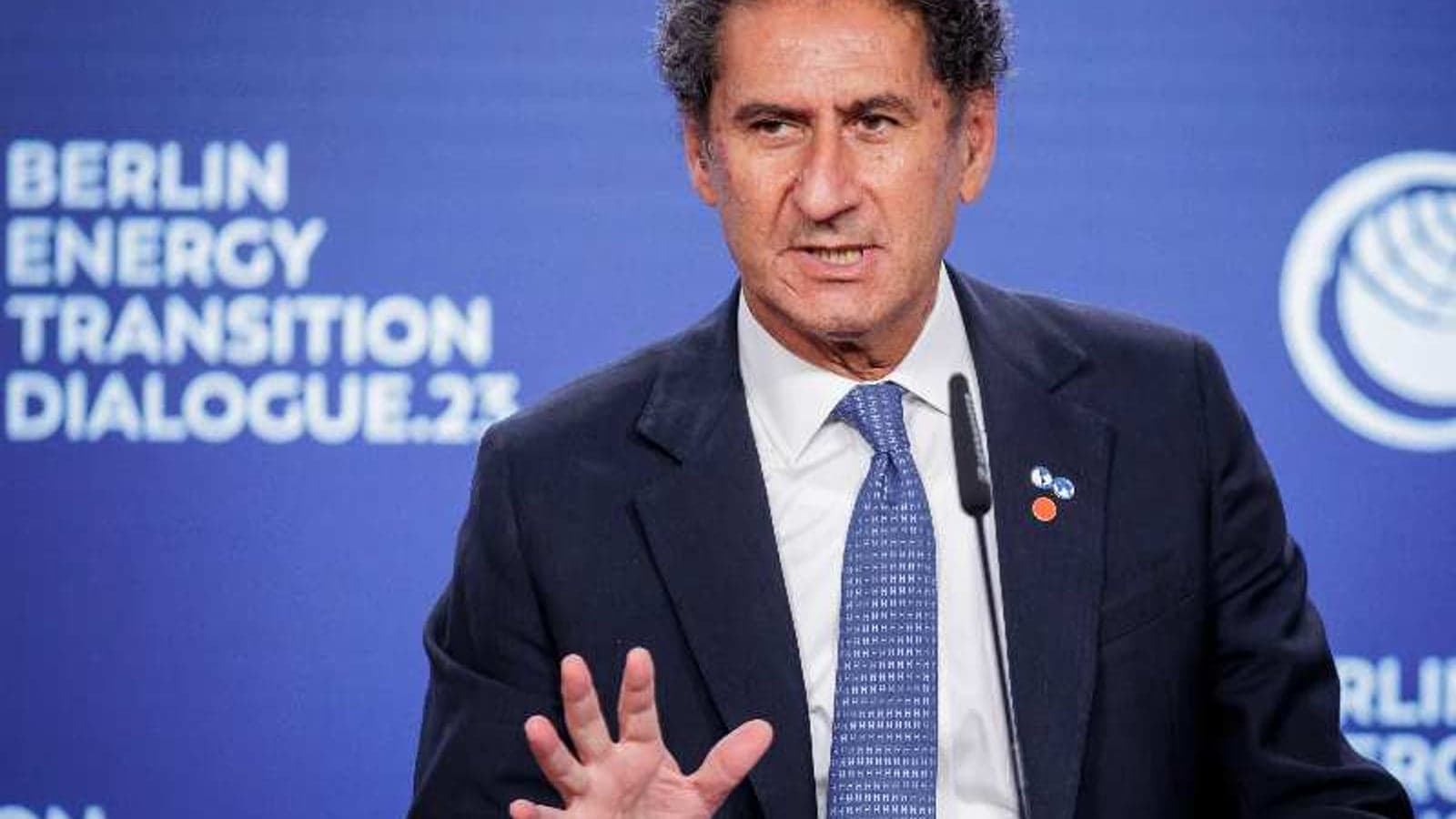
Francesco La Camera, Director-General of IRENA, says in the foreword to the report that today’s power systems, structured around large centralised and dispatchable power plants, require a holistic approach to address all key aspects from technology and economy to society and the environment.
“Otherwise, misalignments between electricity procurement mechanisms, regulations and policies will continue to hinder a successful energy transition.”
IRENA says the dual procurement proposal is meant to be a starting point for discussion, with further work needed to advance and refine the concepts, incorporating both country- and region-specific contexts.