Urgency of attracting turbomachinery talent highlighted at ASME expo
Nigel Blackaby
Posted on: 8 July 2024
American Society of Mechanical Engineers' annual conference hears that sector must ‘do better about engaging and educating’.
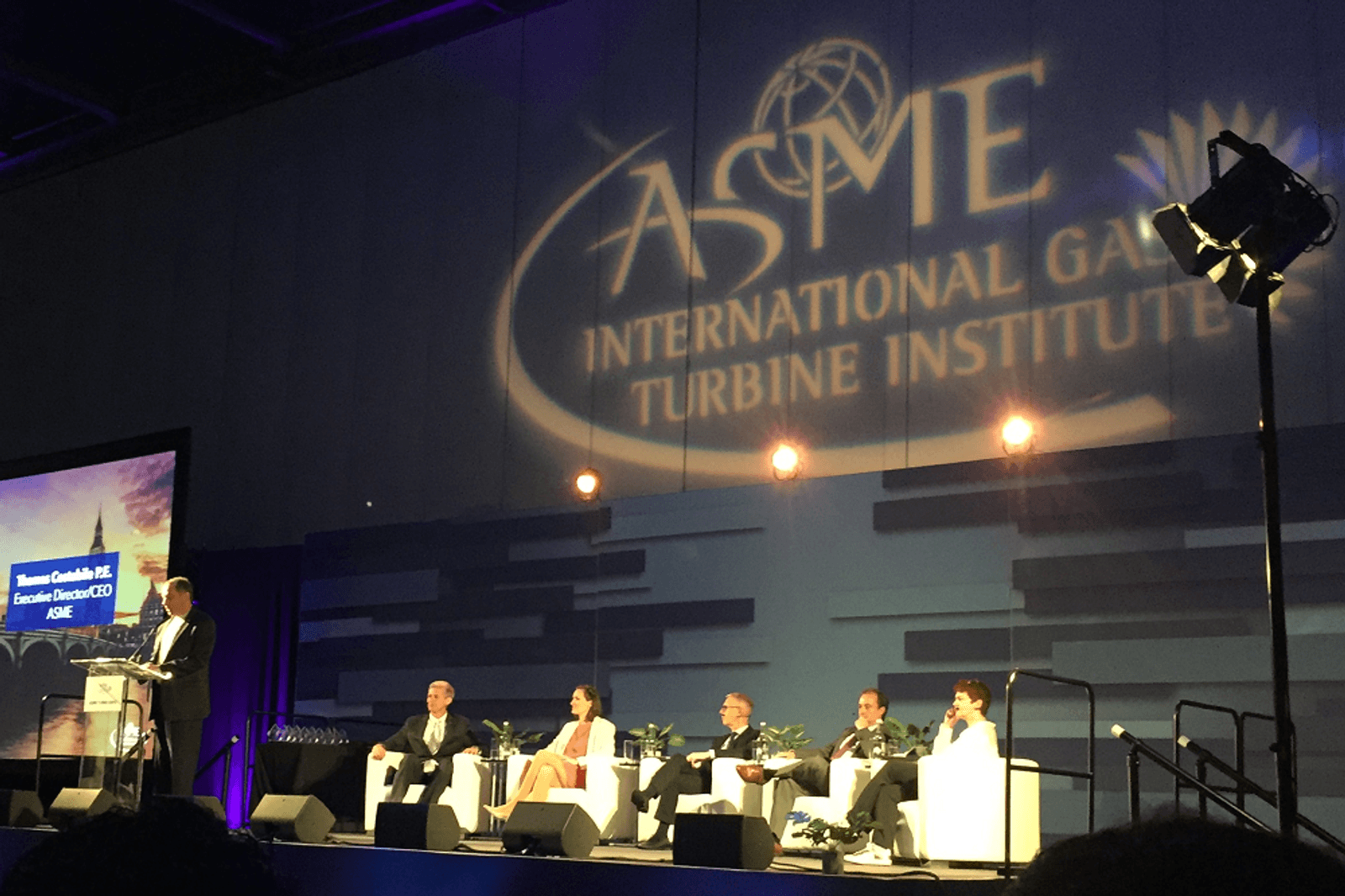
American Society of Mechanical Engineers hears that sector must ‘do better about engaging and educating’
The importance of gas turbine skills and technology in the energy transition was highlighted at the 69th annual Turbo Expo organised by the American Society of Mechanical Engineers (ASME).
At the opening ceremony of the event in London, Tim Lieuwen, Executive Director of the Georgia Institute of Technology, said that it was the efficiency, flexibility and reliability of gas turbines that would ensure they would be a part of a net zero journey that continues to incorporate increasing amounts of intermittent renewable energy.
And when asked what needed to be done to ensure that the workforce was secured to enable the role of gas in the journey to net zero, he said “the skillset that this group needs to bone up on is communication”.
He said the energy community “needs to do better about engaging and educating the broader populace around what it takes to get to net zero”.
Technical challenges to conquer
His fellow keynote speaker Verena Klapdor, Senior Vice President of Siemens Energy, echoed that call to secure the next generation of workers, and added: “People like working in challenging environments – especially engineers: the bigger the challenge, the better.
“There are still new technical challenges to conquer. We need to be able to attract the talent to tackle those challenges. There is so much more to do.”
Exclusive: How Siemens Energy is future-proofing the gas turbine with hydrogen in Berlin
Thomas Costabile, ASME’s chief executive, told that recruiting and retaining a skilled workforce was an issue in the sector and that most exhibiting companies at ASME London were recruiting staff.
The importance of this was underscored by Jeff Benoit, VP of Energy Solutions at PSM, a speaker and ASME programme advisory member, who sees a need for more focus on careers and expanding the pipeline of talent into the turbomachinery sector.
'Energy conversion chameleon'
“We have to tackle the perception that the gas turbine has no long-term future, whereas it is the energy conversion chameleon, capable of delivering the flexibility and addressing the different boundary conditions needed in the drive to net zero,” said Benoit.
ASME, in collaboration with the Energy Turbomachinery Network association, invited students from collages and high schools to the conference as a way of introducing them to a career in turbomachinery.
Keep up with the latest hydrogen news here
“It is a big ‘must’ to get students involved,” said Costabile. Students could attend presentations and talk to exhibitors including Texas A&M university.
“What ASME does best is to connect industry players to encourage collaboration and technology transfer,” said Costabule.
“Turbine technology is part of the solution to climate change with the circularity of re-using metal, the ability to use low and zero carbon fuels and their efficiency and adaptability.”
Costabile added that development in miniaturisation of turbine technology is also extending the uses into more commercial and industrial setting.
Future innovations in turbine blades, coating, O&M and 3D printing are examples of the healthy state of technology advancements, said Costabile.
“The next few years will see advancement in sustainable fuels, including hydrogen with many start-up companies developing these technologies.” ASME will be developing new standards to codify the hydrogen sector.
'Super-exciting opportunities'
Another ASME contributor, Bobby Noble, Senior Turbine Manager for Gas Turbine R&D at EPRI, told PEi that gas turbine sales are picking up around the world.
“In Europe it is a mixed picture with German building out and growth in Eastern Europe, but the needs are location-specific and driven by different regulatory regimes and local needs.
“The opportunities for the gas fired sector are super exciting,” said Noble. “However, it is important for the industry to communicate the opportunities that are available and events like ASME Turbo Expo and other are important to do so.”
ASME was formed in 1880 with the goal to collaborate and address safety issues in the steam boilers of the day by creating industry standards.
Its first standards were issue soon thereafter and today ASME has over 600 standards across various sectors including turbomachinery, transport, heat transfer and manufacturing technologies.
The Turbo Expo serves both power and aerospace sectors and the event in London attracted around 3000 turbomachinery specialists and 112 exhibitors, with more than 400 technical papers presented.
Costabile told PEi that at 2085, the number of submitted abstracts were at an all-time high and that as well as the ubiquitous topic of hydrogen-readiness, this year saw a focus on 3D printing, turbine blade designs, coatings and the use of digital technology in repair and maintenance.
Originally published on powerengineeringint.com
Latest content
+1
Lifecycle Management Series S2 E2: Optimisation of Gas Turbine O&M Strategies
In this episode, you will learn about Uniper's extensive work over the last decade on optimising the life of conventional power stations; Dalia Power Energies' valuable experience of implementing an outage optimisation strategy - and more!
- Enlit Editorial Team
- 10/08/2020