HYDREAMS – is hydrogen the answer to decarbonise Europe's steel industry?
Jonathan Spencer Jones
Posted on: 25 August 2025
The HYDREAMS project is investigating the transition from natural gas to clean hydrogen to decarbonise steel production in Europe.
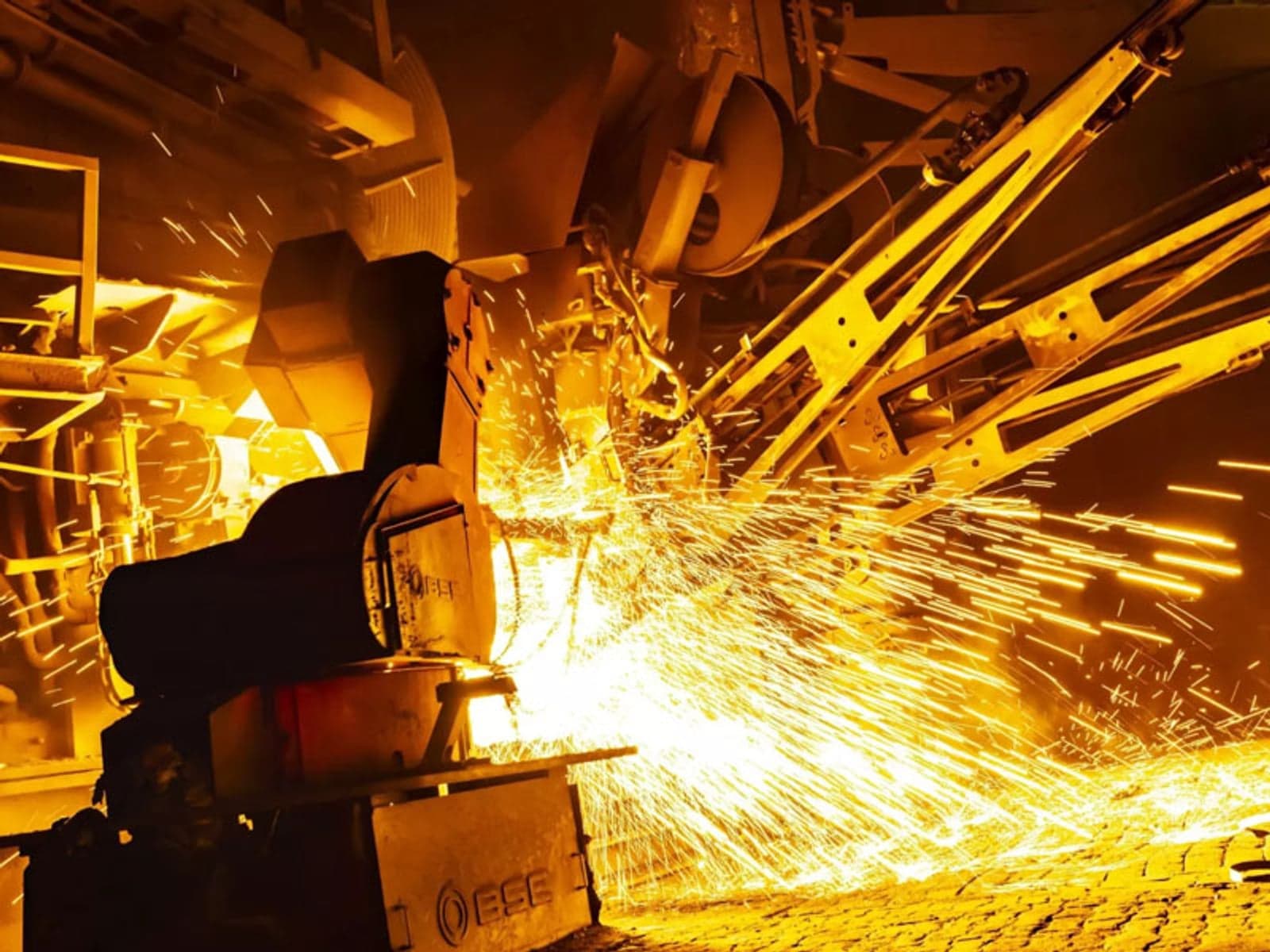
The HYDREAMS project is investigating the transition from natural gas to clean hydrogen to decarbonise steel production in Europe.
The steel industry is one of the world’s largest CO2 emitters, contributing around 8% of global CO2 emissions.
A particularly challenging area is the thermal steel processes, which were responsible for up to 39 billion tons of CO2 emissions globally in 2021 due to natural gas combustion.
The question is can hydrogen be the solution for this emission-heavy sector, and Swiss Steel Group reports taking a crucial step in this direction as part of the HYDREAMS project.
Also of interest
New project spotlight: Industry decarbonisation with DESIRE and SYRIUS
The project, funded by the European Union through the Research Fund for Coal and Steel and launched in April 2023, is aimed to explore how the steel industry can decarbonise by transitioning from natural gas to clean hydrogen, with the target of reducing CO2 emissions by 4.5Mt/year by 2032.
The project focuses on two types of furnaces, reheating and annealing, and two burner types, impulse and flat flame systems, to test hydrogen combustion's efficiency in steel production.
With the aim for minimal CO2 and NOx emissions as well as increased combustion efficiency, it is believed to be the first comprehensive attempt to study the effects of hydrogen combustion on various steel grades.
“Replacing natural gas with hydrogen in thermal processing is still not mature enough and poses potential risks – including increased NOx emissions and possible negative effects on steel quality and furnace refractory life,” explains Laurent Sieye, Sustainability Manager Ugitech at the Swiss Steel Group.
“That’s precisely what we aim to investigate and address in the HYDREAMS project.”
The project is progressing in multiple stages, which started with laboratory tests in pilot furnaces and followed by fluid dynamic simulations, furnace modeling and industrial demonstration trials.
In the first phase, tests were conducted with 13 different steel grades, and no structural differences or changes in composition were observed in the steel samples after heating with air/natural gas, air/hydrogen, oxy/natural gas and oxy/hydrogen.
Over the next few years until the end of HYDREAMS in September 2027, a series of industrial trials are planned, including three demonstrators for different heating processes and product types, including blooms, forged bars and coils.
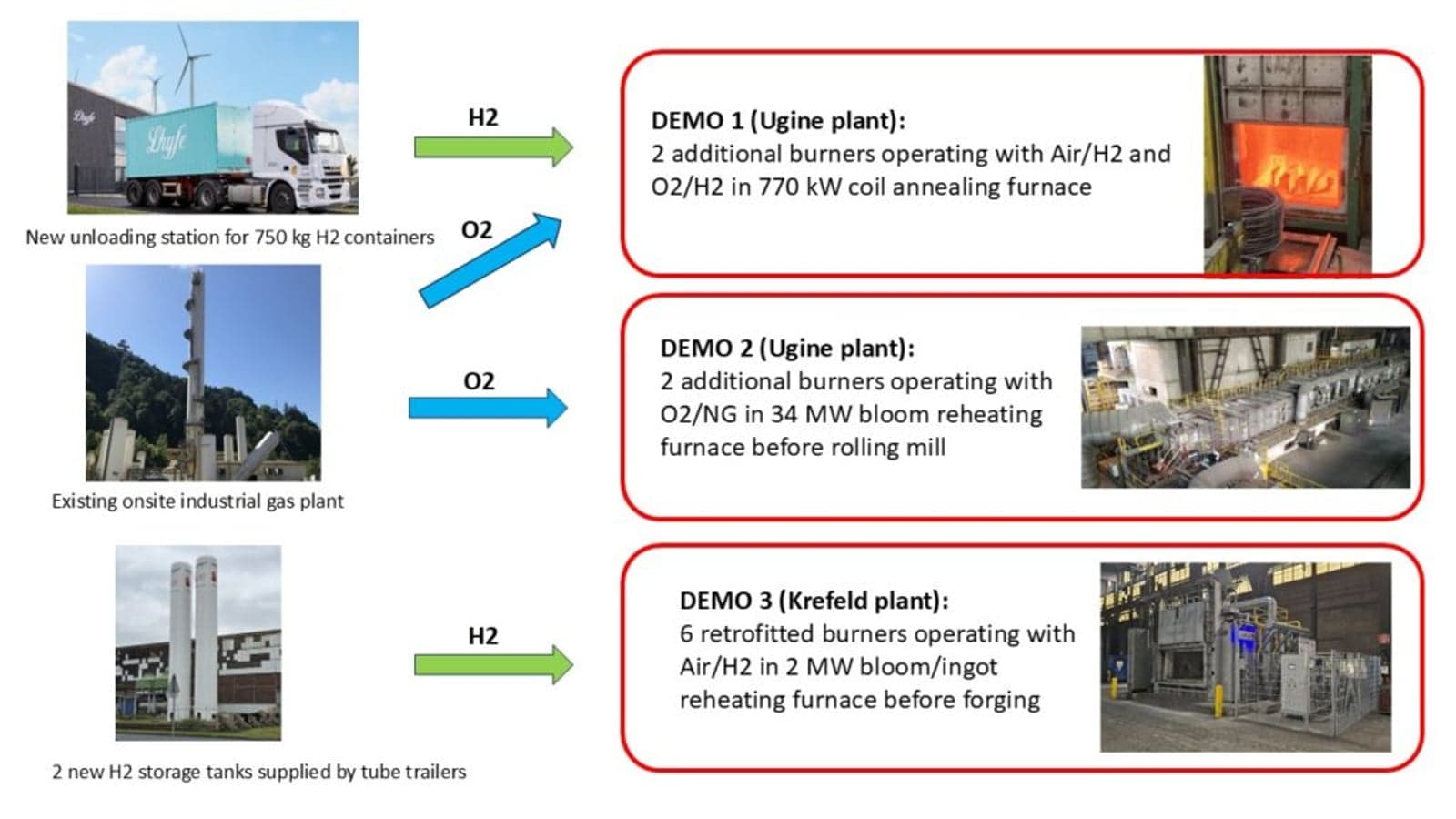
The solution also is expected to offer an alternative to electric heating, which presents technical challenges in specific applications, such as excessive wear of electric resistances at high temperatures or poor temperature homogenisation within the furnace.
In addition to the technical findings, the project intends to provide safety assessments, life cycle analysis and cost analysis to support future market deployment.
The project is targeting a hydrogen production cost of €2/kg and an opex and capex cost of €56.50/MWh to be competitive with gas production and combustion. As it scales, the plan is to reach over 500 production sites across 23 EU countries.