Hydrogen hype dissected by cleantech experts during Belgium-UK trade mission
Kelvin Ross
Posted on: 24 May 2022
Belgian clean-tech trade mission brings together energy transition academics and business leaders.

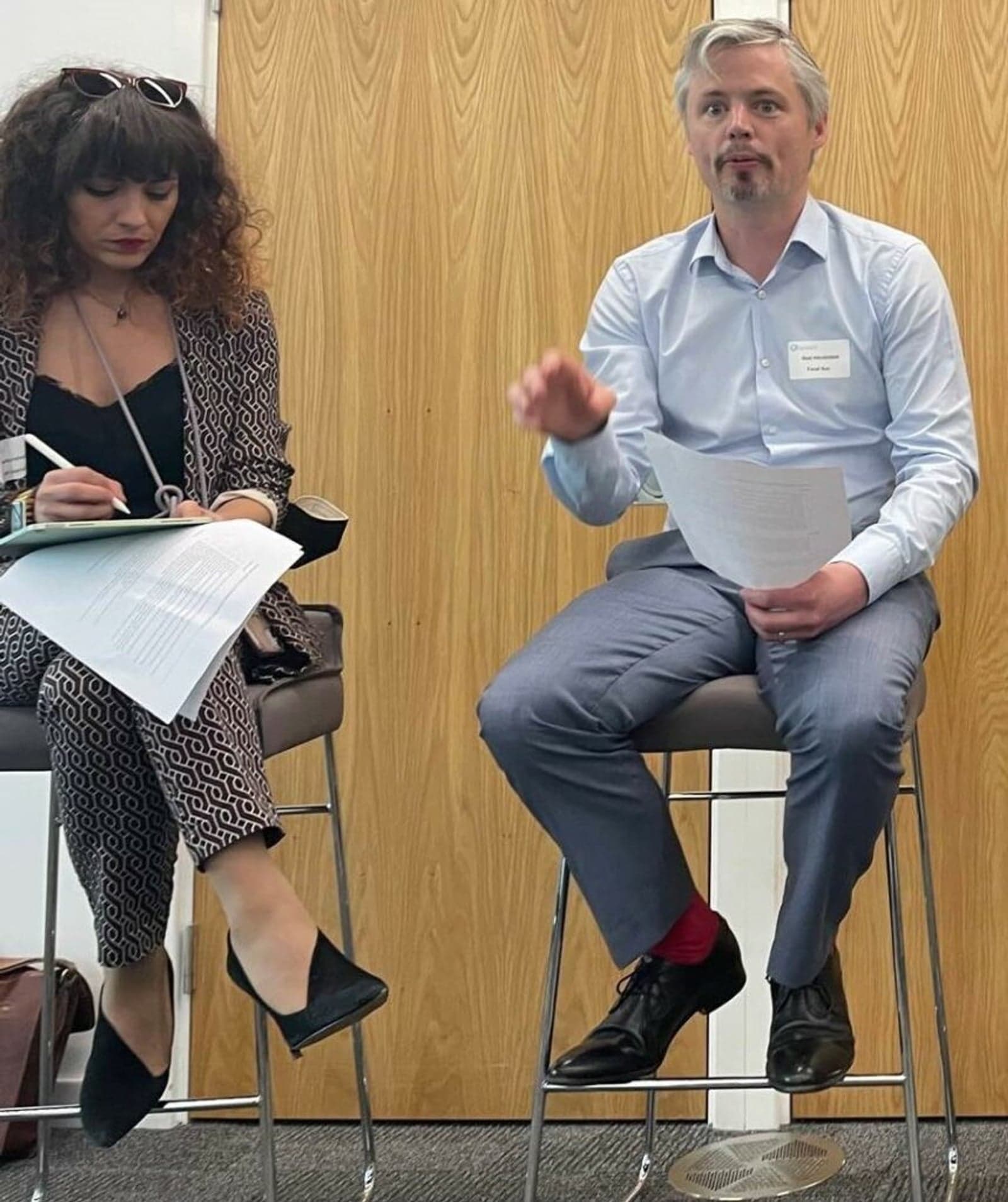
“Hydrogen seems to attract extremes and somewhere in between is the right place”, says Niall Haughian, co-founder of Focal Sun, a company developing solar-to-hydrogen technology.
Haughian was speaking in Cambridge which was hosting Belgian clean-tech companies and clusters who were visiting the UK as part of the Belgian Economic Mission.
The mission is a four-day trade and political visit intended to strengthen economic and diplomatic ties between the two countries: Belgium was last year ranked 13th in the world for both exports and imports by the World Trade Organisation.
Talking about hydrogen, Haughian said: “The reality is that green hydrogen is exceedingly expensive, so we should be focusing on using hydrogen as a fall-back position with electricity as the primary source.
“Electricity is cheap and we already have the infrastructure in every household, ripping out gas boilers to replace them with hydrogen ones will be unaffordable to many and that disadvantages the most vulnerable.
It’s not about blue vs green
“So electricity should be the primary source and where it’s not possible to use electricity hydrogen can be the fallback.”
Speaking on the issue of whether policymakers should pursue green or blue hydrogen, Dr Lata Sahonta, Research Manager at Energy Interdisciplinary Research Centre, University of Cambridge, said: “It’s not about blue vs green.
"We need blue and green to achieve 2050 net-zero goals, starting with green in industrial scenarios, and applying it to other sectors as the technology develops."
She went on to explain how new energies might address inequality: “The government needs a comprehensive plan on how to rollout new technologies and, at the moment, they don’t have that.
Related articles
P2H2 wins Enel Green Power Green Hydrogen Challenge
How light could boost performance of fuel cells and lithium-ion batteries
Zero Emission Hydrogen Turbine Center: A closed loop of the energy future
“We know from the hydrogen strategy that they are trying to use them as a means to pull people out of poverty, but they’re very fuzzy on how that might work.”
Multiplicity of technology
As well as hydrogen, attendees and speakers at the event discussed developments such as solar glass, circular economy production, and retrofitting older buildings to make them more energy efficient.

Chairing a roundtable on the future of energy, Dr Cristina Peñasco, policy lecturer at the University of Cambridge, said: “We can have a multiplicity of technology and figure out what works the best for each sector.
"It’s not that wind or water is the one miracle… we’re going to need a huge variety of energies to get where we need to go.”
And Charlotte Struye, Deputy Director at Cleantech Flanders, stressed that “the problem of global warming is a shared one”.
“We are all facing, more or less, the same environmental issues and are in dire need of green technologies.”