A blueprint for smarter energy storage integration with AGISTIN
Guest/partner contributor
Posted on: 27 October 2025
The AGISTIN project is about making energy storage simpler, smarter and easier to integrate where it matters most.
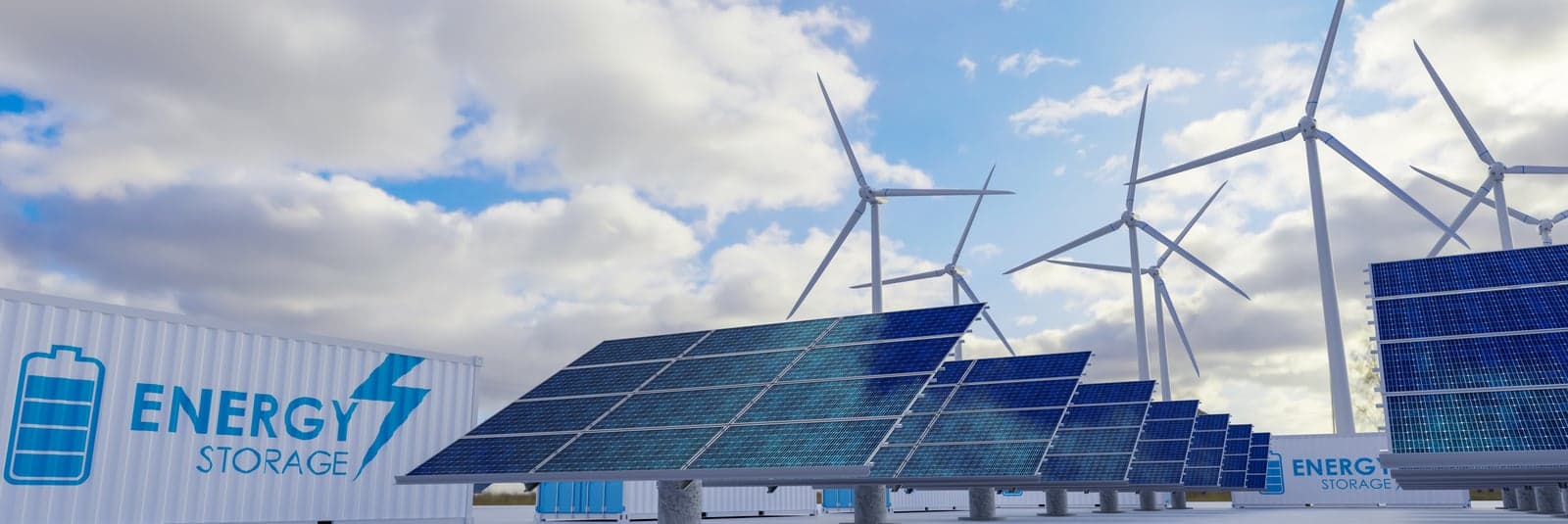
Europe’s energy transition is accelerating. Renewables are expanding at record pace and electrification is reshaping how we move, manufacture and heat our homes. Yet the same trends that make the system cleaner also make it more complex to operate. Grid operators are grappling with congestion, low inertia conditions, and long queues for new connections, while industrial sites are seeking reliable ways to use more on‑site renewables without driving up costs or disruption. Against this backdrop, energy storage is emerging as a critical enabler.
AGISTIN (Advanced Grid Interfaces for Innovative Storage Integration) brings together grid users, operators, storage manufacturers and researchers to remove practical barriers to storage adoption. There are two goals: to help industry connect and use far more on‑site renewables and storage without costly grid reinforcements, and to equip system operators with new services that keep the grid stable as renewable penetration rises.
Rather than adding layers of complexity, AGISTIN focuses on integration strategies that cut hardware requirements, lower costs and improve day‑to‑day operations.
What’s different about AGISTIN?
At the heart of the project is a shift in how assets are connected. Traditional approaches rely on AC‑side integration, where each device – solar, storage, load –interfaces separately with the grid.
AGISTIN advances DC coupling, a method that links on‑site renewables, storage and certain end uses on a shared DC bus before interfacing with the grid. In practical terms, this means fewer conversion steps, less duplicated hardware and tighter coordination between assets.
For industrial users, the benefits are tangible: lower capital and operating costs, higher efficiency and greater flexibility to align energy use with production needs. More of the renewable energy generated on site can be consumed on site, cutting curtailment and improving the payback of both storage and generation.
For grid operators, DC‑coupled systems can deliver the fast, precise responses that modern power systems increasingly require, including grid‑forming capabilities, fast frequency response and balancing flexibility – all essential in low‑inertia conditions.
To make these gains accessible, AGISTIN is developing advanced control algorithms that coordinate across solar, storage and end‑use assets. Importantly, many of these controls will be released as open source tools, enabling system integrators and power electronics manufacturers to adapt and deploy them quickly across a range of settings.
Open approaches help the sector avoid vendor lock‑in, speed up learning and raise confidence that solutions can interoperate as portfolios scale.
From lab to field
The project will begin with three laboratory test campaigns to validate performance under controlled but realistic conditions:
- Germany – EV fast charging: Evaluating controls and functionality in high power, highly dynamic charging environments where storage can both buffer grid impacts and improve economics.
- Germany – electrolyser with dynamic grid emulator: Testing how storage and control strategies can stabilise and optimise operations for renewable hydrogen production.
- Spain – small scale pumping system: Demonstrating the concept on a pumping setup prior to deployment in a live irrigation scheme.
Lessons from the lab will then flow into two field demonstrations. In Spain, a pilot will showcase how irrigation systems can act as flexible energy assets and even as a form of storage, aligning water and energy use to reduce costs and grid stress.
In the Netherlands, a second pilot will combine storage and advanced controls to maximise the use of renewable electricity in a hydrogen production facility, highlighting how integrated design can turn variability into value.
Unlocking system‑wide benefits
While the pilots are sector‑specific, the implications are system‑wide. By coordinating renewables, storage and end uses on a common platform, AGISTIN’s approach strengthens resilience and improves overall flexibility. It addresses short‑duration storage needs – the crucial seconds‑to‑hours window where most grid stability services are delivered – while improving the utilisation of existing connections and reducing the need for new reinforcements.
Crucially, AGISTIN also looks beyond single sites. Advanced power electronics and hybrid AC–DC grid solutions can make energy transport and transformation more efficient both onshore and offshore, supporting the build‑out of new infrastructure while extracting more value from assets already in place.
By validating these approaches and documenting the results, the project will contribute to common standards and interoperability – the foundation for scaling solutions across countries, sectors, and vendors.
Making adoption easier
Technology alone does not guarantee uptake. That’s why AGISTIN pairs technical innovation with practical business models aimed at large grid users. The project will identify ways to monetise flexibility, reduce connection and reinforcement costs, and capture the full value of co‑locating renewables, storage and flexible demand.
The message to industrial decision‑makers is simple: integrated designs can pay their way, not just in sustainability metrics but on the bottom line.
Pathway to cleaner electrification
Every year of delay in connecting renewables or electrifying processes has a climate cost. By offering a clear, tested route to integrate storage at scale – while reducing material use and embedded emissions through smarter design – AGISTIN helps keep the transition on schedule.
Fewer bottlenecks, more flexibility and better use of existing infrastructure mean less curtailment and more clean power actually delivered to where it’s needed.
Why it matters
Europe’s grid challenges won’t be solved by a single technology. They will be solved by integration – of assets, of controls, of business models and of standards.
AGISTIN shows how to bring these strands together in a way that is practical for industry and valuable for system operators. It turns storage from a standalone asset into a system solution, capable of delivering services to the grid, efficiency to the user, and stability to the whole.
About the author
Gianluca Lipari obtained his PhD degree in electronic engineering from the University of Reggio Calabria, Italy, in 2015. Since October 2022 he has been European projects coordinator at EPRI Europe. He is the coordinator of the Horizon Europe project AGISTIN.