ArcelorMittal cancels decarbonisation plans at two German plants
Pamela Largue
Posted on: 25 June 2025
-
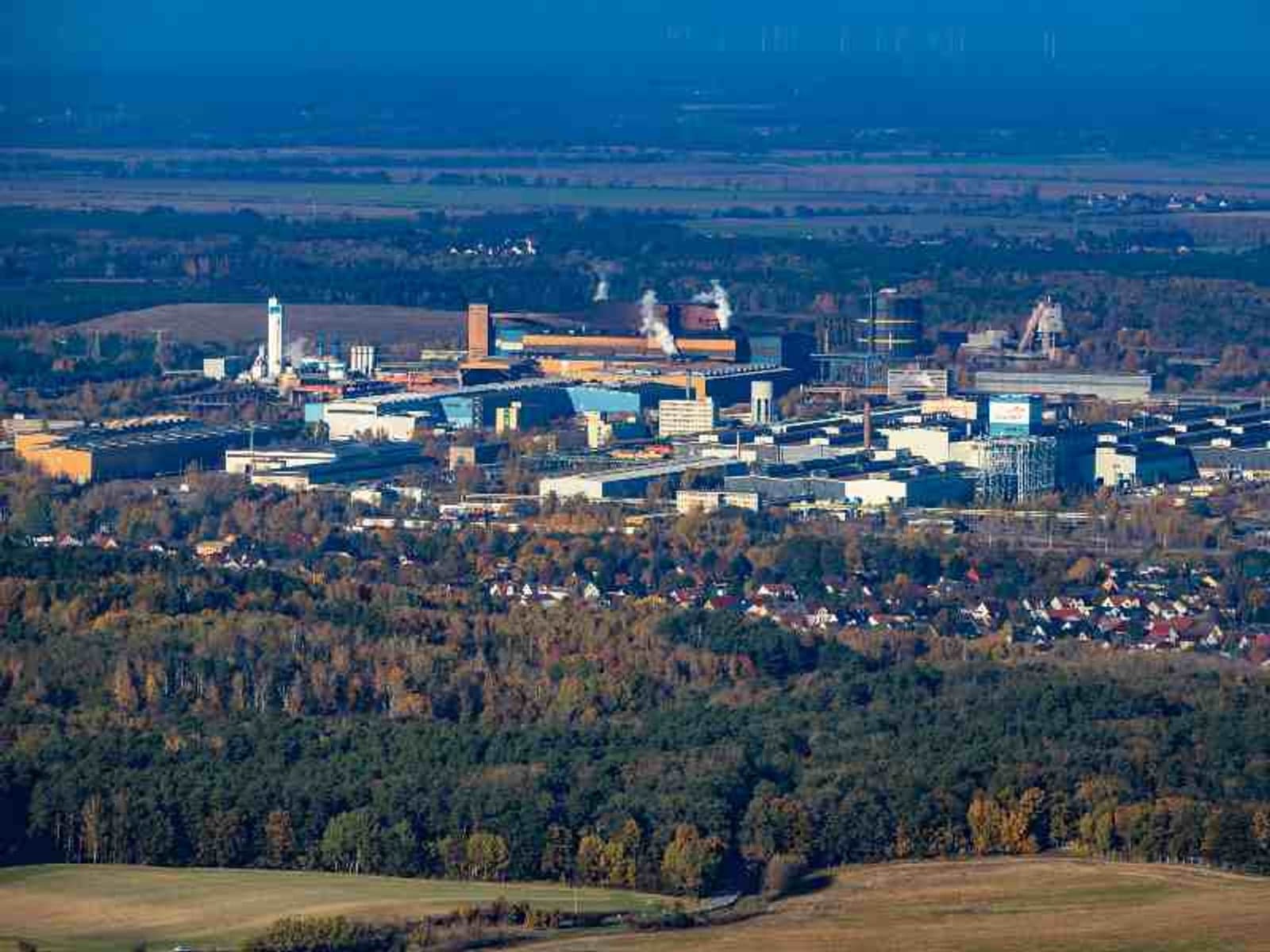
ArcelorMittal Europe has announced that it is cancelling decarbonisation plans at its steelmaking sites in Bremen and Eisenhüttenstadt, Germany.
ArcelorMittal had already stated in November 2024 that it was unable to take final investment decisions on new Directly Reduced Iron (DRI) and Electric Arc Furnace (EAF) assets in Europe, due to unfavourable policy, energy and market environments.
In order to execute the decarbonisation plan in Bremen and Eisenhüttenstadt, the steel manufacturing giant had secured a contract with the German Federal government for €1.3 billion ($1.5 billion) in financial assistance. However, to access the funding, construction on the DRI-EAF project needed to begin by June 2025.
ArcelorMittal Germany has therefore had to formally notify the government that it cannot proceed with these investments, due to current market and economic condistions associated with low-carbon emissions steelmaking.
The next step in Bremen and Eisenhüttenstadt will focus on detailed planning for the construction of electric arc furnaces, to be ready for when a stronger business case is present.
Have you read?
Lack of base load and grid connection key risks to EU’s industrial decarbonisation
ARENA announces funding for lower-emissions steel pilot in Australia
Commenting on the announcement, Geert van Poelvoorde, CEO of ArcelorMittal Europe, said: “We appreciate the financing offered by the Federal government of Germany and the state of Bremen as well as the support of the state of Brandenburg for this project. But even with the financial support, the business case for moving ahead with this transformation is not strong enough, which shows the scale of the challenge."
Van Poelvoorde emphasised the influence of high levels of imports and the pressure this is exerting on Germany's steel sector.
“The most important priority right now is to ensure that there is a vibrant level of steel demand in Europe that is accessible to European steel producers. The high levels of imports are a major concern – we need imports for flat products to be limited to 15% - which means a reduction of around 50% compared with what we are seeing today.
"Once that is achieved, the industry will be in a much stronger position to be able to progress with decarbonization investments,” concluded Van Poelvoorde.
Besides the levels of imports, ArcelorMittal also cites the slow progress of the green hydrogen sector as a factor, stating that green hydrogen is not yet a viable fuel source and natural gas-based DRI production is not competitive as an interim solution.
Energy Transitions podcast: Bringing industrial flexibility to market
Also, the price of electricity is a big influence in using EAFs. According to ArcelorMittal, the current electricity prices in Germany are high compared with countries in Europe and abroad.
For this reason, ArcelorMittal announced its intention to build the next EAF in Dunkirk, France.
The company stressed the need for countries to provide visibility and certainty on low-cost electricity in order for these projects to be financially viable.
The company stated in a release that while it remains committed to decarbonise its assets, "it is increasingly unlikely to achieve its 2030 carbon emissions intensity target".
The decision has raised concerns in the sector, with one voice in particular, the German metal union IG Metall, strongly condemning the announcement.
Jürgen Kerner, second chairman of IG Metall and member of the union's executive board responsible for the steel industry, commented in a statement: "This decision is strategically short-sighted, wrong from a business perspective, and extremely irresponsible with regard to both the employees and the consequences for society as a whole..."
Kerner called on Germany's government to convene a crisis summit for the steel industry, saying: "It is unacceptable that France is creating facts through politically subsidised industrial energy, while Germany is laboriously searching for solutions that are consistent with European standards. Steel must also become a top priority for us."