Bio materials reducing building energy demand by up to 20%
Guest/partner contributor
Posted on: 21 July 2026
The BIOBUILD project is developing fully bio-based materials that aim to increase energy efficiency in buildings, writes Nouhaila Bouhout.
Buildings are responsible for a significant share of Europe’s energy consumption, with heating and cooling remaining among the largest drivers of demand.
As Europe accelerates efforts to decarbonise its building stock, improving energy efficiency is no longer only about smarter technologies or renewable energy systems, it is also about the materials buildings are made from.
BIOBUILD is addressing this challenge through a new generation of fully bio-based construction materials designed to improve thermal performance while reducing dependence on fossil-based components.
The Horizon Europe project is developing lightweight bio-composite materials composed of more than 95% sustainable and bio-based compounds. At the centre of the BIOBUILD concept is the integration of bio-phase change materials (bioPCMs) into innovative wallboards and parquet flooring systems.
Combined with bio-based binders derived from plant oils, lignin and fungal mycelium, these materials are designed to absorb, store and release thermal energy. The result is improved indoor temperature regulation, lower reliance on active heating and cooling systems, and reduced energy demand across the building lifecycle.
Turning thermal storage into building material
Thermal energy storage is becoming increasingly important in Europe’s energy transition, particularly as buildings are expected to become more energy efficient, flexible and climate-resilient.
BIOBUILD approaches this challenge directly through material innovation.
Phase change materials can store and release large amounts of thermal energy during temperature changes. BIOBUILD uses bio-based phase change materials derived from renewable sources and integrates them into wood-based construction materials to enhance the thermal mass of buildings.
When indoor temperatures rise, the bioPCMs absorb and store excess heat. When temperatures fall, the stored energy is released back into the indoor environment. This passive thermal regulation helps stabilise indoor conditions and reduce fluctuations that typically increase heating and cooling demand.
Instead of relying solely on mechanical systems to maintain comfort, buildings can begin to regulate part of their thermal behaviour through the materials embedded in their walls and floors.
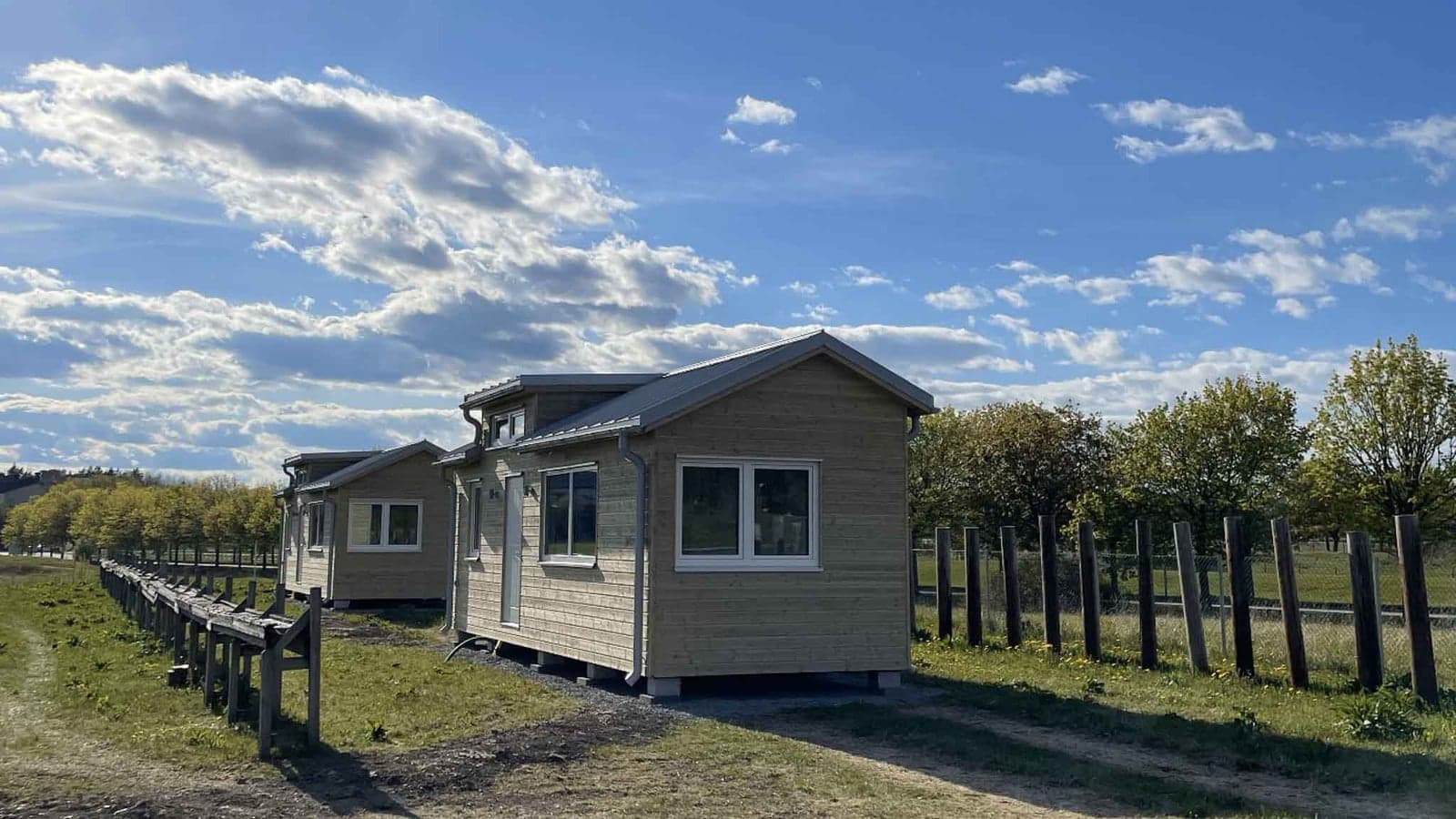
One of the latest developments within the project is the preparation of PCM-impregnated wooden lamellae for parquet flooring systems, which will be demonstrated in prototype houses in Sweden and Spain.
Building with circular, bio-based materials
BIOBUILD is not only focused on improving energy performance. The project also responds to growing pressure on the construction sector to reduce embodied carbon and improve circularity.
Traditional construction materials often rely on fossil-derived components and energy-intensive manufacturing processes. BIOBUILD is replacing these with renewable, non-toxic and recyclable alternatives designed for long-term sustainability and recyclability.
The project is developing three different bio-based binders using plant oil resins, lignin and fungal mycelium.
Together with recycled wood fibres and particles, these materials form lightweight bio-composites that combine structural functionality with thermal performance.
Importantly, BIOBUILD is also evaluating the environmental impact of its solutions through ex-ante life cycle assessment methodologies. This ensures that energy efficiency gains are considered alongside recyclability, durability and lifecycle sustainability.
From laboratory innovation to real buildings
A recurring challenge in sustainable construction is moving innovation beyond laboratory scale. Recent BIOBUILD stakeholder discussions on circular and energy efficient construction also highlighted the importance of industrial readiness, certification pathways and market adoption for bio-based materials.
BIOBUILD is addressing this through real-world demonstration and industrial validation. The project will design and construct four prototype wooden houses in Sweden and Spain to evaluate the energy saving performance of integrated wallboards and parquet systems under real operating conditions.
This demonstration phase is critical because it moves the conversation from theoretical performance to measurable impact.
It also reflects a broader shift happening across the energy and construction sectors: buildings are no longer viewed simply as consumers of energy, but as active systems capable of storing, managing and optimising thermal performance.
By integrating thermal energy storage directly into bio-based construction materials, BIOBUILD contributes to this transition while supporting Europe’s broader goals around circularity, decarbonisation and energy efficiency.
Next generation of energy efficient materials
The construction sector faces increasing pressure to reduce emissions while improving resilience and energy performance. BIOBUILD demonstrates how advanced bio-based materials can support both objectives simultaneously.
By combining renewable binders, recycled wood-based materials and thermal energy storage technologies, the project is helping redefine what sustainable buildings can look like in practice.
More importantly, it shows that high-performance energy solutions do not need to rely on fossil-based materials to achieve scalability or real-world relevance.
As prototype demonstrations move forward in Sweden and Spain, BIOBUILD is contributing to a future where building materials themselves become part of the energy solution.
About the author
Nouhaila Bouhout is Head of Communication and Dissemination at RTDS Group, leading outreach and engagement across Horizon Europe projects, including BIOBUILD. She specialises in translating complex Horizon Europe research into accessible, high impact storytelling and stakeholder engagement initiatives across the fields of sustainability, energy and innovation.