Citizens Energy Package is an enabler for public engagement
Guest/partner contributor
Posted on: 14 April 2026
Four young energy ambassadors show how one stop shops and interoperability could make citizen engagement mechanisms more effective.

Across the EU, households still struggle to engage in energy markets. Awareness of tangible gains is low and trust in safeguards from extractive corporations is limited.
Although credible mechanisms exist, their implementation remains complex, uneven and inaccessible.
The Citizens Energy Package, building on the Clean Energy Package and the 2025 Action Plan for Affordable Energy, aims to empower consumers and enable energy sharing.
Our contribution to the public consultation as young energy ambassadors focused on practical delivery, through such solutions as development of targeted one stop shops, recognition of youth/renters as a vulnerable group, creation of audience-specific outreach and improvements to two key levers for citizen participation in energy markets: energy communities and community benefit clauses.
In this article, we focus on the latter two.
Energy communities
Despite clear EU direction for energy community initiatives, barriers persist: energy community definition and implementation differs widely across member states; low awareness; perceived high effort from practitioners involved in the energy community creation process; complex bureaucratic set-up and operations; limited benefits for students, young workers and low-income renters; costly, non-interoperable metering/platforms; and risks of capture by large market actors.
To make energy communities easier to start, join and manage, we propose a set of complementary solutions that address both organisational and technical barriers.
Primarily, energy community-focused one-stop shops would act as single entry hubs where citizens, small and medium-sized enterprises (SMEs) and local authorities can access ready-to-use documentation (statutes, by-laws and communication templates), energy sharing evaluations and clear guidance on data management and regulatory steps, as well as information on how to make their homes more energy efficient.
Moreover, young people, especially those renting apartments as students or early career professionals, should receive formal recognition as a vulnerable group within national social frameworks. This would enable them to access dedicated benefits and support schemes, like other vulnerable groups, helping to remove structural barriers to their participation and ensuring that energy communities become an inclusive, rather than niche, option.
Then, a dedicated civil service track for energy communities would also enable young professionals to gain first hand experience while supporting communities with day-to-day management and citizen engagement activities that are otherwise costly if fully outsourced to external experts.
Building on emerging examples from France and Italy, these hubs would also connect communities to grants, soft loans and local financial partners, making investment more accessible and de-risking early-stage initiatives.
Finally, to simplify participation from a technical and bureaucratic point of view, we propose a renewable energy system identifier (RES-ID) as a standardised and recognised technical and administrative data set that citizens and SMEs can fill in once and then reuse across different national portals procedures, such as permit applications, grid connection requests, energy community affiliation and incentive schemes request.
Such a tool would store all the renewable energy system technical data required by different national authorities and retrieve them, when necessary, at each access point, similarly to the Italian SPID or Dutch DigID personal digital identity systems.
Energy community case studies
Sixteen municipalities set up an energy community, added ~650kW of photovoltaics on public buildings and made accessible national grants (up to 40% of the initial investment) for residents and small firms. A youth team is taking it forward organising a buying club for building energy retrofit.
Policy takeaway: Back clusters of neighbouring municipalities building from existing energy information points, keep supporting public building solar installation as a 'lead by example' lever and encourage young professionals to actively engage with local communities via dedicated support grants, civil service specific paths and learning opportunities.
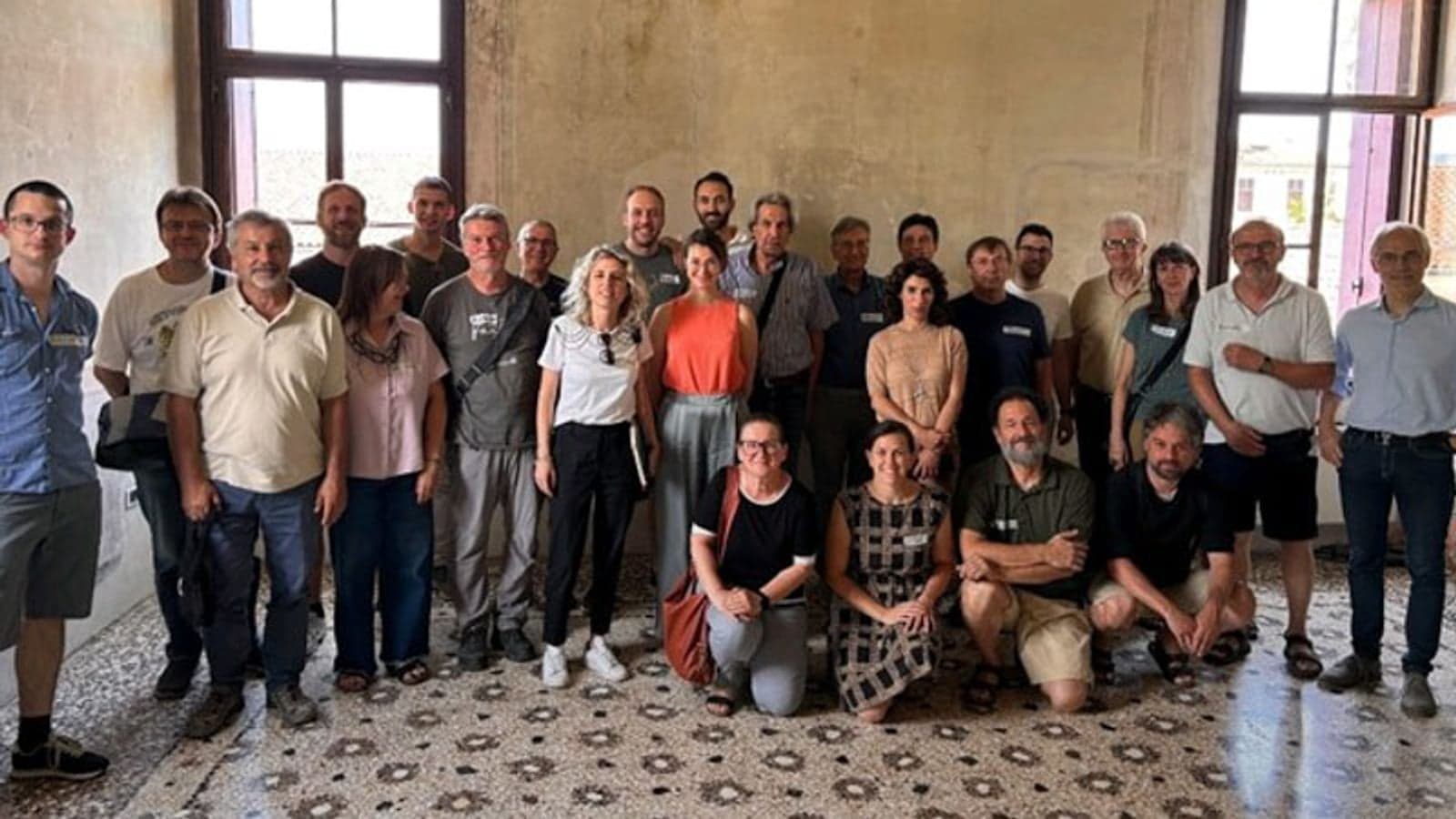
Hyperion energy community, Athens (Greece)
The Hyperion energy community, founded in 2020 and mainly composed of families and NGOs, aims to evolve into an ESCO to support the renovation of apartments in multi-unit residential buildings. The project operates in several neighbourhoods of the capital, aiming to ensure gender balance and representation of diverse social groups among its 123 members.
Policy takeaway: Use the citizen energy community regulatory framework to create new, citizen-led business structures (ESCOs) to accelerate urban energy renovation in multi-unit buildings, ensuring broad social representation.
Energie Samen Rivierenland (The Netherlands)
The neighbourhood association in Rivierenland, founded in 1936 and citizen-led, is revitalizing its dated housing stock (60% built before 1950) through a co-design process for interventions. The project covers 133 dwellings, with a specific focus on energy poverty and elderly residents.
Policy takeaway: Leverage existing neighbourhood associations with a long history of community trust to promote the co-design of renovation interventions, focusing specifically on the most vulnerable groups.
A network of one-stop shops dedicated to renewable energy communities is run by public local energy agencies backed by the Environmental Ministry. It covers the whole national territory with at least one one stop shop per region, aligned with the energy performance in building directive. Each agency supports energy communities via dedicated services that span from information to grants application, feasibility studies and members engagement campaigns.
Policy takeaway: Support cluster organisations of public led one stop shops to offer a structured and homogeneous technical assistance approach across Europe.
Community benefit clauses
While energy communities are a promising and innovative concept with clear environmental benefits, they don’t always address the social equity concerns from renewable energy projects, such as externalised siting costs. This is why the introduction of benefit sharing mechanisms, such as community funds and shared equity ownership is also building momentum among member states.
Still, progress is uneven: many schemes are complex, opaque and engage residents too late; youth, renters and other under-represented groups are barely reached; participation stays low, and legitimacy suffers.
We argue that a just transition must go beyond compensation to create shared community value, especially where skills and alternative jobs are scarce.
To make renewable energy projects fairer and more inclusive, national governments can set out simple rules to ensure that local communities share in the benefits. For example, benefit criteria can be built directly into auction schemes, with clear guidance on eligible uses such as local energy relief or community facilities. A one stop shop can then help communities check who qualifies, access funds or compensation, and connect to training or re-skilling opportunities.
Furthermore, governments could develop risk sharing models that make it easier for low income households to take part in projects without bearing financial losses.
Finally, targeted communication through youth groups, schools, community centres and local media can raise awareness, using an EU-adapted model that considers both income and housing conditions.
Community benefit case studies
We once again explored two national models in detail to see what fair community value-sharing can look like.
Every supported project pays €2/MWh into a local community benefit fund and appears on a national SEAI register with guidance on eligible uses – from energy poverty relief to community facilities. There’s also a community-led auction lane for locally developed projects.
Policy takeaway: Set a fixed €/MWh payment into a local fund, keep a public register and simple annual reporting, and retain a community-led track so locals can lead and access the value.
This study goes further by pairing money with ownership and protection. Developers of new onshore wind must offer 20% local shares (within 4.5km) on equal terms, compensate any loss of property value and pay into a green scheme for local amenities.
Policy takeaway: Make a package – local shares, property compensation and a community fund – to align incentives and build durable acceptance.
Why all of this matters – a call to action
Coupling energy communities and community benefit mechanisms with functional one-stop shops, RES-ID, interoperability and guardrails among other improvements builds trust, accelerates their deployment, improves affordability and broadens participation – especially for youth, renters and other vulnerable groups.
As the EU’s modern citizen energy participation transitions from a consultation phase, equitable codification of mechanisms must follow: targeted one-stop shops must be scaled, trusted tools must be standardised, mainstream risk sharing principles must be integrated and community-benefits must provide tangible value beyond mere compensation.
The European Commission already provides a foundation for this through tools such as the energy communities facility and the citizen-led renovation initiative, which help local actors access guidance, finance and capacity-building. In parallel, EU-wide networks like REScoop.eu support renewable energy cooperatives and peer learning across member states.
Building on and scaling these efforts will be essential to ensure our future citizens become genuine partners in Europe’s renewable energy build-out.
This opinion editorial is produced in co-operation with the European Sustainable Energy Week 2026.
Recommended links
- Directive (EU) 2019/944 on electricity market rules.
- Action Plan for Affordable Energy.
- Directive (EU) 2023/2413 on the promotion of the use of energy from renewable sources (recast).
- Electricity Market Design – OJ L 2024/1711.
About the authors
Niklavs Tamanis is a private markets ESG strategy advisor with 5+ years’ experience in ESG-linked risk mitigation, renewable energy procurement, ESG capital allocation, fund stewardship and long term portfolio-wide EBITDA value creation programmes. His expertise spans value creation for PE-backed assets, investor-level ESG engagement, EU policy advocacy and emissions quantification across scopes 1-3.
Veronica Saletti is a Senior Associate with Boston Consulting Group. Her experience includes review of a European multi-utility operating and organisational model, business plan analysis and definition, model design for mandatory natural disaster risk coverage and utility CCS competitiveness assessment.
Marco Costas is an energy engineer and sustainable energy enthusiast with a civic mindset. His current role is head of renewable energy communities and one stop shops with the Italian Agency for Energy and Sustainable Development where he coordinates energy community and renewable energy projects in the public sector.
Marina Fernández-Campoamor is a team lead in data and AI in energy networks at E.ON Digital Technology, driving digital innovation in grid modernisation. She holds a master's in industrial engineering from UPM and TUM, and an honours degree in technology management from CDTM in Munich.
Related tags
Latest content
+4
The moonshot moment for energy communities: Expectations from the citizens energy package
Without being legally binding, will the European Commission's citizens energy package live up to expectations, ask Chris Vrettos and Sara Tachelet from EUSEW partner organisation REScoop?
- Guest/partner contributor
- 03/04/2026