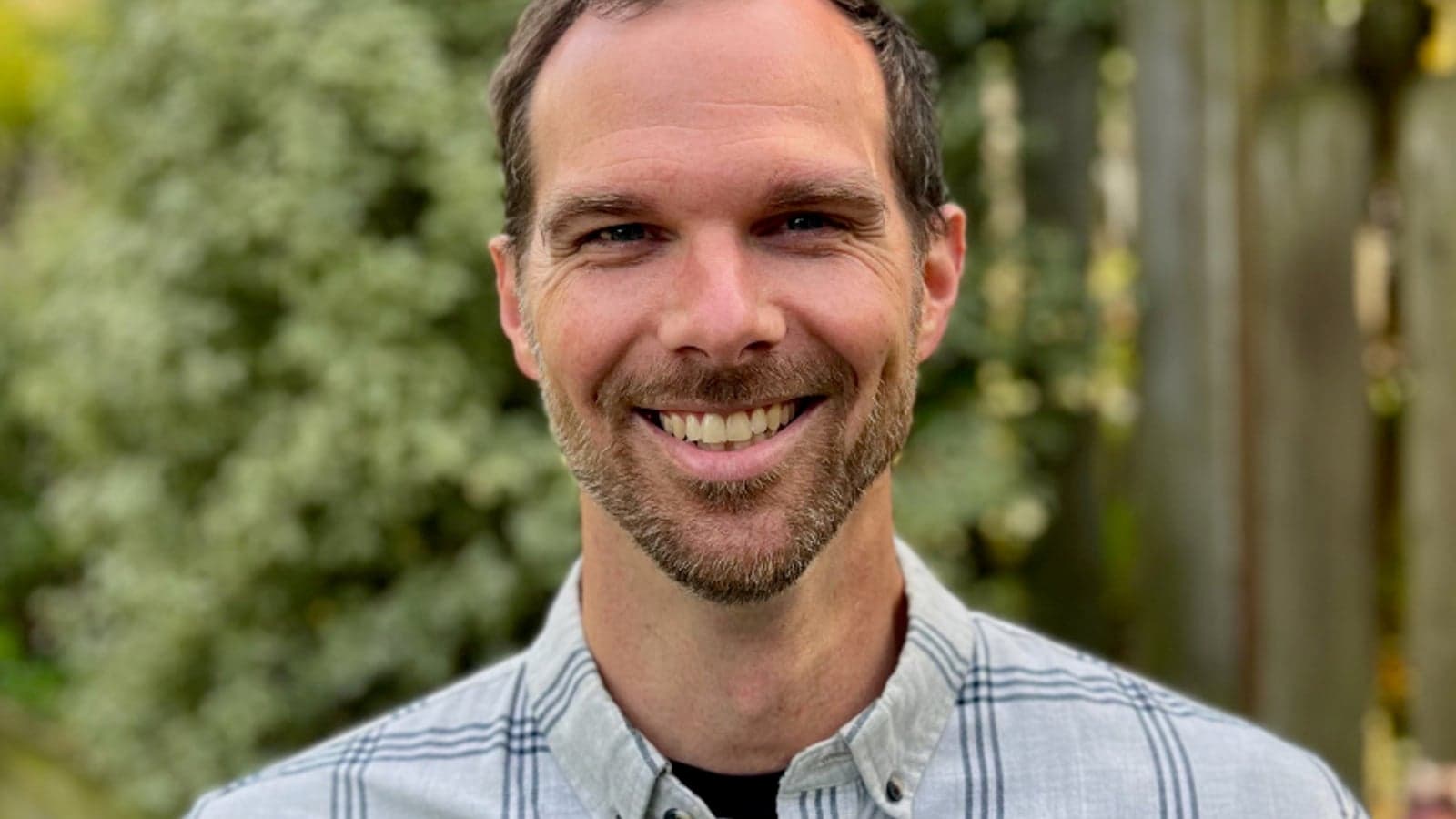
Clock is ticking for Europe to close climate gap says VisNet’s De Vivo
Enlit Editorial Team
Posted on: 28 November 2025
Europe has climate frameworks and targets but not the execution. Michael De Vivo outlines the regulatory, digital and workforce shifts needed to accelerate progress by 2030.

Europe has the ambition to decarbonise and electrify, but delivery is lagging. Michael De Vivo, Head of Europe from VisNet from EA Technology explains how smarter grids, modern regulation, and a digitally skilled workforce can turn targets into reality by 2030.
How does the European energy sector turn shared ambition into collaborative action?
The direction and ambitions are clear: Europe has set targets to decarbonise its economy, electrify key sectors and increase energy resilience.
Frameworks like Fit-for-55, REPowerEU, or the updated NECPs have aligned Member States around shared objectives. Yet the real challenge lies in execution… and the gap between ambition and delivery is widening.
Collaboration is emerging: Eurelectric, the EU DSO Entity and ENTSO-E are fostering cross-border dialogue; Horizon Europe projects are linking DSOs and technology partners; and regional trials are starting to share data and practices that can accelerate impact. But these examples remain the exception, not the rule.
We need faster permitting, interoperable standards, adaptive regulatory frameworks, and more pragmatic cooperation between policymakers, DSOs and innovators. The sector must invest over €67 billion a year in EU grids – but without a great supply chain management and coordinated planning and quicker implementation, that money won’t translate into real resilience or large-scale decarbonisation.
At VisNet from EA Technology, we’ve chosen to act. Connect Europe brings DSOs together to learn from each other’s successes and failures, while a new EU initiative - EURO LENS - will focus on grid condition monitoring at the LV level. In the end, collaboration is the only path to deliver Europe’s energy transition at the pace the climate crisis demands.
What does Europe need to do to deliver competitive, resilient energy by 2030?
It starts with scaling grids – but not just through volume, through intelligence. As already mentioned, Europe needs to invest over €67 billion annually in electricity grids to meet long term targets. But according to Eurelectric and EY, this figure could be reduced by 18% to €55 billion if we deploy anticipatory investments, embed digitalisation and embrace flexible grid solutions from day one.
The critical bottleneck? It’s regulation. Europe must modernise its regulatory model to match the complexity and urgency of the energy transition. We need frameworks that support both capex and opex, enables anticipatory investments before constraints hit, and links operator remuneration to measurable outcomes like LCT connection times, resilience, or customer service.
Procurement and permitting timelines must also be overhauled. Today, new infrastructure can take up to 10 years to move from proposal to commissioning. That’s incompatible with 2030-2050 targets. We need time-limited procedures and performance-driven procurement mechanisms.
Resilience, flexibility and competitiveness aren’t separate goals. They’re outcomes of smarter planning, adaptive regulation and faster delivery.
It’s 2030: what does Europe’s energy mix look like?
By 2030, Europe’s energy mix is dominated by renewables, with solar and wind accounting for the lion’s share of new generation capacity. Solar continues to outpace other sources due to low cost and rapid deployment, while wind grows more steadily amid permitting challenges.
Fossil fuels are still present but marginal, largely relegated to flexibility and security roles. Gas and coal plants are increasingly seen as back-up capacity rather than baseload contributors.
Electricity has become the continent’s primary energy carrier, accounting for more than one third of final energy use, up from 23% in 2024. This reflects deep electrification in transport, heating, and industry, supported by rising uptake of EVs, heat pumps and clean industrial processes.
This mix will only work if Europe’s grids are ready. Without sufficient investment in capacity, flexibility, and digitalisation, renewables risk being underutilised or curtailed. The energy mix of 2030 may look green on paper, but its real impact depends on how intelligently we’ve built the system to use it.
The energy mix of 2030 may look green on paper, but its real impact depends on how intelligently we’ve built the system to use it.
Is there another industry vertical which has vital lessons for the energy sector?
Several. The water sector offers a particularly relevant example: it’s transitioning from large, capex-heavy infrastructure projects to smarter, digital-first solutions using sensors and software to improve compliance, resilience and efficiency. Energy can take note: not every challenge needs concrete and copper – sometimes, insight is the smarter investment.
Data centres are another source of inspiration. These are global-scale infrastructures that rely on predictive analytics, real-time monitoring, and remote management to deliver ultra-high reliability. That mindset – infrastructure as a managed, data-driven service – is exactly where energy networks, particularly at LV level, need to go.
And then there’s telecoms. This industry cracked the code on distributed intelligence, interoperability and ecosystem innovation decades ago. DSOs can learn a lot from how telecoms layered their systems, separating physical infrastructure from services and enabling innovation at the edge without losing control at the core.
Each of these sectors shows that openness, digitisation and decentralisation aren’t threats but the foundations for resilience, flexibility and future growth.
COP30: are you optimistic or pessimistic about the outcomes?
I'm by nature optimistic, but in this particular case, I'm cautiously pessimistic. After nearly 30 COPs, we’ve seen a pattern: big ambitions, long timelines and vague language. Yes, there have been meaningful steps - COP28 finally acknowledged the need to transition away from fossil fuels; COP29 agreed on a $300 billion annual climate finance goal by 2035; and Article 6 carbon market rules were finalised (even if after years of delays). But these wins often come with caveats: non-binding wording, targets pushed a decade out, or unclear implementation paths.
What’s missing is the how. We've had enough of the what. If COP30 is to make a true impact, it must go beyond statements. We need binding commitments on permitting reform, enforceable investment signals for grids, and practical tools that help regulators and operators deliver on climate goals - not just talk about them.
Optimism is still on the table, but only if we make delivery as serious as declarations.
What is the biggest workforce issue for the energy transition? Recruiting? Reskilling? Retention? Something else?
As a global leader in power engineering education, it gives us a unique lens to see that, it’s all of the above - but the most urgent bottleneck is recruiting digital and data-skilled talent. As DSOs evolve into data-driven, software-enabled operators, their ability to attract and integrate digital expertise has not kept pace. According to the International Energy Agency, 89% of energy companies identify skills gaps as the main challenge to digital technology adoption - yet many aren't actively seeking digital talent or adapting their recruitment models.
DSOs are now competing with tech firms, mobility startups, and telecoms for the same skillsets - data science, machine learning, systems integration - but without the same salary flexibility or brand magnetism. The challenge isn’t just attracting talent, it’s reshaping the perception of what a ‘grid operator’ even does.
At the same time, legacy workforce challenges persist. A significant portion of the field and operations workforce is nearing retirement. Reskilling is underway, but often lags behind the pace of change. In the EY Future of Energy 2023, it was reported that “workforce capacity constraints are materialising” due to an ageing talent base and a shortage of qualified replacements.
To close this gap, we need a sector-wide push: modern training alliances, tech-industry partnerships, and stronger messaging that grid modernisation it’s data, digital, and transformation at scale.
The critical bottleneck? It’s regulation. Europe must modernise its regulatory model to match the complexity and urgency of the energy transition.
Is the energy sector making the most of the current AI tech?
Not yet - and definitely not at DSO level. While the energy sector talks a lot about AI, very few regulated network operators are seeing operational impact today. If anything, AI is more present in open-market use cases - energy trading, price forecasting, and customer analytics - than in the day-to-day running of electricity grids.
For most DSOs, priorities today are more foundational: cybersecurity, systems architecture, and data strategy. There’s a legitimate concern that opening up to AI too quickly - before building the right governance and safeguards - could introduce risk, not value. And there's also a cultural factor: DSOs are by nature control-oriented, and the idea of letting algorithms make or suggest operational decisions challenges that mindset.
That said, the long-term picture is clear. AI will absolutely sit at the heart of grid operations by 2040 or 2050 - driving predictive maintenance, flexibility dispatch, real-time monitoring, and customer-facing services. But to get there, the sector needs a step-by-step transition, not a leap.
So no, we’re not making the most of AI today. But we’re starting to prepare for the moment when we can.
How do you see the role of AI supporting/enabling your organisation's CX strategy?
Like all businesses, we are adapting to and embracing the use of AI where it adds value to our offerings to customers. Our key sector of DSOs is always looking to innovate and using AI is no exception. Whether it is through better customer service; streamlining customer journeys through automating simple tasks and offering them tailored approaches to how to get connected to the network or to understand the performance of the network in certain areas or regions, AI can help with all of this.
What sustainability practice in your organisation are you most proud of? And how have you reduced your personal carbon footprint?
EA Technology is proud to be independently audited on its approach to sustainability which enables us to create a set of milestones for improvement. For example we have recently extended our carbon reporting to include all Scope 3 emissions. This holistic view of our footprint has enabled us to reprioritise the areas where we can make the most impactful interventions. I’m also proud when I get the opportunity to take customers around our Chester headquarters and show them the solar PV, battery storage, and 10 EV charging points for staff and customers.
You might be interested in: Network automation technology and its role in the EU's net zero transition
Current frameworks penalise anticipatory investment, fail to reward measurable performance, and still treat digitalisation as a nice-to-have rather than a core enabler of a resilient, flexible grid.
What are the biggest challenges facing energy leaders today?
Three stand out: underinvestment, regulatory inertia and the workforce gap - all unfolding in parallel, and all interconnected.
Grid investment remains far below what the transition requires. Europe needs around €67 billion annually through 2050 just to match electrification needs – yet even well-funded DSOs hold back as regulation stays backward-looking and cost-fixated. Current frameworks penalise anticipatory investment, fail to reward measurable performance, and still treat digitalisation as a nice-to-have rather than a core enabler of a resilient, flexible grid.
Then there’s people. DSOs need to recruit and train thousands of engineers and data specialists - but the talent pool is thin, and the transition from asset-heavy to data-driven operations is a truly cultural shift. And culture takes time. You can’t ‘announce’ a transformation and make it real in 12 months.
Standardisation is another brake. The lack of common protocols across DSOs slows everything from vendor integration to scalability. And unlike competitive sectors, most DSOs operate in regulated markets with weak innovation incentives.
Add to that the short-termism of political cycles, and you get a system where long-term targets are praised, but rarely enabled.
How did your industry experts address these challenges at Enlit Europe?
At Enlit, we presented a real-world success story from the UK - a market where regulation has encouraged DSOs to digitise earlier, and where tangible benefits are already visible: faster connection processes, better visibility on the LV network, and proactive asset management. We demonstrated how VisNet supports this shift and how those same tools are now being adapted to European realities.
But our focus isn’t just technology, but it’s also people. The real transition happens when DSO teams take ownership of digital tools that speak their operational language. We showed how we enable that, and why tech adoption is also a powerful way to attract new talent. The more digital a DSO becomes, the more appealing it is to a new generation of engineers and analysts.
Ultimately, if politics remains stuck in ambition and messaging, we came to Enlit to focus on delivery. Because the question isn’t whether the energy transition should happen, but how and at what speed.
If you had a magic wand what is one thing you would implement today?
I’d replace today’s regulation with one simple rule: reward DSOs for what they deliver, not how little they spend.
Imagine a world where every DSO - anywhere in the world - operated under a performance-based framework, with the freedom to manage a TOTEX envelope and invest ahead of the curve. No more financial handcuffs, no more waiting for demand to explode before acting. Just clear targets - resilience, speed of connection, capacity unlocked - and the tools to go and deliver.
It’s not utopia. It’s what competitive industries already do. But in energy, we still treat anticipation as a risk, and efficiency as something you prove with last year’s costs.
This one change would unleash innovation, attract talent, and turn the energy transition from an ambition into a reality - faster, smarter, and fairer.
Related tags
Latest content
+3
Open source: The key to utility digital sovereignty
Open source collaboration is not merely a technological choice for the energy sector but a strategic imperative for navigating the complexities of today and tomorrow, writes Alex Thornton, Executive Director, Linux Foundation Energy.
- Guest/partner contributor
- 29/05/2025