COP28 President says climate fight is lost without major CCS investment
Kelvin Ross
Posted on: 29 March 2023
Dr Sultan bin Ahmed Al Jaber of UAE says carbon capture is only viable solution to decarbonise hard-to-abate industries
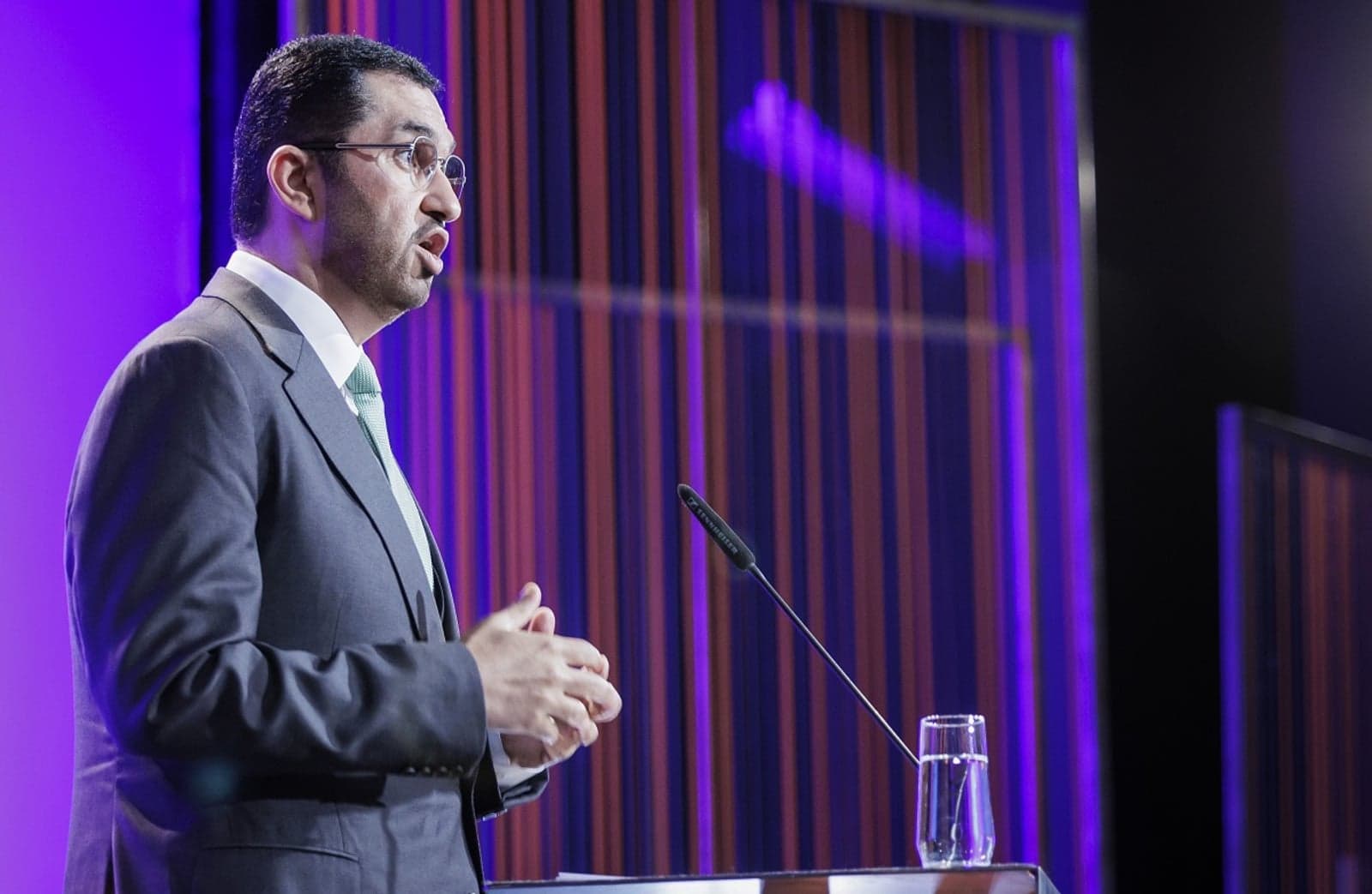
Dr Sultan bin Ahmed Al Jaber of UAE says carbon capture is only viable solution to decarbonise hard-to-abate industries. French Energy Transition Minister is less convinced
The President-Designate of COP28 has called for a global push involving major investment into carbon capture and storage.
Without it, says Dr Sultan bin Ahmed Al Jaber, the global goal of limiting emissions to 1.5 degrees will truly be a lost cause and the whole worldwide energy transition will be slower.
Speaking at the Berlin Energy Transition Dialogue this morning, Al Jabar said the IPCC report “sent a clear message that the world is losing the race to 1.5 degrees”.
He said “we have a small window of opportunity” to get back into the race and added that it will not be a “one-size-fits-all solution”.
“It’s not nuclear, or hydrogen or renewables – it’s all of the above.”
But he stressed that no matter how fast the roll out of renewables is accelerating – and it is showing no sign of slowing pace – it won’t be the answer to some hard-to-decarbonise sectors.
More from Berlin Energy Transition Dialogue
German minister Habeck says ‘gloves will be off’ for share of green economy
‘The door to a new sustainable era of renewables is wide open’ says climate envoy Morgan
Germany has ‘paid for cheap Russian gas with our energy security’ says Baerbock
“There are more than 5000 steel, cement and aluminium plants in the world… and they cannot run on wind and solar. And the hydrogen value chain is still in its infancy.
“So we need proven technology like carbon capture and storage.”
Al Jabar said that CCS has been deliberately overlooked in the past decade because of its associated costs, but he added that there was no viable alternative to cutting industrial carbon emissions.
He said “there is nowhere near enough carbon capture now – we need to multiply it 30 times”.
And this, he added, would require incentives from governments and private investment.
Read now: Exclusive - Carbon capture: Big cost, big reward
"Carbon capture can become a true bridge in the energy transition. Carbon emissions are an industrial-sized problem that require an industrial-sized solution.
“We need to re-imagine the relationship between heavy emitters and the finance community.”
French Energy Transition Minister Agnès Pannier-Runacher is less convinced that CCS is a silver bullet to decarbonise industry.
In an interview today at the Berlin Energy Transition Dialogue, she told me: “Any technology that will lead to lower-carbon fossil fuels in our mix is good to investigate. I’m not the kind of person who would say ‘this is not acceptable’.”
However, she adds that “we need to be cautious”.
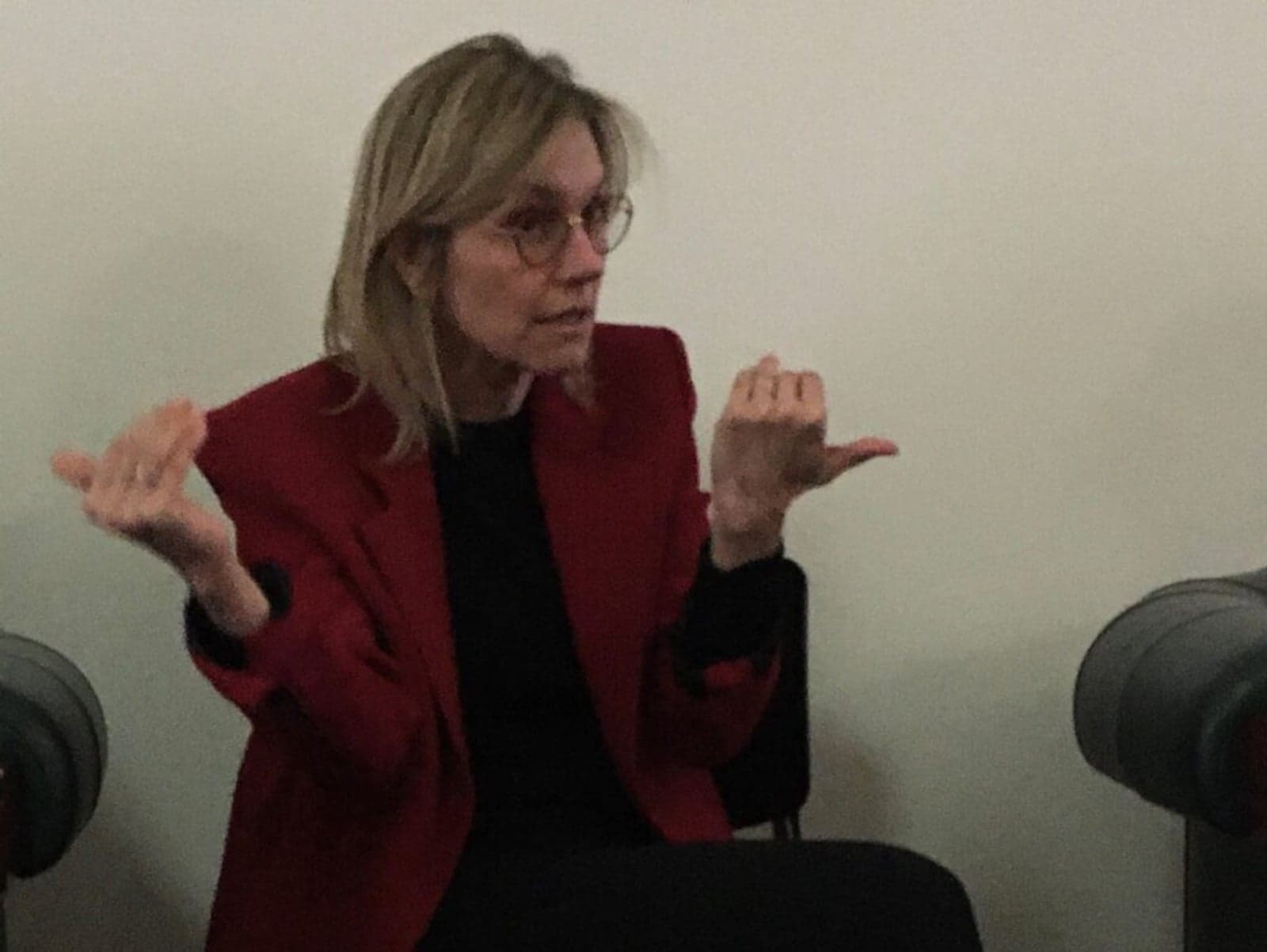
“We need to ensure that the standards and the effects of CCS are exactly the ones that we need: that is, that we have less CO2 afterwards than we had before.”
Which is not to say that France is not looking at carbon capture technologies. “We are working on a roadmap,” she says, adding that France is talking to energy sector players plus government in Norway, “because they seem to be quite ahead, and we have contact with the UK government to see how we can co-operate”.
“But what should lead the game is how many CO2 emissions can be removed.”
Al Jabar helped to found Abu Dhabi-headquartered clean energy company Masdar in 2006 and was its chief executive for seven years.
Have you read?
DOE backs project to scale solar thermal technology to produce cement
TotalEnergies bags two Danish carbon storage licenses
UK projects get £6m to decarbonise industry
He is now the UAE’s Special Envoy for Climate Change and also its minister for industry and advanced technology.
He left Masdar to become CEO of state-owned energy – and still predominantly oil – company ADNOC.
This has made his choice as COP28 President-Designate controversial, and not just because he is the first serving chief executive of a company to hold the role.
Many environmental groups fear the UAE will use its hosting of the COP as a smokescreen for its fossil fuel industries, however, others stress that the energy transition of the UAE – and Al Jabar’s Masdar-related renewable credentials – make him and the emirate ideal hosts.
This morning, Germany’s Federal Minister for Climate Action, Dr Robert Habeck, welcomed him to the stage in Berlin by stating: "Your résumé brings us into the narrative” of the energy transition.