Home
/
Critical service| contingency power and SMRs – making the connection in a fraught market
Critical service| contingency power and SMRs – making the connection in a fraught market
Guest/partner contributor
Posted on: 20 June 2023
Energy is the one form of international trade with the lowest tolerance for disruption| an idea proven several times over the last three years.
Energy is the one form of international trade with the lowest tolerance for disruption. It’s an idea that’s been proven several times over the last three years, write Wayne Prokop and Mark Leonard, business development directors at IMI Critical Engineering.
First, with the pandemic and the quick economic rebound that followed. Second, with the major upheaval precipitated by Russia’s invasion of Ukraine and the sanctions placed on its huge reserves of natural gas.

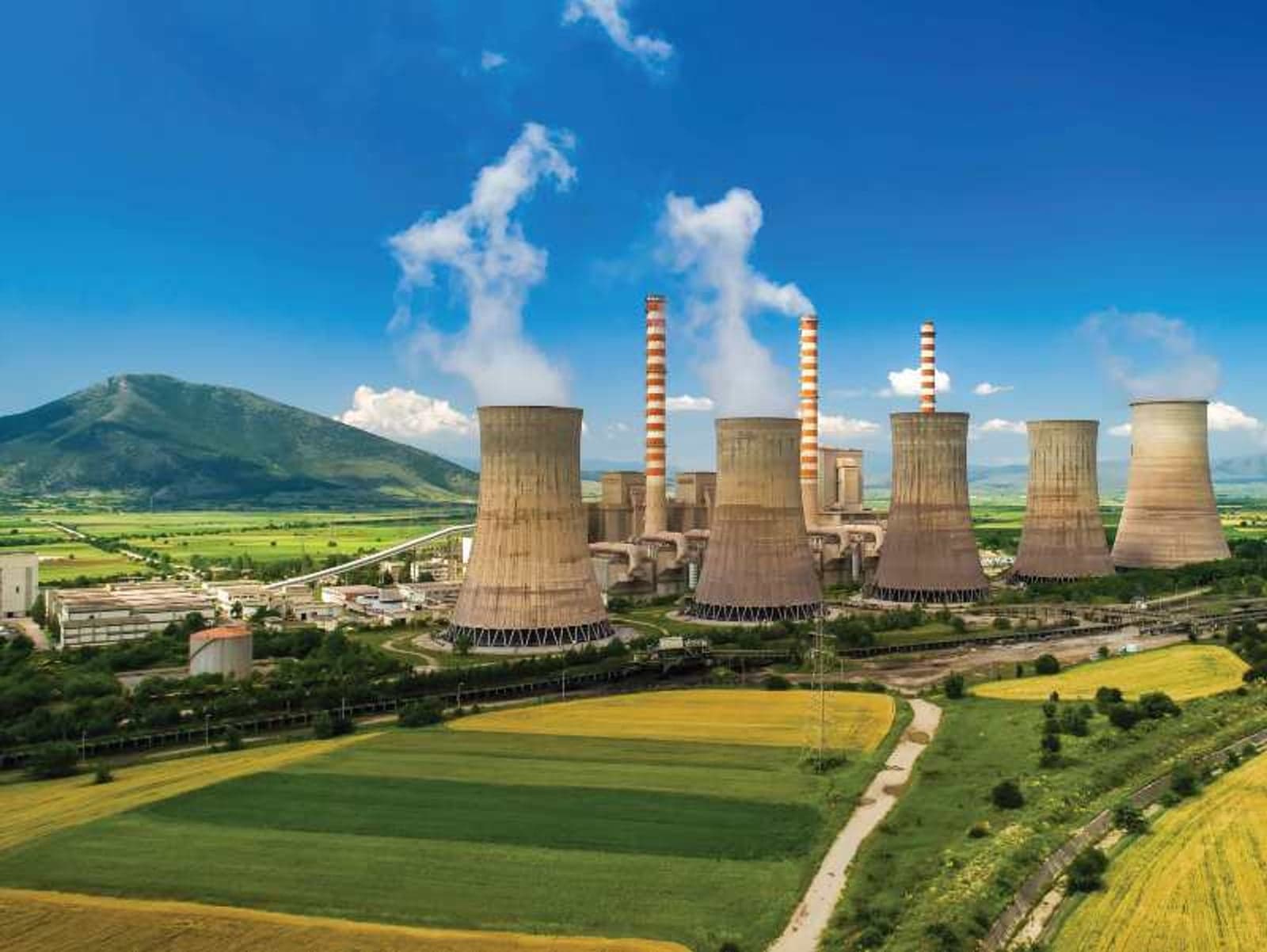
These events continue to have a profound impact. Prices are still volatile and many European nations have been forced to reconfigure supply lines to bolster their energy security. Part of this process has also involved the reintroduction of contingency coal power to meet peak demand during colder months, as well as the pausing or full reversal of planned shutdowns.
This strategy – covered by our colleague in Power Engineering International in May – has understandably raised concerns, with some questioning whether there are other technologies better suited to the challenge in a low-carbon era.
The Small Modular Reactor (SMR) are quickly emerging as a suitable successor. The timeline for this technology, however, is still misaligned with our immediate needs, emphasising the need for a more considered approach when firing up and eventually phasing out legacy assets.
Making good with what we have
Despite what some may claim, coal is not experiencing a renaissance. In the USA, for instance, coal’s share of domestic electricity generation dropped to a record low in the first quarter of 2023.
Most existing coal-fired power plants are now also more expensive to supply, run and maintain when compared to the ‘all-in’ costs of new wind or solar projects. Nevertheless, caution is needed as there is some way to go before coal is completely removed from the energy mix, especially when so many nations rely on it to offset the effects of an unpredictable energy market.
Beyond this, renewables are yet to overcome intermittency issues, even with the development and falling cost of energy storage solutions, so it’s reasonable to expect coal to remain a part of the energy mix in certain regions for some years.
If coal is expensive to use yet necessary to manage short-term peaks, greater focus must now be given to the infrastructure that supports it. Coal-based contingencies are only effective if plants are able to respond to real-time changes in demand. But this kind of rapid synchronisation is not associated with traditional plant design, and mismanagement of the process could end up creating more problems than it solves.
US-based NuScale Power sets sights on Asian SMR market
Similar issues are seen with gas-fired combined cycle power plants (CCPPs). The intermittency inherent in renewables is forcing many of today’s CCPPs to cycle more often, powering up and down to fill the gaps as grid demand changes. This is, in theory, a more sustainable way of generating power as stations are not left idling when conditions are favourable. But, as many plant managers are now finding, systems designed for regular 24-hour operation are exposed to greater operational stresses when having to stop and restart or fluctuate between loads of 50% and 100%.

Valve degradation and cracks in pressure boundaries are not uncommon in these operating scenarios, especially where water is injected into the steam flow to control temperature. Steam turbine bypass systems or interstage attemperators are most often affected, though easily overlooked by engineers when other components – such as the steam turbine – represent a much larger percentage of the plant’s total investment.
However, if left unchecked, these smaller parts can have a serious impact on a facility’s ability to remain on standby and respond in good time, undermining the reason to fire them up in the first place.
Recycling… but not as we know it
Effective maintenance strategies are not just important for contingency. They also have a role to play in the succession plans for coal-fired power plants.
As the International Atomic Energy Agency points out, repurposing fossil plants with SMRs would allow for the continuation of power production for local customers without extensive changes to an existing design. This is afforded by a similar generation capacity between 200MWe and 400MWe, allowing SMRs to effectively ‘slot in’ to old grid connections to begin generating power on a drastically reduced timescale when compared to the construction of large-scale nuclear facilities.
Convenience is arguably the biggest draw for SMRs but there are other benefits to working this way. Repurposing would not only avoid additional land acquisition but also address the need for a sufficient water source and rail and road connectivity, not to mention a pool of suitable engineers within commuting distance of an original site.
While making considerable gains towards full commercialisation, SMRs are very much in the development stage, with around 70 provisional designs currently in consultation across 18 countries. Likewise, standardisation and a full understanding of ‘best practice’ is still unclear, making the knowledge of expert suppliers already working in nuclear essential for proving SMRs beyond concept.
Why ‘nuclear energy is the answer to the climate emergency’
Conversations are ongoing but the signs are positive. Rolls-Royce, for example, recently secured £210 million ($269 million) in government funding to build a fleet of 470MW reactors, which the company believes will be fully operational by the early 2030s.
That’s still up to a decade off but experts like IMI Critical Engineering are helping to accelerate progress by assisting with the application and design of critical components, including main steam isolation valves, main steam safety valves and emergency core cooling system strainers. While relatively small features within the context of an overall design, each of these parts are critical for keeping an SMR safe and functioning within ideal parameters.
Given the long regulatory approvals process – even for businesses that are further ahead – opting for what’s known to meet standard is clearly sensible, especially if the power industry as a whole wants to begin phasing out fossil fuels at a meaningful pace.
SMRs could be used to decarbonise steel-making in Finland
Similarly, incorporating valves and other components that have already been approved for nuclear applications will acknowledge those outside the industry who – understandably – have reservations about its rapid, uncontrolled spread.
The connection between critical service knowledge and our plans to decarbonise is clear. If decommissioned coal stations are part of the plan to scale-up new technologies then it makes sense to properly maintain the infrastructure that’s already available to us – not least because cost remains one of nuclear’s biggest barriers.
The same argument applies for sustaining the interest and development around SMRs. It makes little sense to seek new component designs when successful products can be applied today.
This is a key point for a sector that has historically struggled with new-build delays and cost overruns, in part due to overengineering.
On their own, valves will not solve our immediate and long-term energy needs, though the role they can play throughout the energy transition – both now and in the future – cannot be overstated.