Davos evaluates different paths to successful energy transition
Pamela Largue
Posted on: 20 January 2022
What is the role of fossil fuels in the future energy mix and how do we ensure a smooth transition to a greener, cleaner future without sacrificing energy security?

What is the role of fossil fuels in the future energy mix and how do we ensure a smooth transition to a greener, cleaner future without sacrificing energy security?
These questions were debated by high-level speakers at the World Economic Forum in Davos, a debate that showed a dichotomy of thought between the use of fossil fuels to ensure energy security and promoting renewable investments to avoid climate warming.
The session, moderated by Daniel Yergin, Vice-Chairman, IHS Markit, started off with a Q&A with H.R.H. Prince Abdulaziz Bin Salman Bin Abdulaziz Al Saud, Minister of Energy, Ministry of Energy of Saudi Arabia, who highlighted that energy security is a priority and that traditional hydrocarbons can contribute to achieving that security.
Fossil fuels for energy security
H.R.H. Prince Abdulaziz Bin Salman stated that energy security is a must to ensure economic sustainability however, we must continue to be mindful of and work towards climate targets.
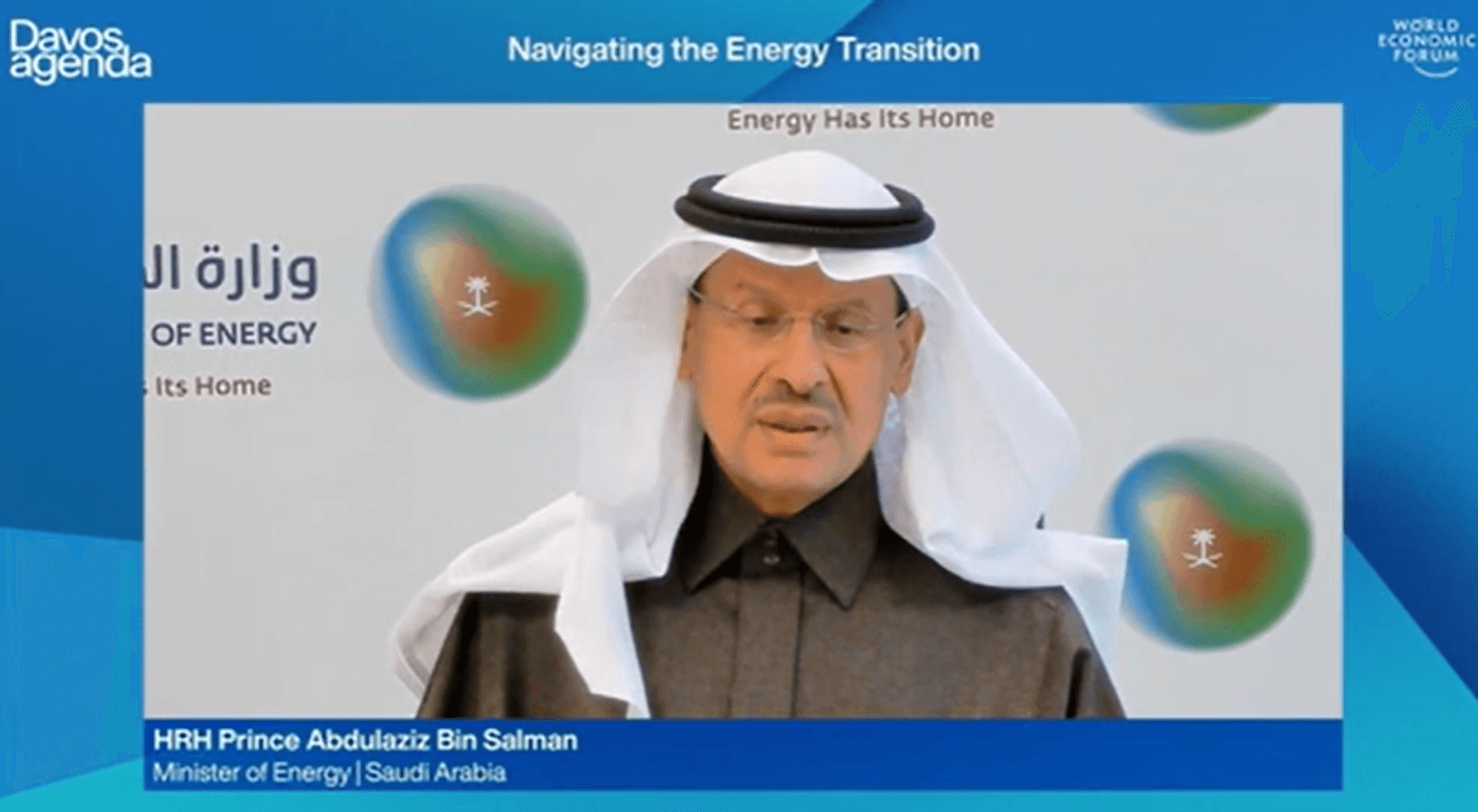
"The main pillar of energizing the world is to make sure whatever we do is consistent with maintaining energy security. Fossils and renewables must be utilized consistently to ensure the world economy is consistently energized," said H.R.H. Prince Abdulaziz Bin Salman.
He emphasised the importance of honest motives behind driving a decrease in hydrocarbons.
"We are all trying to congregate around the idea of reducing greenhouse gas emissions and we should use every tool in the kit to deliver this target and hope. If we are to do this, we have to be honest about if we are really trying to achieve the goal or are we trying to take this hope as a pretext to get rid of hydrocarbons or fossil fuels".
Have you read?
Energy transition in 2022: Five trends fuelling the revolution
Pressure on corporates to decarbonise drives demand for renewables
H.R.H. Prince Abdulaziz Bin Salman stressed that countries should be allowed to choose their own energy mix based on their natural resources and that all fuels and technologies have a role to play in ensuring energy security.
The Minister stated that even though Saudi Arabia is an oil-producing region, they are adopting various initiatives to drive energy transition, such as The Green Initiative, which will see the entire region cooperate to deliver emissions targets and feed the circular carbon economy.
"We will work on unabated hydrocarbons and fossils. We must also make the right environment to advance blue and green hydrogen, recycling and reusing, as well as innovation to ensure carbon is made into a material that can be used."
Commitment from oil & gas gives rise to innovation
Vicki Hollub, President and Chief Executive Officer, Occidental Petroleum Corporation emphasised that the oil & gas sector, while continuing to produce much needed fuel to sustain economic growth, is responding to the climate crisis and driving sustainability through innovation.

Said Hollub: "We all realise climate change is real and things need to be done to mitigate it. We are controlling emissions from our own operations and implementing innovation in drilling, completions and sub-surface modeling, which are undergoing change.
"We have innovated to drill wells faster, ensuring a faster time to market, making shale a stronger business. Being able to bounce back from the COVID crisis is a sign of how we can innovate. Hopefully, our innovation around climate change will be the same, I think it will..."
Vicki Hollub stressed the need for the sector to demonstrate discipline in the execution of decarbonisation strategies, which will in turn demonstrate and prove good returns to investors.
Hollub also emphasised the need for carbon capture, utilisation and storage in the sector, providing examples of how Oxy is building direct capture facilities that will extract between 500,000 and one million tonnes of carbon from the atmosphere. The facility will be powered with a combination of solar and Net Power, a natural gas electric power system that generates no atmospheric emissions and inherently captures all carbon dioxide.
Energy efficiency critical to success
Besides carbon abatement, Björn Rosengren, President and Chief Executive Officer of ABB Ltd emphasised the importance of energy efficiency as a key pillar in achieving successful energy transition.

Said Rosengren: "The best energy is the one we don't waste but save. Efficiency will drive 40% reduction of greenhouse gasses over the next 20 years.
"We need to rethink industrial production from a sustainability angle," stated Rosengren, adding that electrification together with smarter more efficient buildings will go a long way to achieving emissions targets.
Rosengren referred to the mining sector as a good example of driving sustainability through electrification. He stated that the mining sector is committed to making gains through replacing diesel-powered equipment and using on-site renewables to power operations.
"The good news is that the technology needed already exists today. However, besides new and efficient technology, we must change consumer behavior and choices. The right incentives and regulation must be in place to make this happen."
Energy storage and digitalisation
Xin Baoan, Executive Chairman, State Grid Corporation of China spoke to the country's efforts to build grid interconnectivity to promote the uptake of new renewables and ensure the large-scale distribution of those renewables.
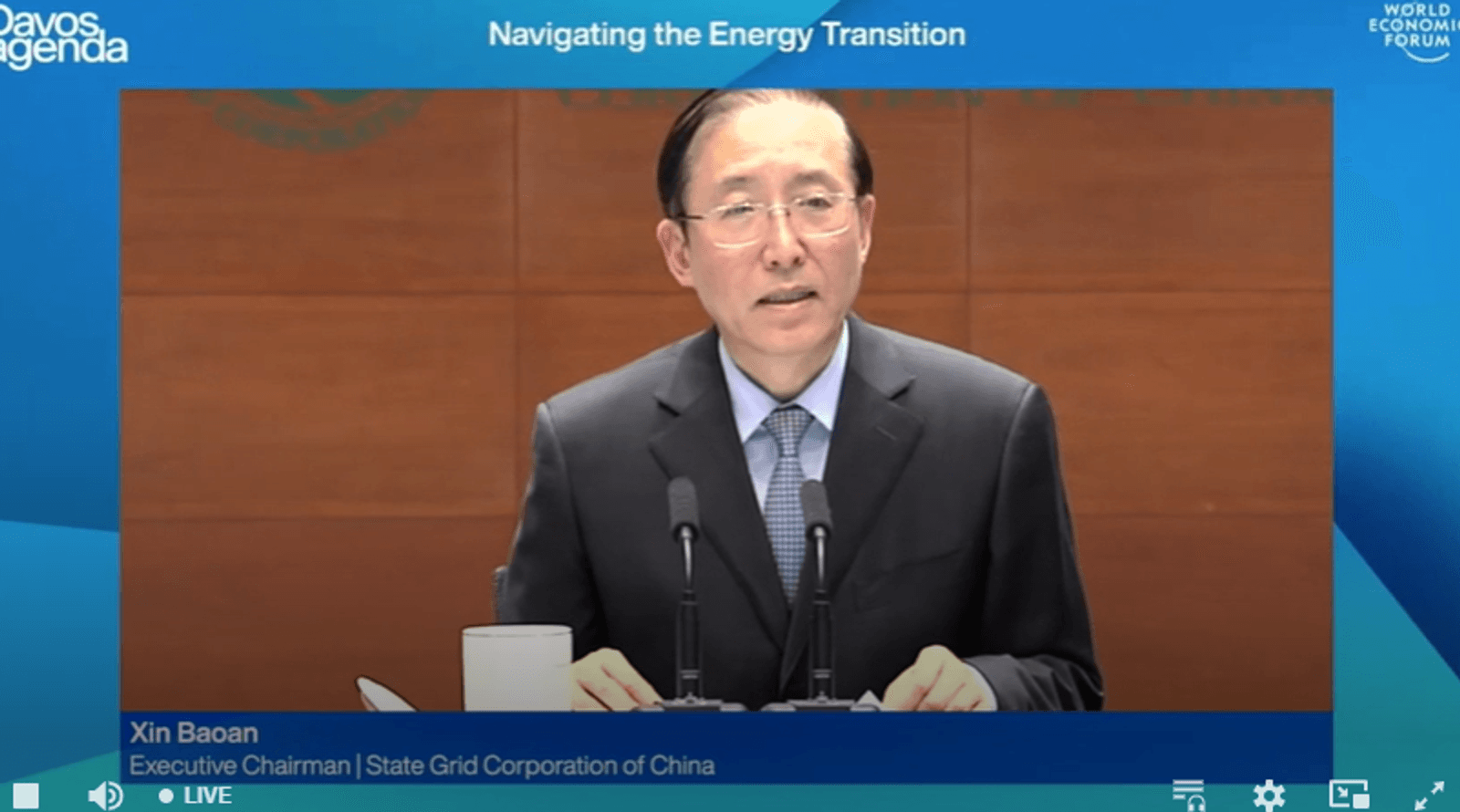
Xin Baoan also emphasised the importance of digitalsation to ensure a safe and stable grid, as well as energy storage to support demand response strategies.
"Sixty-three pumped storage hydropower plants are being built, which will provide 100GW of capacity by 2030. [We] are also striving for new energy storage projects such as chemical storage."
Ultimately, Xin Baoan stressed the importance of knowledge sharing and stated that State Grid Corporation of China wishes to share lessons learned and best practices with the rest of the world to support a successful global transition.
A recipe for net zero success
Fatih Birol, Executive Director, International Energy Agency, spoke to the importance of all the pillars of energy transition, from storage to energy efficiency and carbon abatement. He referred to the importance of the IEA's Global Net Zero Roadmap, which explains the steps individual countries need to take in order to prevent warming above 1.5 degrees Celcius.
Said Birol, "We have a simple choice. Either we continue to use unabated fossil fuels, leading to climate change and extreme weather events or we change how we produce and consume energy."
A simple choice indeed, but with far-reaching ramifications and a great deal of investment required to deliver. Birol reiterated that in order to manage the energy transition properly and avoid market volatility, the world needs to invest USD3 trillion USD, and the oil & gas sector specifically, USD300 billion per year in clean energy.