Decarbonisation drives interest in small modular reactors finds NEA
Jonathan Spencer Jones
Posted on: 23 August 2023
The Nuclear Energy Agency (NEA) has released a second status update on a further 21 small modular reactor initiatives under development.
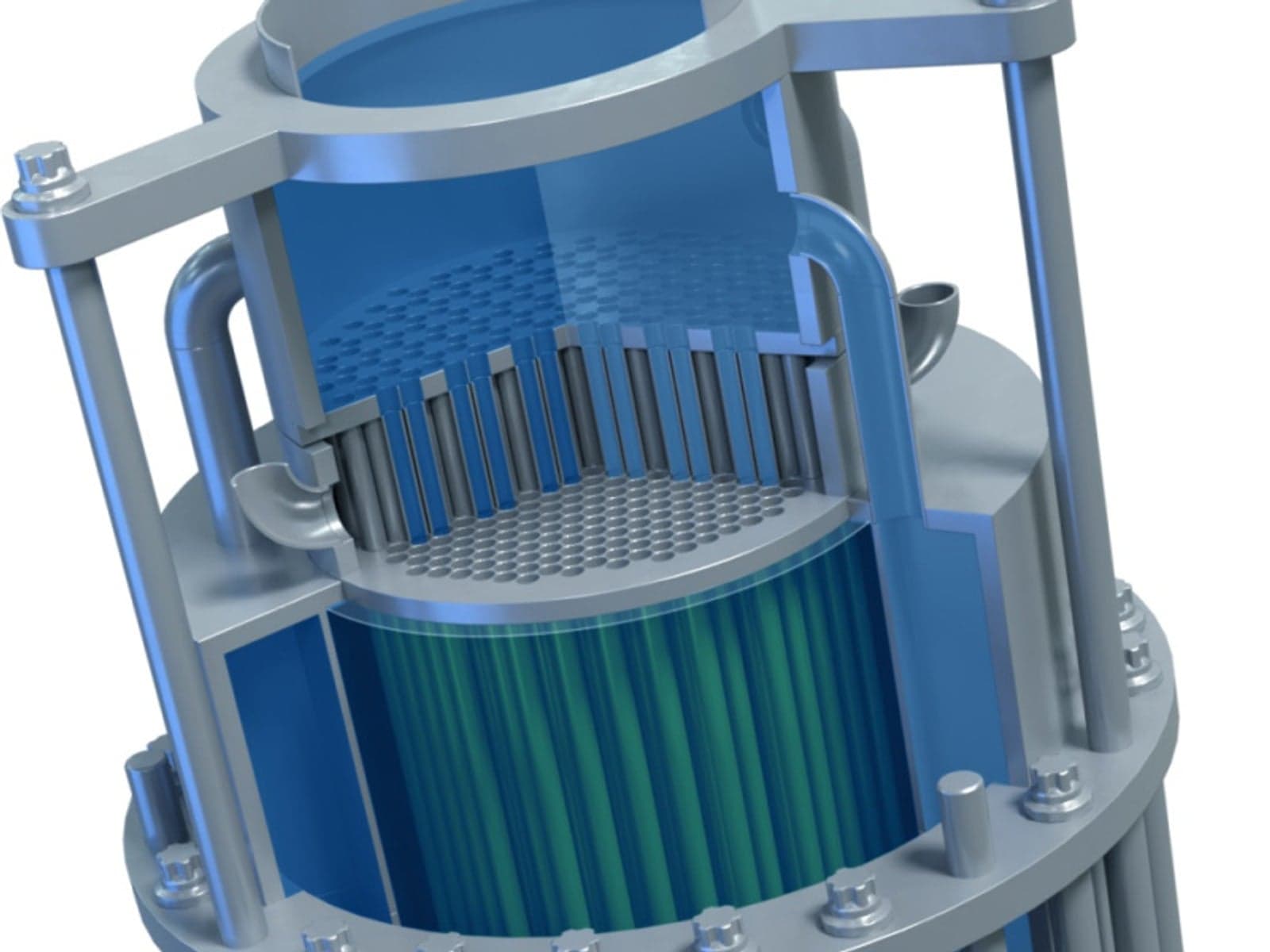
The Nuclear Energy Agency (NEA) has released a second status update on a further 21 small modular reactor initiatives under development.
The Agency’s Small Modular Reactor Dashboard: Volume 2 adds to the first list of 21 SMRs with projects spanning the globe in 11, mostly northern hemisphere, countries and encompassing a range of design concepts, configurations, sizes and development status.
The reactor design concepts are roughly evenly split between water-cooled, gas-cooled, fast spectrum, micro and molten salt and reflect the significant innovation beyond the water-cooled approach.
Similarly, while land-based configurations dominate, multi-module, marine-based and mobile options also are identified as emerging.
In terms of the scale of the featured SMRs, the power output ranges up to about 1,000MWth and they include multiple reactor designs aiming to provide outlet temperatures above 800oC, with one reactor – Canadian Dual Fluid Energy’s proposed fast spectrum DF300 – tipping 1,000oC.
Have you read?
Critical service, contingency power and SMRs – making the connection in a fraught market
Site visit: How thorium energy can change the future of nuclear power
These high temperatures enable carbon-free industrial applications such as aluminium production and can provide high-temperature steam for a wide range of processes.
As before the projects are assessed on the basis of publicly available information on six criteria. These are licensing readiness, siting, financing, the supply chain, community engagement and the commercial supply of qualified fuel.
Based on these Japan’s High-Temperature Engineering Test Reactor (HTTR) and Russia’s Brest-OD-300 demonstrator fulfil the most.
The HTTR is a one-of-a-kind, fully funded operating 30MWth high temperature gas-cooled reactor built to advance technology readiness and demonstrate high temperature nuclear heat application systems.
The Brest-OD-300 is a lead-cooled fast reactor demonstration unit with a design output of 700MWth that is believed to still be in construction.
At the other end of the scale, several appear in the early stages with the least development based on the available information being Toshiba’s 4S small 30MWth sodium-cooled fast reactor that is intended for remote areas as a potential replacement for diesel generators.
Taken together with the 21 SMRs featured in the first volume, the HTTR fulfils the most criteria while the Brest-OD-300 falls below the first ‘top two’, Rosatom’s KLT-40S in Russia and INET’s HTR-PM in China, both of which are in operation.
The NEA believes there may be more than eighty SMR designs at various stage of development so the two volumes of the ‘Dashboard’ represent about half of them.
SMR status overview
The Agency states in the second volume that its analysis continues to reveal substantial progress by small modular reactor developers internationally towards deployment and commercialisation.
As SMR designs continue to make progress towards implementation, governments, regulators and vendors have begun consideration of how the spent fuels and other nuclear wastes produced by these technologies will be addressed.
While continuing activity related to technology definition and development makes it premature to prepare fully for the back end of the fuel cycle for some technologies, light-water based SMR technologies, as a general matter, enjoy the benefits of familiarity and major technical challenges are not expected for the disposal of used fuel from these technologies.
Other technologies, however, do raise some questions which will need to be addressed in the coming years. SMR developers aiming to deploy novel fuel cycles, are conducting important work to characterise their waste streams and work with waste management organisations to prepare appropriate plans for the long-term storage of the wastes.
At the time of publication, however, there was insufficient information available from verifiable public sources to assess the progress of SMRs in terms of waste management planning and readiness for end of life cycle management.
The NEA adds in the volume that notable public announcements, even in the months since volume 1 was published, now reflect technology choices and plans by chemical manufacturers, oil companies and copper mine owners.
Market signals suggest that this trend will only continue to accelerate as awareness grows about the potential for SMRs to provide alternatives to fossil fuels for both power and non-power industrial applications.