Decarbonising power: It all comes down to the bottom line
Pamela Largue
Posted on: 24 January 2024
Speakers at POWERGEN International say the next few decades could be filled with many sleepless nights as the power sector works to mitigate the high cost of going green.
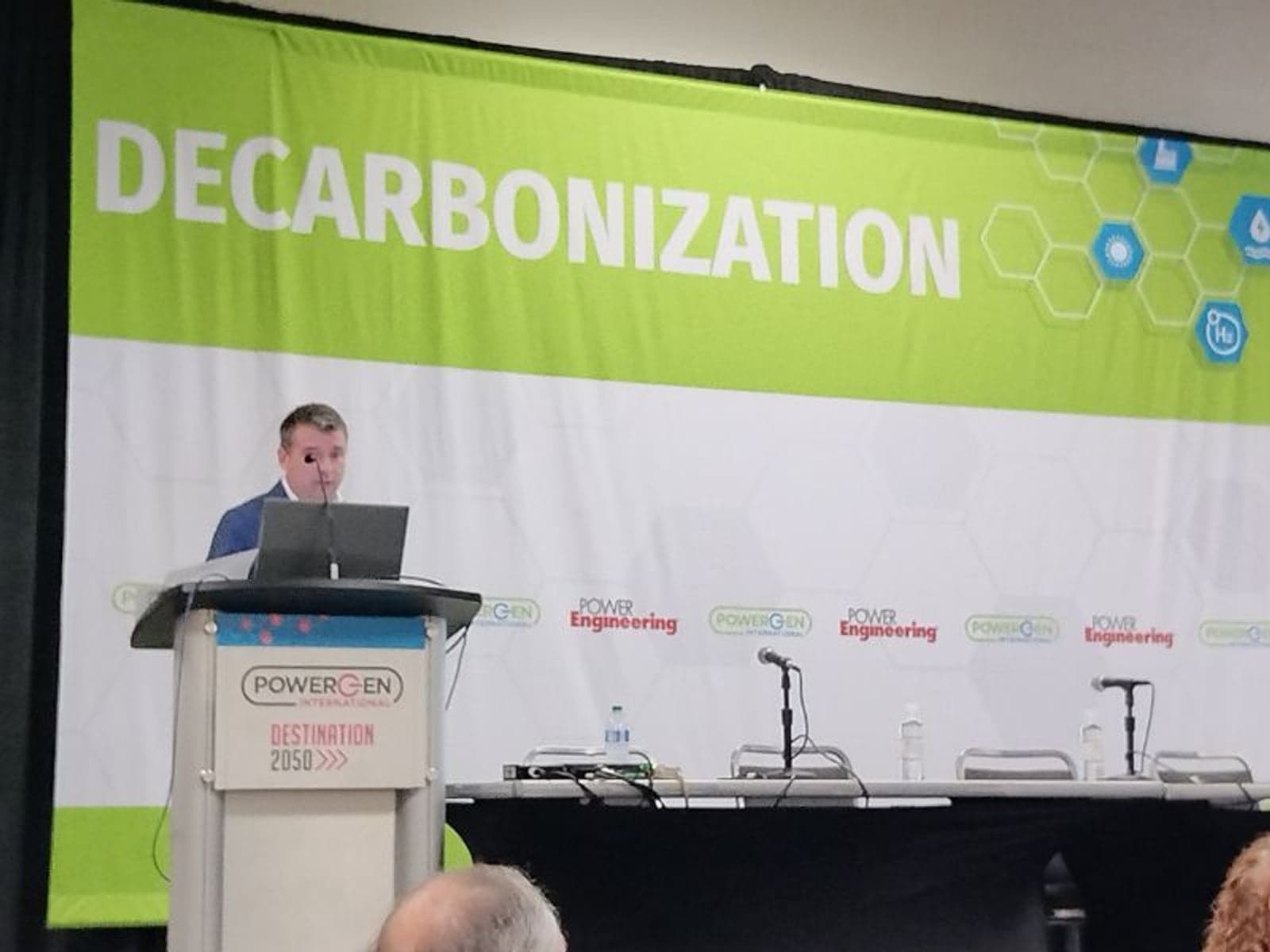
Of all the challenges facing the power generation sector to bring about green transformation, cost is causing the biggest headache for Kevin Lauzze of Sargent & Lundy.
As carbon emissions and temperatures continue to rise, there is increasing pressure on the power generation sector to decarbonise at pace.
When Kevin Lauzze, Vice President and Project Director at Sargent & Lundy, was asked what keeps him up at night, his answer was unequivocal, “cost”.
Speaking at POWERGEN International in New Orleans, Lauzze said: “It’s easy for people to want this [decarbonisation] until they know their power bill will go up,” he said, adding that results of up-front studies result in shock because of the high costs.
But the cost of doing nothing is higher, he agrees, so it’s better to pay more now than to pay a higher price later, referring to the cost of the impact of climate change.
Said Lauzze, “It’s not just [about] do it all and spend infinite amounts of money or spend nothing,” but rather, he suggests, it’s about finding the balance, something in the middle that will offer the best return.
Have you read?
France’s energy transition – Siemens Energy France’s MD shares her vision
Setting a roadmap to decarbonise energy-intensive industries
Varied decarbonisation pathways – it comes down to the bottom line
Lauzze went into detail about what he referred to as an ‘all of the above approach’.
As electricity demand continues to increase due to market growth and electrification, he recommends a varied energy mix, including hydrogen, renewables and nuclear, together with carbon capture.
However, despite the opportunities offered by each of these pathways to decarbonisation, the common theme is clearly how to mitigate the high cost associated with maximising these opportunities.
Renewables, for example, are clearly here to stay and when coupled with energy storage, hold great promise for our decarbonisation journey, said Lauzze.
However, without the required transmission and distribution infrastructure build out, a costly endeavour indeed, there is a soon-to-be-reached ceiling for renewable deployment.
Hydrogen, a useful zero carbon emission fuel and well-suited for use in peaking applications, is currently without the infrastructure needed for a well-functioning value chain. And not surprisingly, Lauzze points to the significant investment needed to make this a reality.
Finally, Lauzze points to carbon capture as one of the key pathways to decarbonisation and arguably one of the most costly.
“Fossil-based generation is not going away," he said. "We will have dispatchable power, but you need to make the power less carbon-intensive.”
Proponents say carbon capture is a proven technology that can be deployed now on existing and new fossil assets and industrial sources that are hard to abate. However, despite the production and investment tax credits, and the fact that the Department of Energy is actively funding project development, the biggest hindrance to the deployment of carbon capture tech is cost, he said.
According to Lauzze, carbon capture requires double the space and double the investment of a combined-cycle facility.
Despite these concerns, the sentiment overall is optimistic, with Lauzze suggesting we will meet our 2050 decarbonisation goals.
However, it seems the next few decades will be filled with some sleepless nights, as the sector works to mitigate the high cost of going green.