Dominica geothermal plant gets loan funding
Jonathan Spencer Jones
Posted on: 7 January 2025
A $34.8 million loan has been approved by the Caribbean Development Bank to fund a 10MW geothermal plant in Dominica.
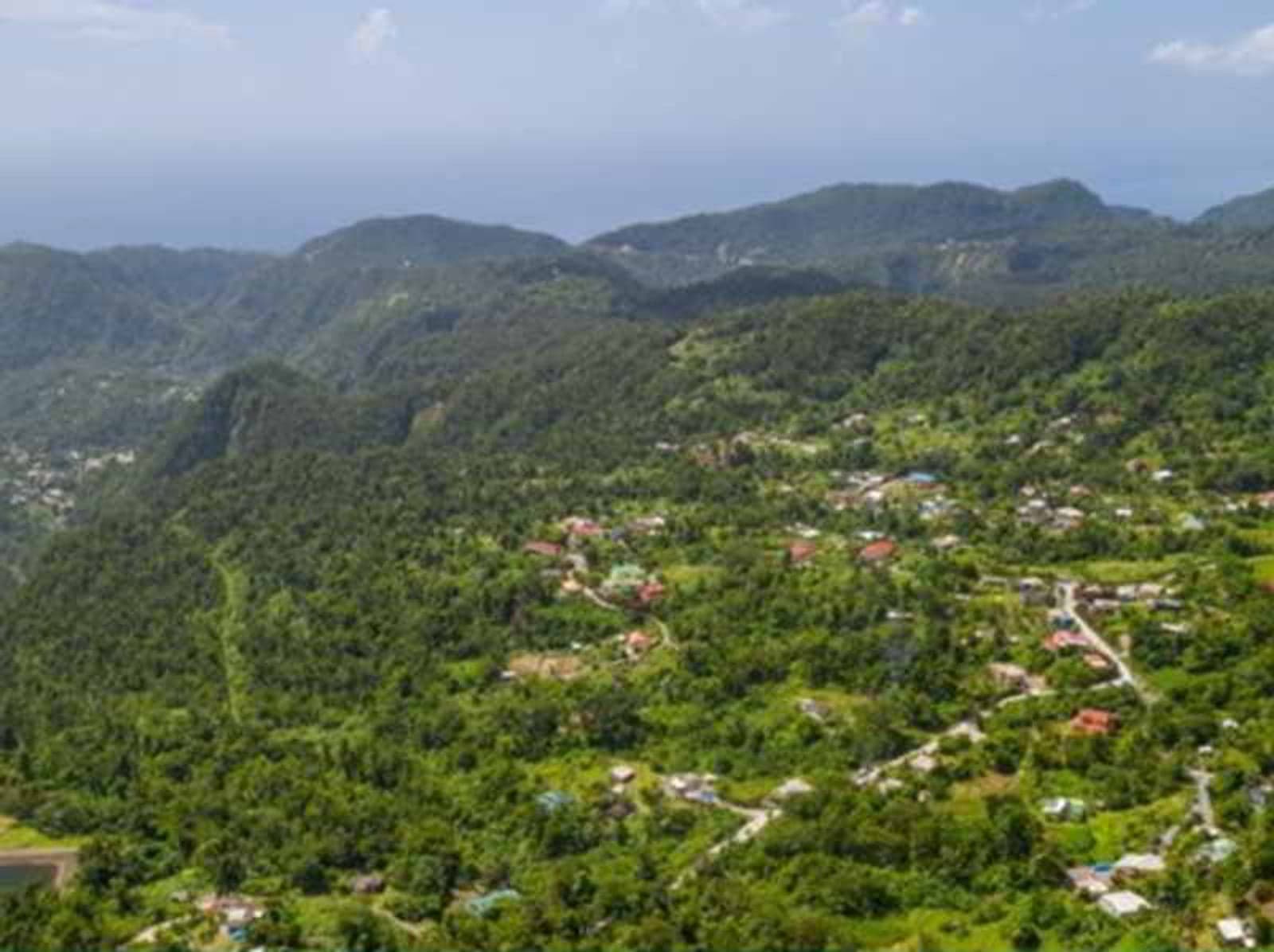
A $34.8 million loan has been approved by the Caribbean Development Bank to fund a 10MW geothermal plant in Dominica.
The project, to be sited at Laudat in the Roseau Valley a short distance inland from the capital Roseau on the southwest coast, is aimed to strengthen Dominica’s energy security and reduce its electricity production costs as well as lower the sector’s carbon emissions.
Currently Dominica, like other Caribbean islands, imports the majority of its energy, mainly in the form of fossil fuels and almost three-quarters of the country’s electricity is diesel-generated.
However, Dominica, again like other eastern Caribbean islands, has vast geothermal energy potential linked to its volcanic origin, with estimates suggesting that potential could provide electrical power capacity up to 50 times the current peak demand of the approximately 23,000 homes and businesses of around 18MW.
Have you read?
Tech breakthroughs unlocking global geothermal potential shows IEA
Geothermal hailed as reliable solution to the climate crisis
The path towards the development of geothermal energy in Dominica has been lengthy, with the earliest studies on its potential dating back to the early 1980s.
In 2016 the Dominica government established the Geothermal Development Company to lead all activities relating to geothermal exploration in the island.
In December 2023 an agreement was signed with the US geothermal company Ormat Technologies for the funding and building of the plant, including a 25-year power purchase agreement with Dominica Electricity Services (DOMLEC).
Subsequently site preparations have been under way with construction of the binary cycle geothermal plant expected to start in the first half of 2025. Once under way it is expected to be completed within 18 months.
Other works also under way at various stages of development are the constructions of 8km of 33kV and 43.5km of 69kV transmission networks, five new substations and two battery energy storage systems.
The Caribbean Development Bank’s loan from its Geosmart initiative to support geothermal development in the eastern Caribbean covers over half of the total project costs of approximately $68 million.
The CARICOM Development Fund is contributing a further fifth and the remainder is equity from the Geothermal Development Company.
“This plant will go a long way in helping Dominica achieve its sustainable energy goals and transition from fossil fuel-based electricity generation to entirely renewable sources,” commented Therese Turner-Jones, the Bank’s Vice President of Operations.
Green hydrogen and critical metals
Other Caribbean islands with geothermal developments at various stages of development include Nevis and Montserrat, while Ormat also is constructing a new 10MW plant as an addition to its existing 15MW Bouillante plant for EDF in Guadalupe.
Geothermal development in the region also is set to boosted with the November COP29 agreement between the Organisation of Eastern Caribbean States Commission and IRENA and the Global Geothermal Alliance to bolster engagement and participation, particularly in Dominica, Grenada, St Kitts and Nevis, Saint Lucia and St Vincent and the Grenadines.
There also has been a proposal that geothermal energy could be used for the production of green hydrogen and ammonia for local use and export, with Trinidad and Tobago based Kenesjay Green contracted to undertake a pre-feasibility study in Dominica.
A further novel initiative is under way, led by the University of Oxford’s Oxford Martin School to secure critical metals such as lithium, copper, gold and others from volcanoes.
According to the School, the world’s volcanoes emit as much of these metals in their volcanic plumes as is mined every day around the world.
However, while volcanic plumes are obviously inaccessible as a resource, the hot, saline geofluids occurring underground in reservoirs beneath dormant volcanoes are more accessible.
Recovering the minerals dissolved in these geofluids, at the same time as generating geothermal power from their heat, has the potential to both dramatically shift the economic viability of geothermal as a renewable energy source and to deliver a significant portion of the critical metals needed for the energy transition.
The Oxford Martin School is currently working to develop a case study project with the government of Montserrat, which voted to licence a new geothermal power plant in April 2023.