Energy Transitions Podcast: Talking bioenergy and CCS with Ann Burton
Pamela Largue
Posted on: 11 June 2024
Drax, a UK-based power company originally built for coal operations, embarked on a decarbonisation journey that has led to BECCS or Bioenergy with carbon capture and storage.
Drax, a UK-based power company originally built for coal operations, embarked on a decarbonisation journey that has led to BECCS or Bioenergy with Carbon Capture and Storage.
It has been a decades-long process that has resulted in Drax turning from one of Europe's largest emitters to one of the largest decarbonisation projects.
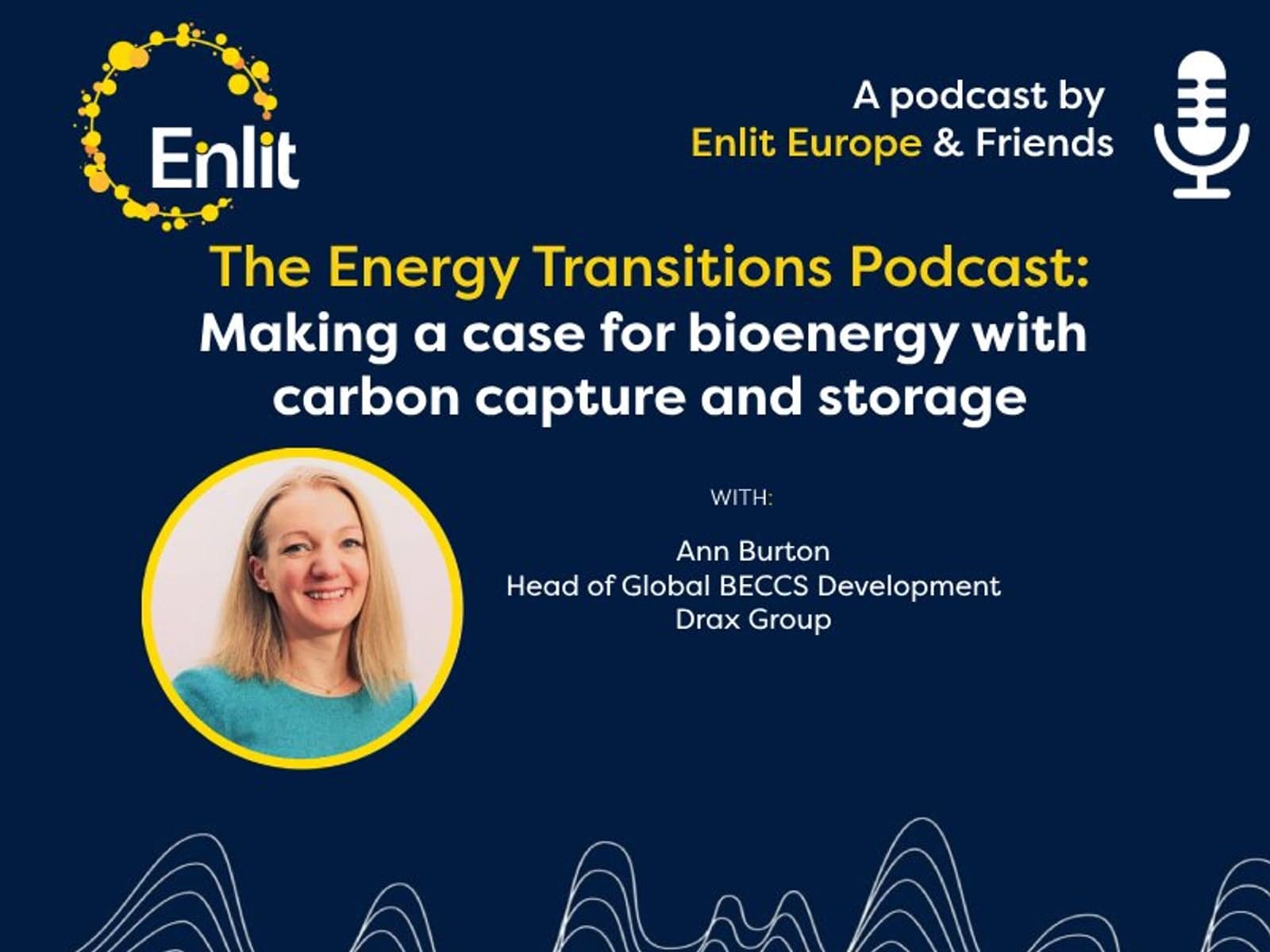
In this episode of the Energy Transitions podcast, Pamela Largue speaks to Ann Burton, head of global BECCS deployment at Drax, about BECCS and what makes it a viable and sustainable decarbonisation solution. Burton talks about how Drax is progressing with the new energy system's project deployment, as well as the challenges, wins and lessons learned thus far.
In this episode, you will gain insight into:
- Why bioenergy with carbon capture and storage (BECCS) is a viable solution despite its bad reputation
- How BECCS can be sustainable
- Challenges associated with projects and how to overcome them
- An update on the 600MW North Yorkshire plant and Drax's expansion plans into US markets
- The skills needed to make these projects successful
- Why education and awareness are critical to ensure the growth of the sector
- How BECCS is developing a robust carbon credits market
"It starts with the trees at the beginning and goes all the way through to the carbon that's removed at the end and if we don't have that nice ecosystem in place, where we're working with the forest, then we don't have a business model..."
LISTEN NOW
Previous episodes:
Rightsizing the grid to accelerate decarbonisation
Why Portugal is a European renewables success story
Engineering wind energy with the titans of turbines
More about decarbonisation:
UK: £5 million for research into hydrogen production from biomass
Weighing the true cost of carbon capture
Why it’s time to fast-track carbon capture to future-proof power plants