Energy Transitions podcast: Why it's time to curb our enthusiasm for CCUS in the UK
Pamela Largue
Posted on: 20 August 2024
Lorenzo Sani of Carbon Tracker shares findings from their latest reports that show CCUS technology has shown little evidence of cost improvements and scalability.
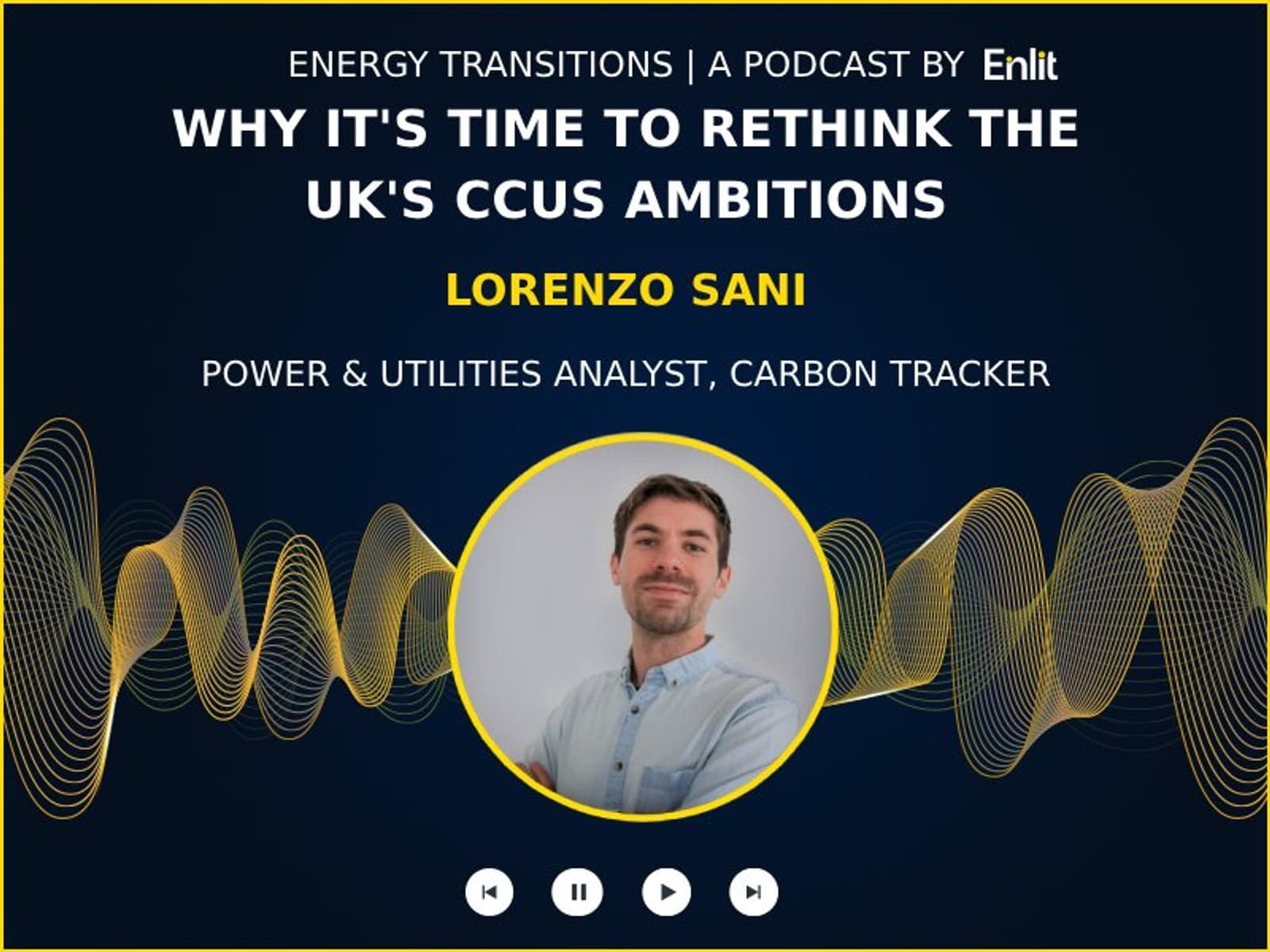
A recent report on the state of carbon capture and utilisation projects (CCUS) in the UK showed that many CCUS projects are simply not delivering on their promises and the UK government's strategy risks locking in a high-cost, fossil-based future, despite cleaner and cheaper alternatives being available.
In this episode of the Energy Transitions podcast, Pamela Largue gains candid perspectives on the UK's CCUS market from Lorenzo Sani, power and utilities analyst at independent financial think tank Carbon Tracker. Sani shares findings from Carbon Tracker's latest reports, which show the technology has shown little evidence of cost improvements and scalability.
In this episode you will learn more about:
- Why the UK's CCUS ambitions are not realistic and need to be reconsidered;
- The importance of policy to set realistic targets and why the UK's new Labour government needs to go back to the drawing board;
- Where CCUS will have the greatest impact in reaching decarbonisation targets;
- The challenges presented by upstream emissions for blue hydrogen and gas-CCS;
- How to ensure the carbon market is fit for purpose.
"...even if all these projects will be built in time by 2030, which Im quite sceptical of, we will get around five million tonnes of capture which is very far from the 20 or 30 that the government is planning..."
LISTEN NOW
Listen to previous episodes:
Taking a deep dive into floating offshore wind with Jon Salazar
Why green hydrogen is part of the decarbonisation toolkit
Joanna Pandera highlights Poland’s progress towards decarbonisation
More about carbon capture:
What have carbon capture and the Ford Motor Company got in common?
Why it’s time to fast-track carbon capture to future-proof power plants
Energy Transitions Podcast: Weighing the true cost of carbon capture