Europe Energy Briefs: Decarbonisation of Europe’s gas system with hydrogen
Jonathan Spencer Jones
Posted on: 8 August 2025
The energy transition in Europe is only achievable with the use of gas distribution grids with their use for the supply of hydrogen growing strongly over time, the Ready4H2 project has found.
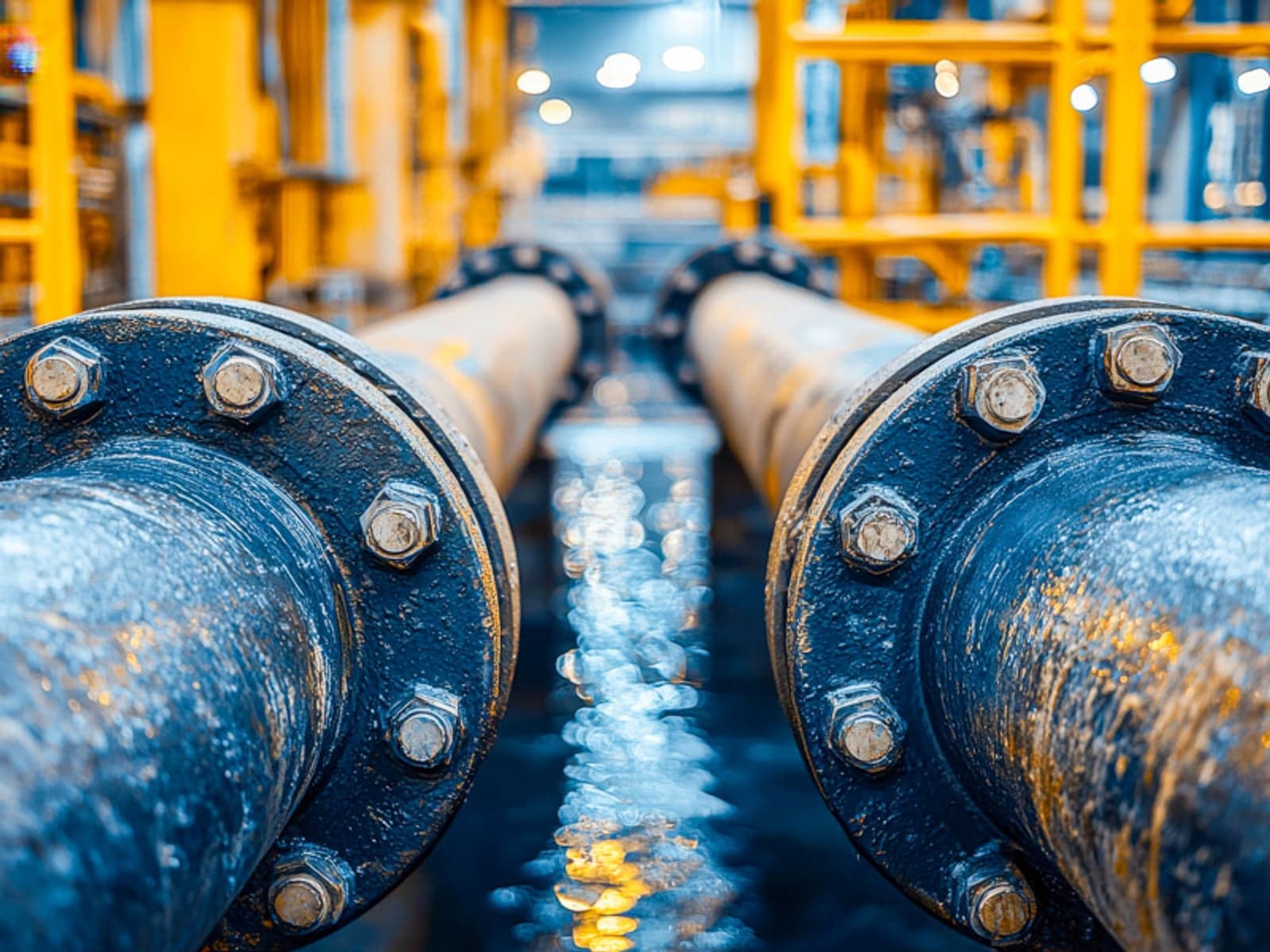
The energy transition in Europe is only achievable with the use of gas distribution grids with their use for the supply of hydrogen growing strongly over time, the Ready4H2 project has found.
While the route to green hydrogen has been fraught with complexity and controversy and slower than expected in Europe, as indeed elsewhere, the consensus is that it has an important role to play in the future energy mix, particularly in the so-called ‘hard to decarbonise’ sectors.
A key question is around how to distribute the hydrogen, with the gas distribution system being an obvious option but with questions arising around its suitability.
For example, early efforts with blending of low concentrations of hydrogen into natural gas have come under particular criticism over their practicality, cost effectiveness and emission reduction potential.
Also of interest
Hydrogen at the heart of Trelleborg’s system of energy solutions
To get to grips with issues around the distribution of hydrogen the Ready4H2 project launched in 2020 has brought together more than 60 European gas DSOs and national organisations in 10 countries to create a common understanding of how distribution networks can help realise the huge growth potential and deliver the carbon reduction potential of hydrogen utilisation.
Together these DSOs operate over half of Europe’s gas distribution pipelines – around 1.6 million km – in Austria, Czechia, France, Germany, Netherlands, Slovakia, Spain, Switzerland, UK and Ukraine.
Currently in the final phase of advocacy and communications and broader liaison with target stakeholders, the initiative has recently put out its research findings from the previous phase that state the feasibility and essential role in the energy transition of the gas distribution networks for hydrogen.
According to the study, in the Ready4H2 countries the need for hydrogen to be supplied by the distribution grids grows strongly over time across all sectors, driven by the large geographical dispersion of customers.
By 2040 around half of the hydrogen demand forecast for the industry, transport and household and buildings sectors could be transported via this means.
With the connection of remote biomethane and green hydrogen production and end users to the distribution grids, regional development also can be facilitated.
To achieve this the repurposing of the distribution grids offers a cost effective approach, estimated at just 7% of the cost of new build pipelines while the cost of converting the gas pressure reduction and metering stations is about half the cost of new.
Repurposing also should be achieved more quickly than new builds.
The report goes on to point out that the prerequisite for transforming the gas distribution grids to hydrogen are in place with over 50 projects in progress by Ready4H2 participants. These include both research and field-based pilots, of which over a fifth are completed.
Looking ahead the report points to the need for gas DSOs and TSOs to work together for integrated and parallel infrastructure planning.
There also is a need for supporting regulatory and financial frameworks, with support needed to confirm the value proposition of a hydrogen market and provide certainty to DSOs to make a business case to convert their grids to hydrogen.
Technical issues
The technical issues underlying the requirements for gas networks, including their repurposing, are helpfully addressed in another new study from the German gas and water industry association DVGW.
While focussed on the German gas system, they are nevertheless of wider application.
The issue of hydrogen embrittlement of metal pipelines that can weaken the material is one that has emerged as a concern. According to DVGW under realistic conditions, such as pressure fluctuations and hydrogen exposure, existing steel pipelines remain structurally flawless. Long-term tests and fracture mechanics analyses have proved the suitability of the material and confirmed its technical feasibility for hydrogen.
Other technical findings include:
● Research has shown that the steel materials and valves used are generally suitable for hydrogen. Under certain operating conditions, fracture mechanics assessments must be carried out to ensure the safe operation of steel pipelines.
● Leaks occur at threaded joints and mechanical connections, which in the case of hydrogen require more stringent sealing measures than natural gas due to the smaller molecular size.
● The integration of hydrogen into existing gas networks requires careful testing of the components to ensure safe and efficient operation. Components such as compressors, filters, gas meters and chromatographs must be adapted or replaced, while components such as gas flow monitors and some safety valves can remain in operation with minimal modifications. Household appliances must also be adapted or replaced.
From the industrial perspective when switching from applications currently fuelled by natural gas to hydrogen, particular attention must be paid to the physical, chemical and combustion-related differences between the two gases and their influence on the application process in order to ensure safe, efficient and low emission operation.