Europe Energy Briefs – Europe’s energy storage outlook
Jonathan Spencer Jones
Posted on: 11 April 2025
The latest edition of the European Market Monitor on Energy Storage (EMMES) reveals rapid expansion in energy storage capacity in Europe, reaching 89GW by the end of 2024.
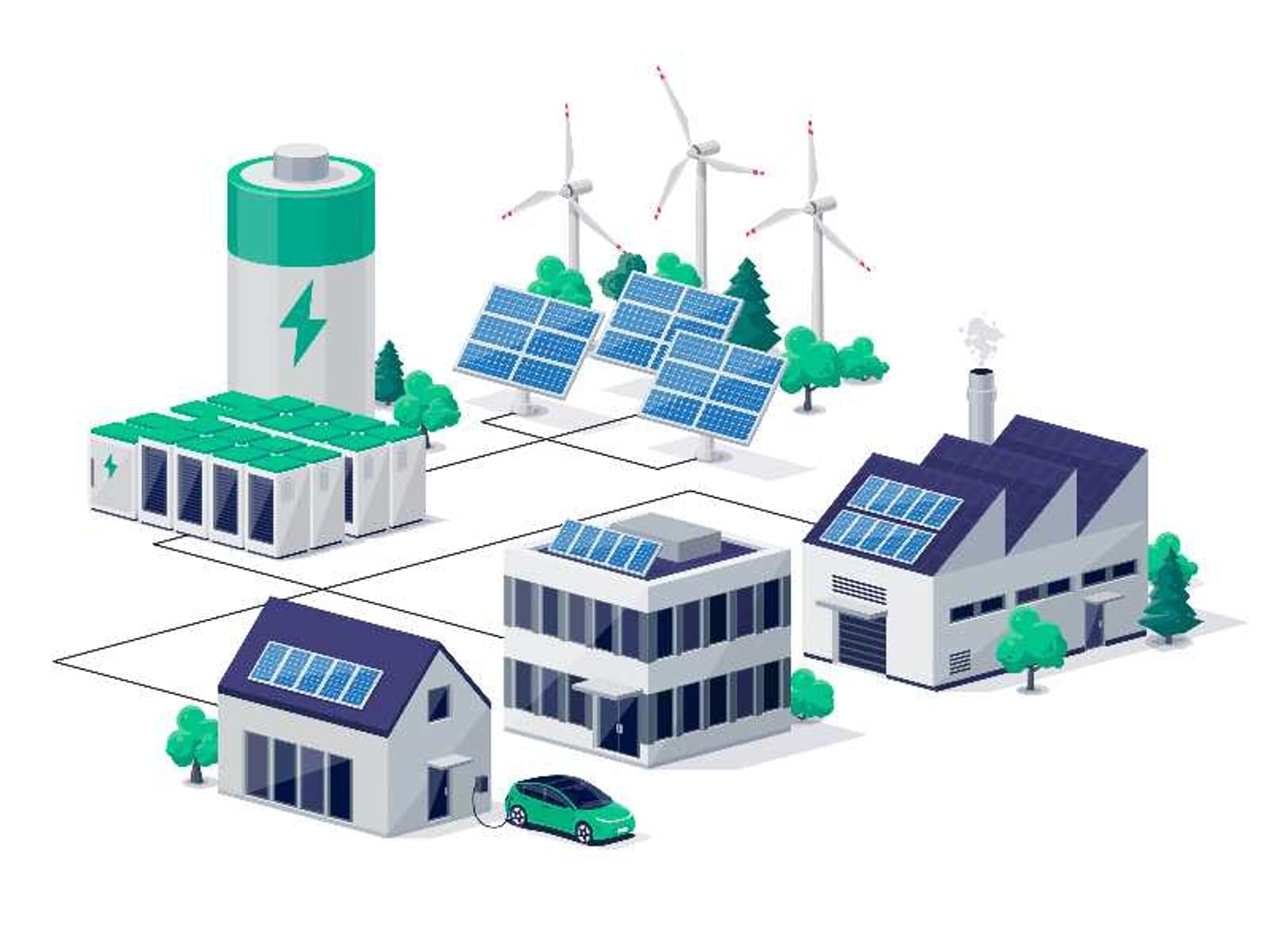
The latest edition of the European Market Monitor on Energy Storage (EMMES) reveals rapid expansion in energy storage capacity in Europe, reaching 89GW by the end of 2024.
The report, now in its ninth edition, compiled by the European Association for Storage of Energy (EASE) and LCP Delta tracks over 3,000 energy storage projects from over 27 countries to claim the moniker of the most comprehensive archive of European storage.
So what does it reveal? 2024 was a record year for new energy storage deployments in Europe, with 12GW/21.9GWh increases in the total capacity.
These were comprised of 4.9GW/12.1GWh increases in front-of-the-meter capacity and 7.1GW/9.8GWh increases in behind-the-meter capacity.
Also of interest
Inside La Muela: Europe’s largest pumped storage hydropower plant
EU Energy Projects Podcast: Advancing energy storage integration with InterSTORE
While these figures corresponded to a 17% decrease in behind-the-meter capacity compared with 2023, the front-of-the-meter capacity increases were 60% in MW and 280% in MWh.
In terms of technology the increases were led by pumped hydro, which now comprises 53GW of the capacity.
Electrochemical storage comprises 35GW, of which almost two-thirds is behind-the-meter and over a third front-of-the-meter, and large scale thermal storage 1GW, while around 0.3GW is from other technologies.
Looking ahead the analysis projects the addition of 128GW/200GWh of electrochemical storage to be added to European grids, to take the cumulative installed capacity to 163GW by 2030.
Deployment analysis
A key aspect of the EMMES is its forecasts and the report notes a 1.9GW underestimation in behind-the-meter installations for 2024, primarily due to smaller than expected declines in the major markets – Italy and Germany – as well as underestimating deployment in some key markets.
On the other hand, there was a 1.4GW overestimation in front-of-the-meter capacity, largely due to projects in Britain not being connected as expected and again differences in Italy and Sweden.
However a notable change in 2024 was the increase in the average front-of-the-meter project duration from 1.5 hours to 2.5 hours in 2024 – a trend that is expected to continue aggressively towards 2030.
Another notable evolving feature of front-of-the-meter capacity is that its co-location, while common with conventional generation, is growing with renewables.
For behind-the-meter capacity the study projects further small decreases in 2025 and 2026 before increasing steadily to almost 8GW by 2030 in the residential sector.
While the reduction or removal of current subsidies in key markets is expected to be a factor, ultimately it is PV market developments that will affect long-term deployment, with dynamic tariffs and changing remuneration for solar PV expected to provide more incentives in the future, according to the report.
As of 2024 there were around 17 million homes in Europe with solar, while the number of battery homes numbered 3.4 million, or about a fifth of them.
Conversely the behind-the-meter sector for C&I customers is projected to show strong growth, almost doubling to over 1GW annually by 2030.
In this market electrification is driving unique use cases and a need for storage, while also it opens accessibility to flexibility revenues.
In the front-of-meter market new capacity additions are expected to increase to almost 10GW in 2025 and over 15GW in 2026, around which level it is likely to hover to 2030.
This is due largely to commissioning of queued projects but delivery challenges are expected to increase towards 2030.
EU legislation
The study highlights the recent Clean Industrial Deal with new state aid rules and the Affordable Energy Action Plan as promising for driving energy storage deployments in Europe – particularly from 2027 onwards.
With these should come reduced costs due to changing network costs and taxes, more expedited projects due to shortening of permitting and connection times, the availability of investment support and new revenue streams with the provision of ancillary services.