European energy policy ‘divorced from reality’ but CHP leaders stay upbeat
Kelvin Ross
Posted on: 19 November 2024
-
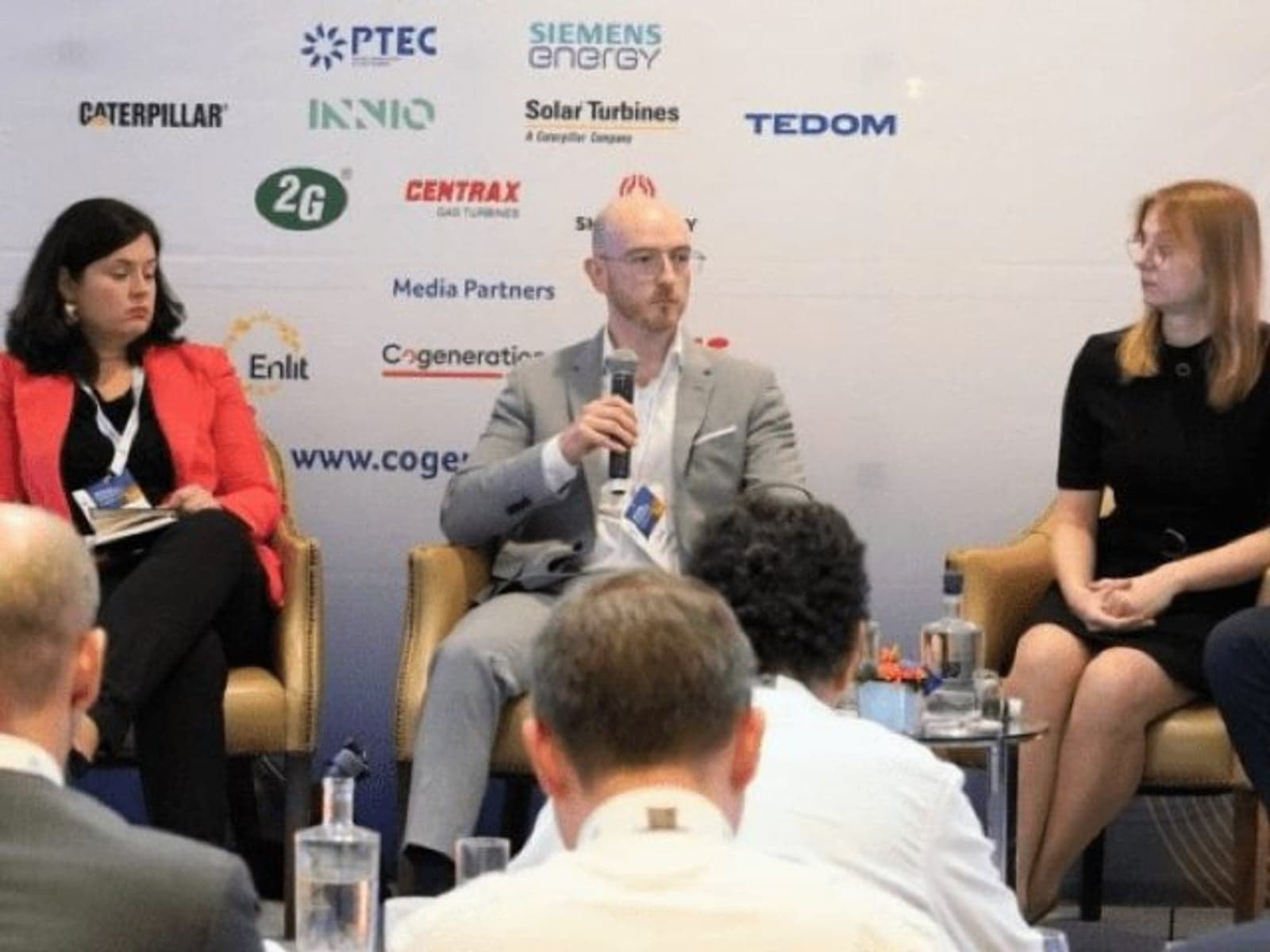
Industry leaders deliver energy policy reality check at COGEN Europe conference
European energy policy “has almost become divorced from the reality on the ground” a conference in Brussels was told.
Josh Gartland, Deputy Director General, European Association of Sugar Manufacturers, expressed frustration that in recent years policymakers have ‘picked winners’ in terms of technologies to decarbonise industry.
“We think the EC has been biased against biomass and biogas,” he told the COGEN Europe annual conference. “We want to see technology neutrality.”
Yet as a new Commission for the next five years starts to take shape, he was “cautiously optimistic” about the outlook for cutting emissions in his sector, as were his fellow panellists in a discussion about enabling a successful Clean Industrial Deal for industry.
Małgosia Rybak, Climate Change & Energy Director for the Confederation of European Paper Industries (Cepi), said the European Commission was seeing the energy transition from a different perspective.
“The change we see now is a new lens on policy – the lens of competitiveness of our industries.
“As industry, we are in the long game and it’s clear what that long game is: it’s decarbonisation.”
With around 20% of the global pulp and paper industry based in Europe, she said decarbonising the sector using existing technologies such as combined heat and power offered Europe a chance to bolster its competitiveness.
But the panellists were united in wanting to see this “new lens on policy” manifesting in new policies, rather than regurgitating existing ones.
“We don’t want a repetition of the Green Deal – we don’t want Green Deal 2.0,” said Magdalena Vallebona, Climate & Energy Director for the European Ceramic Industry Association (Cerame-Unie).
“We need policies that support manufacturing industries and does not penalise them in their bid to decarbonise.”
This echoed the conference’s opening remarks from COGEN Europe chairman Marco Pezzagli, who called on EU institutions to adopt “a smarter and more flexible approach” to decarbonising Europe’s energy system.
He said cogeneration “remains the most effective way to use renewable fuels” and added that combined heat and power is the tool to “make the energy transition efficient”.
Have you read?
Romania CHP plants upgraded with hydrogen-ready engines
TAQA and JERA reach financial close on 475MW Saudi cogen plant
Energy efficiency
Indeed, he said “energy efficiency must be a first principle” of the transition to cleaner fuels, and integrating combined heat and power technology into Europe’s energy system would unlock greater competitiveness, affordability and system resilience.
He called for the Commission to ensure that local communities were enabled “to take control of their own pathways to net zero”.
In a panel discussion which I moderated between four energy company leaders, the common word used was flexibility.
The speakers: Thomas Smith, President of the COGEN World Coalition and President of the US Combined Heat and Power Alliance; Luiz Hanania, CEO of Veolia Poland; Henrik Bahri, Vice President Sales, Siemens Energy; and Christian Pho Duc, Chief Technology Officer at Smartenergy, all wanted to see, not just technologies that offered energy flexibility, but flexible thinking from policymakers.
Bahri said Europe’s progress to net zero had been stalled by “siloed thinking” and a market that had become “hesitant because of a lack of policy clarity”.
Technological progress
Yet again, all were optimistic that significant technological progress in cogeneration would be recognised by Europe’s new intake of policymakers.
That technological progress was highlighted later in the evening at the COGEN Europe Recognition Awards, which celebrated the winners in five categories: Technology & Innovation; Market Development (organisation); Market Development (individual); Young CHP Leader, and Lifetime Achievement.
The Technology & Innovation Award went to INNIO Jenbacher and RAG Austria AG for the commissioning of a flexible cogeneration plant in Gampern in Austria that is able to run on 100% hydrogen.
The COGEN judges said the “innovative project demonstrates the potential for cogeneration using hydrogen to provide electricity and heat with zero emissions of greenhouse gases. The plant uses green hydrogen that is produced using surplus electricity from solar panels during the summer, and then stored in an underground reservoir for use in the winter.”
The runner-up was the Agribioenergia Agricultural Cooperative Society, based in Medicina near Bologna in Italy. It successfully integrated a 100% renewable biogas-based cogeneration system in its industrial process. The heat is used on site for the drying of medicinal plants and the production of biogas, and any excess electricity is sold to the grid.
The COGEN Europe Market Development (organisation) Award is given for work which has significantly improved, increased or promoted the market for cogeneration in an important way.
This year’s award was won by the public utility Stadtwerke Lemgo, based in the Lippe District of North Rhine-Westphalia in Germany, for “smartly combining clean energy solutions to increase efficiency and support the uptake of renewables, whilst reducing costs”.
Stadtwerke Lemgo has developed an integrated energy system that includes 11 CHP units, two large scale heat pumps alongside solar thermal, photo-voltaic, wind and biomass. The CHP units are partly running on biomethane and also offer the possibility of using hydrogen in the future.
The runner-up was Denmark’s EC POWER, for “successfully bringing micro-CHP and hybrid solutions to European markets and beyond”.
The COGEN Europe Market Development (individual) Award is given to the person who the judges believe has had “the greatest impact on the cogeneration market in Europe”. This year’s award went to Christoph Zeis, Managing Director of the Rhine Hesse District Energy Service Company, who the judges said “has demonstrated an exceptional level of commitment in his efforts to promote cogeneration both at the local level in the Rhine Hesse District and also at national level in Germany”.
The COGEN Europe Young CHP Leader Award recognises “those who are pioneering new ideas and have the drive and ambition to change the cogeneration sector for the better”.
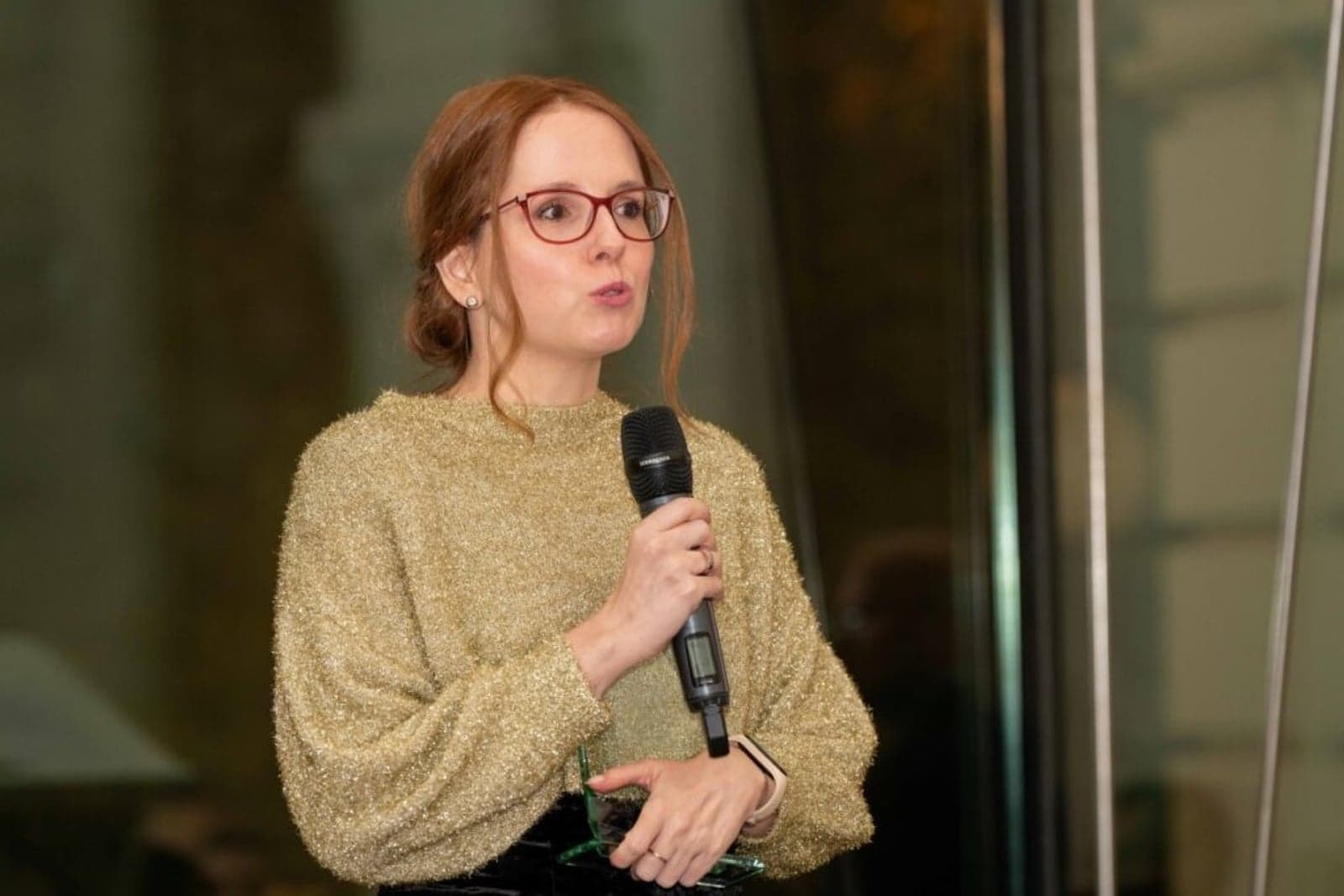
It was won this year by Olga Monroy García, Regulatory and Technological Coordination Officer for COGEN Spain, for her “invaluable analysis and support as part of COGEN Spain’s efforts to increase the recognition of cogeneration in Spain, to develop new business opportunities and to address regulatory challenges”.
Finally, the COGEN Europe Lifetime Achievement Award was presented to Yavuz Aydin, Chairman of the Turkish Cogeneration Association (KOJENTÜRK). COGEN Europe managing director Hans Korteweg said has “dedicated his professional life to cogeneration”.
“Yavuz’s experience in the energy sector spans over more than 25 years in different roles as part of GE Energy and Enerko, alongside his role as Chairman of KOJENTÜRK and also as a member of COGEN Europe’s Executive Committee since 2016.”
Accepting his award, Aydin said: "Wherever you need power and heat together, cogeneration is the most efficient energy technology to rely upon with high efficiency and resilience.
“While the world is trying to reach net zero emissions, such a transition cannot happen without the smart utilization of cogeneration."