FEVER Project: Unlocking flexibility in a decentralized energy future
Guest/partner contributor
Posted on: 4 June 2024
The FEVER project tackles the challenges of a decentralising energy system by creating solutions for flexibility exchange.
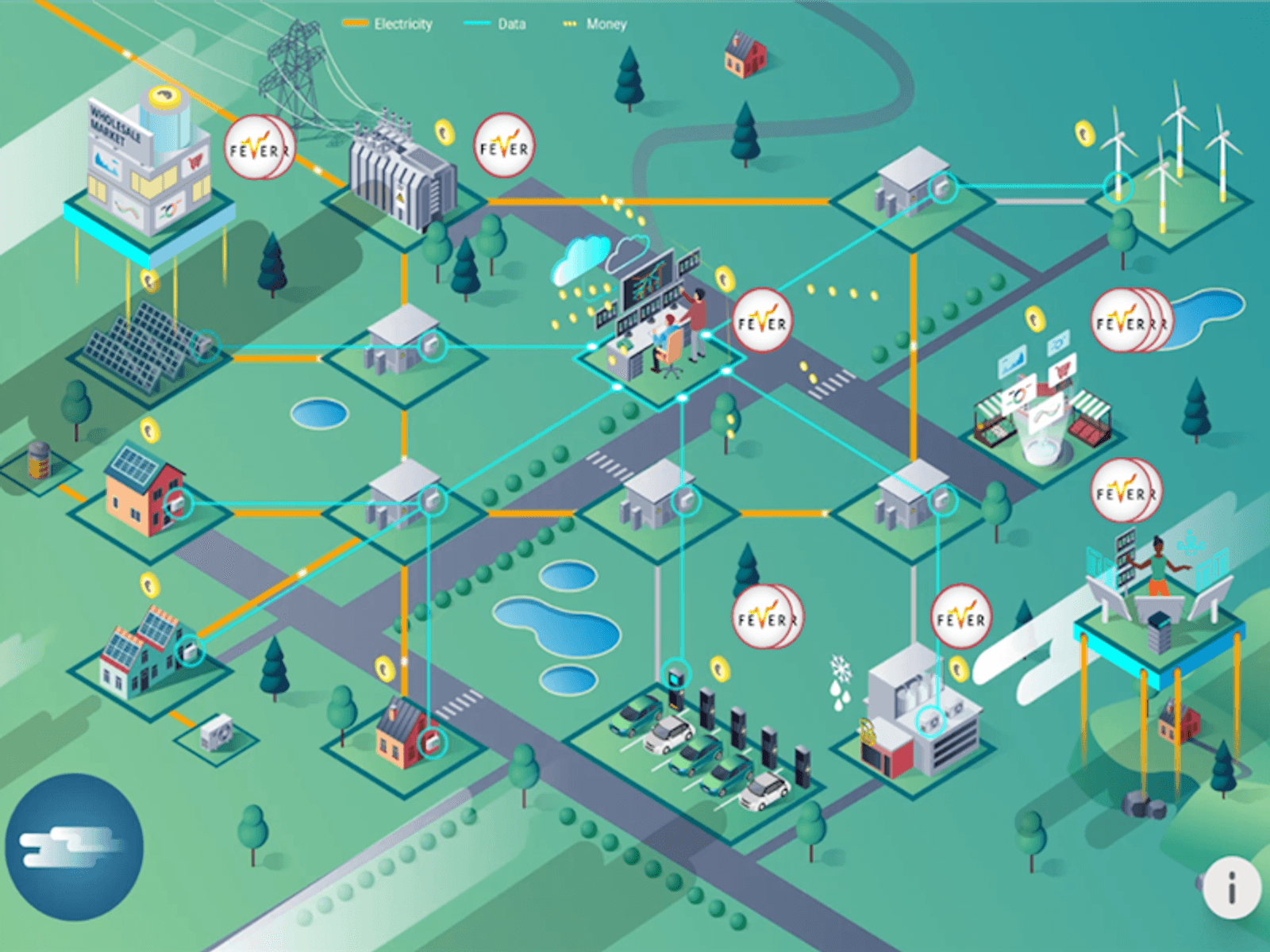
The European Research and Innovation project FEVER tackles the challenges of a decentralising energy system by creating solutions for flexibility exchange. This allows prosumers, traditionally passive participants, to become active grid service providers and contribute to a more renewable, electrified, and inclusive energy future.
Project FEVER aims at demonstrating and implementing solutions that leverage the potential of flexibility in generation, consumption and storage of electricity. With an overall budget of almost 10 million euros, seventeen partners from eight European countries are working together to accelerate the transformation of the energy system.
Shifting energy from transmission to distribution grids
The decentralisation of the energy system, which is already taking place through the mass deployment of distributed renewable energy and storage solutions, is shifting the energy transition from transmission to distribution grids.
As more resources are deployed at residential, commercial and industrial facilities, more and more traditional consumers become prosumers. For these prosumers to fully become active participants in the energy system, FEVER’s solutions, among other things, enable prosumers to provide grid services, as well as to act in a way which increases a distribution grids’ renewable energy hosting capacity while reducing the need for reinforcements or expansion.
This has been achieved by interconnecting devices and infrastructure spanning from the prosumers’ premises all the way to the offices of system operators. But, one might ask… how did we achieve this?!
The answer is: Platforms!
Using technology to manage energy flexibility
Energy flexibility can mean so many different things that the use of the word becomes misleading. Despite this, the future energy system has qualities that many stakeholders agree on. Among them, the future will be renewable, electrified, sector coupled, digital and inclusive. The latter meaning a more active participation of traditionally passive stakeholders. This in turn reduces the need for storage and potentially accelerates the transformation.
Read more about:
EU-Funded energy projects
Decentralised energy
Energy communities
Making use of technology which has been specifically tailored for the management of flexibility (the FlexOffer), and carrying out point-to-point integrations (involving weather data, network power quality measurements, flexible devices, user preferences and tariffs, among other elements), the FEVER project has dived into the world of flexibility and tackled its related issues from different angles and approaches.
FEVER’s DSO Toolbox
Supported by the development of FEVER’s DSO Toolbox, an integrated solution which effectively digitises the operation of distribution grids while avoiding vendor locks, FEVER products enable an exchange of flexibilities between flexibility providers and flexibility consumers (the latter, most commonly enacted by system operators).
Prosumers can thus provide system services which, without the digitalisation of the DSO, would otherwise not be possible. But are flexibility providers supposed to actively react upon a flexibility request? Not necessarily! The integration of FEVER products allows for an automated exchange of flexibility; including tools for the exchange of financial compensation (i.e. money) through an immutable and transparent storage of data (i.e. the blockchain).
Is all of this necessary? Maybe not! Is it cool? Absolutely…
Unlocking flexibility through automated processes
With its three trial sites, FEVER has put the FlexOffer specification to the test and proven its usefulness in unlocking the flexibility of a massive amount of stakeholders through automated processes, empowering them to actively participate in flexibility trading and ensuring the interoperability of devices.
From campuses, to buildings, homes, industries, EV charging stations and stationary batteries; the FlexOffer is capable of managing the information of devices with diverse consumption patterns in a fully scalable, transparent and system-beneficial way. Able of even unlocking flexibilities from thermal processes! And making use of state-of-the-art algorithms to improve its predictive capabilities.
The trial sites include the formation of a campus microgrid, the activation of industrial flexibility provision (including V2G, battery storage and industrial energy management systems) and the formation of two energy communities.
Together, these trial sites put products to the test which enable a locality to become resilient, sustainable and participatory; and prepares energy system users and operators for a changing energy landscape as the transformation reaches further milestones.
But that’s not all! Flexibility markets have also been thoroughly explored and novel market mechanisms developed, which have used the results from the trials to deliver more robust simulations!
Impressively, the communities from the third trial site (which are under the responsibility of two different DSOs) can even trade flexibilities with each other while being more than a 100 km away from one another. Moreover, these two have no direct physical connection, since there’s another distribution system between them.
How can all of this happen automatically? Well, energy management systems located at the end user’s grid connection points interact with the DSO through enabling platforms. These platforms ensure that flexibilities are matched and traded in a way that minimizes the inconveniences of a flexible system operation, allowing flexibility providers (e.g. prosumers) to choose when, how and at what price to offer their flexibility to the DSO or any other flexibility requesting/consuming entity.
This involved serious integration efforts, but various related hurdles have been addressed and solved, putting the local energy systems of the future within reach. When resources are already interconnected and ready to operate flexibly, the additional functionality becomes a matter of creativity!
A platform made for energy communities
Finally, due to so much talk about inclusion and participation, we can’t help but to mention our platform, which was specifically tailored towards energy communities.
This platform can adapt to the organisational structure of different aggregator entities and uses AI to obfuscate the complexity of background processes, bringing with it the potential to increase the attractiveness of energy communities and foster membership.
Of course, as this project aimed at proving the functional aspects of flexibility exchange, the energy community platform still has a way to go. For example, how the community defines its social and environmental goals is outside the scope of this project with relation to the platform’s development.
But the fundamental building blocks which enable trading between community participants have been made possible through state-of-the-art technology, accompanied by our technical knowledge and expertise!
We hope our efforts call to your attention, as they did indeed give us the FEVER!
By Charlotte Budde & Carlos Ayon Mac Gregor (B.A.U.M. Consult)
Most popular
Join the community for freeAnd get access to all content
Related projects
Fever
+2
1 February 2020 - 31 July 2023
View project