Five green tech innovations for power generation of the future
Guest/partner contributor
Posted on: 6 July 2023
Green innovations for businesses include wearable energy generators and modular wind turbines
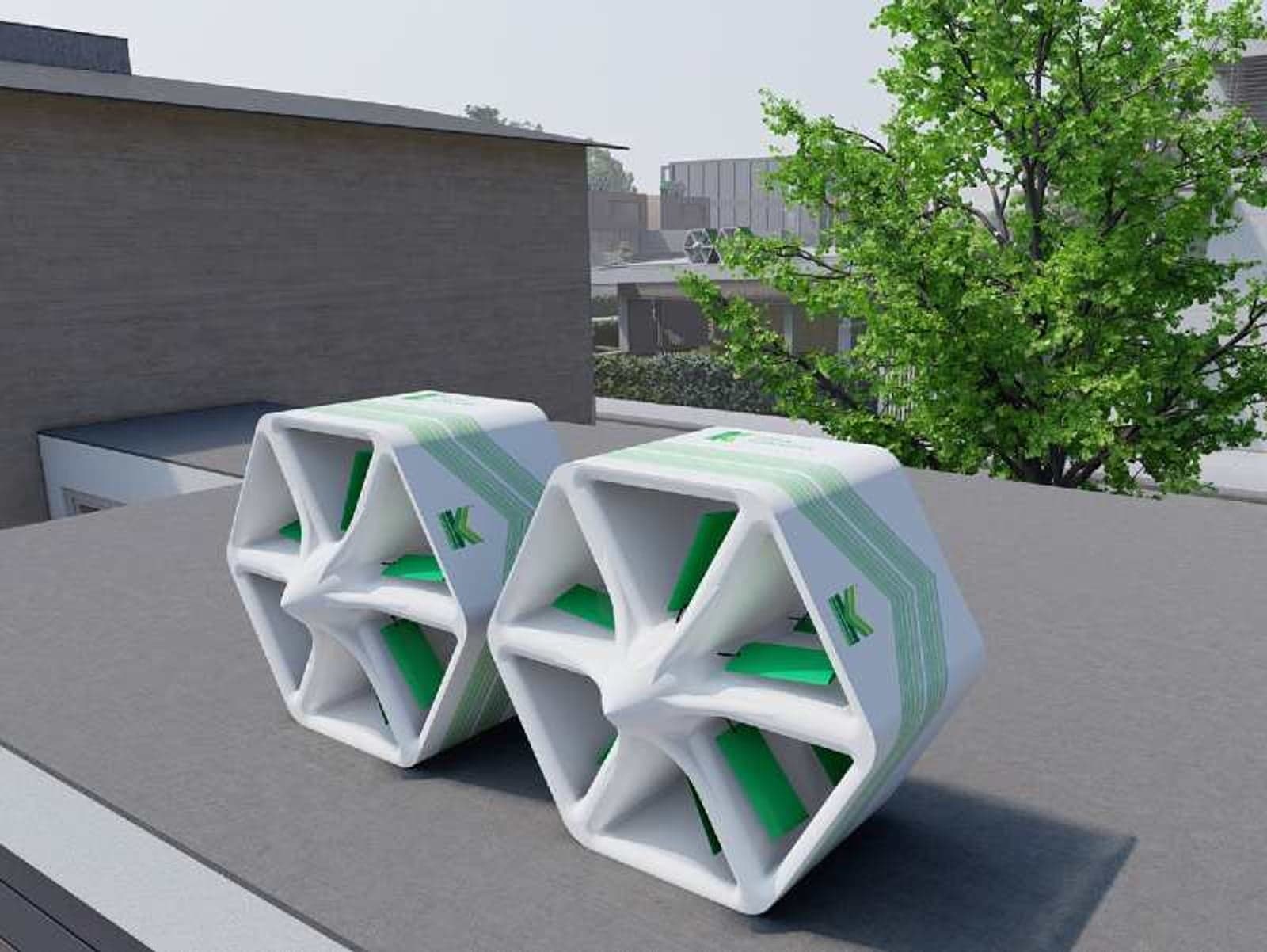
Green innovations for businesses include wearable energy generators and modular wind turbines
Karthik Velayutham, chief technology officer of green tech innovator Katrick Technologies, delves into five of the most exciting new green tech innovations for future power generation, examining how each could help businesses improve their sustainability and reduce their carbon footprint.
As the future is marked by environmental uncertainty, the world saw a record growth in renewables that accounted for an impressive 83% of all power capacity added in 2022, according to the International Renewable Energy Agency (IRENA).
IRENA’s findings show that renewable power generation is becoming more popular than ever before, amounting to 3,372GW while the growing stock of renewable power rose by a record 295GW, or 9.6%, by the end of 2022.

Green technologies are also evolving to support this demand in ways that make increasing sense to businesses and industry.
Let’s look at some of the most exciting new green tech innovations that could help businesses meet their sustainability commitments.
Roof tiles that operate as solar panels
GB-Sol is a UK-based company that specialises in the design, manufacture, and supply of a range of solar products for residential and commercial buildings. Its products include roof-integrated solar panels, solar tiles, solar carports, and energy storage solutions.
One of GB-Sol's unique products is the "PV Slate," a solar panel designed to look like a natural slate roof tile. The solar panel allows homeowners to incorporate solar power into their homes without compromising the aesthetic of their roof.
GB-Sol has won several awards for its innovative solar products and commitment to sustainability and is also certified to ISO 9001 and ISO 14001 standards for quality and environmental management.
A wearable powered by your fingertips
The Center for Wearable Sensors at UC San Diego Jacobs School of Engineering, US, has developed a new type of wearable that is powered by the user's fingertips.
The wearable technology can generate electricity from the user's body heat, sweat and motion, which makes it a highly sustainable solution.
The first-of-its-kind device is designed to harness energy that humans exert naturally. It is shown to collect almost 30 millijoules of energy when the wearer clicks on a mouse or casually types on a keyboard for one hour. 400 millijoules of energy were collected while the wearer was asleep for 10 hours, which is enough to power an electronic wristwatch for 24 hours.
According to its makers, the device offers a high return on investment (ROI) and has the potential to revolutionise the wearables industry.
Have you read?
Power generation innovation drives sustainability in UK’s water sector
Innovation needed to meet Britain’s renewable energy targets
An alternative to silicon solar panels
Perovskite roof solar panels were finally brought to market in 2021, after several years of strong performance. Unlike traditional silicon solar panels, a thin perovskite cell is placed on top of a standard silicon cell.
The result is a more efficient, durable, longer lifespan and cost-effective photovoltaic technology. The panels can also generate electricity even in low light conditions, making them an ideal solution for countries with less sunlight.
Meanwhile, Toshiba Corporation has developed a new coating method that boosts the modules’ efficiency by up to 15%. According to Toshiba, if all the roofs in Tokyo — which cover approximately 164.9 km2 — are fitted with their new modules, it could generate levels of power equal to two-thirds of the city's annual residential energy consumption.
Converting footsteps into electricity
Pavegen, a new and quirky renewable energy company, has developed a unique technology that can convert footsteps into electricity.
Its product is a floor tile that can harvest energy from people walking on it and convert it into usable electricity. The tiles use a combination of electromagnetic induction and piezoelectricity to generate power from each step.
The technology has been installed in various locations around the world, including airports, train stations and shopping centres areas where foot traffic is high.
Pavegen believes that the cumulative effect of thousands of tiles installed in high foot-traffic areas could have a significant impact on reducing carbon emissions.
An alternative to traditional wind turbines
Katrick Technologies has developed a new type of urban wind power. Its Wind Panel is flexible, modular, shaped like a honeycomb and can produce electricity in low-level wind conditions.
Traditional wind turbines use rotary blades. Rotary blades are a common source of maintenance issues in traditional wind turbines due to the replacement or repair of damaged blades and the need for regular inspections. They also create noise pollution and can be harmful to wildlife.
Instead, Katrick Technologies’ Wind Panels do not utilise blades or other rotary components and have the potential to avoid these issues.
The technology features numerous ducts with patented aerofoils, which convert wind's kinetic energy into mechanical oscillations. These oscillations are then converted into electricity.
Katrick Technologies has signed a partnership with Edinburgh Airport and has installed wind mapping sensors that can locate areas with untapped low-level wind power throughout the airport. The technology is ideal for airports as the smaller technology can be deployed more flexibly.
The wind panel’s use of oscillations, rather than rotary motion, can better harness low-level wind energy and does not affect airport radar systems. Moving forward, Katrick Technologies is developing their prototype Wind Panel with the UK’s Manufacturing Technology Centre (MTC), later this year.