FLARE: A proposed high gain approach for fusion energy
Jonathan Spencer Jones
Posted on: 23 September 2025
The FLARE (Fusion via Low-power Assembly and Rapid Excitation) approach to fusion could deliver a gain of up to 1,000, First Light Fusion anticipates.
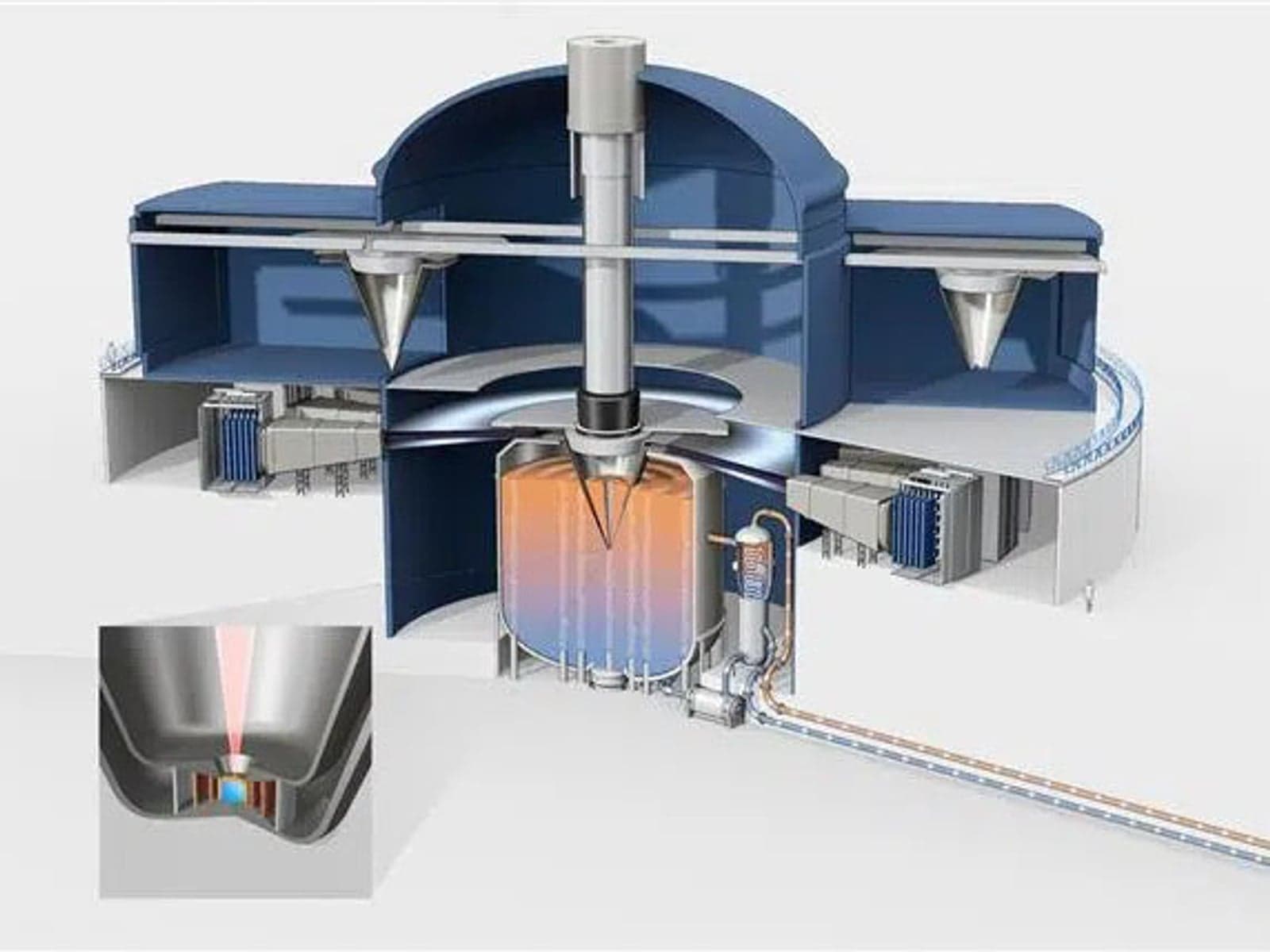
The FLARE (Fusion via Low-power Assembly and Rapid Excitation) approach to fusion could deliver a gain of up to 1,000, First Light Fusion anticipates.
Describing FLARE as the first commercially viable, reactor-compatible pathway for high gain inertial fusion, Oxford-based First Light Fusion presents it in a white paper as an alternative to the magnetic confinement and inertial confinement approaches that are dominating fusion development.
Pointing to the current record gain of 4 achieved at the US National Ignition Facility (NIF) in May 2025, First Light Fusion estimates that a gain of at least 200 is needed for fusion to be commercially competitive, while a gain of 1,000 could deliver power at exceptionally low cost with the FLARE model offering a cheaper development pathway.
Mark Thomas, CEO of First Light Fusion, describes the model as a pivotal moment not just for First Light, but for the future of energy.
Have you read?
Eni signs first energy company PPA for fusion energy
Europe must seize supply chain advantage to harness momentum of fusion
“Achieving a gain of 1,000 puts us well beyond the threshold where fusion becomes economically transformative. Through our approach, we’re opening the door to a new industrial sector – and we want to bring others with us.”
First Light Fusion’s FLARE concept is a modification of the inertial fusion approach in which the fuel is compressed and heated at the same time to achieve ignition.
FLARE splits this process into two: first compressing the fuel in a controlled manner and then using a separate process to ignite the compressed fuel, generating a massive surplus of energy – known as ‘fast ignition’.
Specifically the process is based on three pillars – an innovative target design, pulsed power driven fuel compression and the fusion taking place in a lithium pool reactor.
Rather than relying on high power lasers, the FLARE approach uses cylindrical targets with a dense, opaque pusher to compress the fuel using modest input energy. This reduces the losses and improves the confinement, and then ignition is triggered by an auxiliary source such as a short-pulse laser or pulsed power system.
By decoupling the compression and heating, the power required from the driver is lowered whilst enabling higher energy gain, according to First Light Fusion.
The pulsed power offers a lower cost, higher efficiency alternative to lasers, while the reactor design of a liquid lithium pool dynamically structured with inert gas absorbs neutrons, breeds tritium, captures heat and protects the reactor walls without the need for complex solid structures.
Together, these innovations create an integrated system in which the driver, target and reactor are mutually compatible, robust, and economically attractive: an end-to-end concept designed for deployment, states First Light Fusion in its white paper, which draws on its earlier work and other research on fusion.
This includes considerable experience in target design and pulse power technology and in 2022, First Light Fusion became the first company to demonstrate projectile-driven fusion by using high velocity mechanical impact to compress and ignite fusion fuel.
The high tritium breeding ratio is a notable additional advantage of the FLARE concept, given its importance for the deuterium-tritium fuel combination.
Demonstration reactor
To take its proposals forward First Light Fusion intends to continue validating each component of the scheme including target physics, pulsed power coupling and reactor survivability on existing national and international experimental facilities.
Alongside this the company intends to expand collaborations with key national and international partners to accelerate progress and to mature its modelling, design, and prototype targets to build the scientific and engineering case for a first demonstration reactor.
Such a demonstrator could be in place by the mid-2030s at a cost estimated between $100-200 million, depending on its scale.