Partner content
Gas power, a multiple-facet instrument for flexible and sustainable energy
Guest/partner contributor
Posted on: 10 May 2023
Gas power generates almost one quarter of the total electricity produced worldwide. According to the energy scenarios of the International Energy Agency (WEO 2022), it will continue to produce the same quantity of electricity in the following thirty years even if its share of the global energy mix decreases, complementing a strong deployment of renewable electricity as well as supporting the global electrification of all sectors of the economy.
Gas power generates almost one quarter of the total electricity produced worldwide. According to the energy scenarios of the International Energy Agency (WEO 2022), it will continue to produce the same quantity of electricity in the following thirty years even if its share of the global energy mix decreases, complementing a strong deployment of renewable electricity as well as supporting the global electrification of all sectors of the economy.
Why does gas power remain essential to electricity generation despite the unstoppable trend of renewable energy? There are too few other available technologies capable of providing the flexibility and grid resilience, and can do so for significantly long durations when renewables may be performing below expected levels for days or weeks at a time.
The challenge of flexible and efficient power
The recent spikes in gas and electricity prices and Europe’s reliance on Russian gas have accelerated the European Union’s development of an ambitious plan to reduce its consumption, including the massive implementation of renewable power.
Nevertheless, gas power remains essential for the overall security of the electrical grid. During seasonal periods with low wind and minimal sunlight, backup gas turbines can supply the missing electricity and take over when the photovoltaic and wind plants are at standstill. They start in a short period of time, ramp up, provide electricity for as long as needed and then ramp down when weather conditions are more suitable for renewable generation.
Gas rotating assets are also important for the stability of the grid. They provide synchronous generation essential to maintain a correct frequency on the electricity grid, counterbalancing the variability and the low inertia of solar and wind generation resources.
However, during this period of potential shortage of natural gas, saving every calorie of the precious fuel is crucial. Using state of the art combined cycle technology can double the overall conversion rate of gas transformation to electricity, saving about 30% of the consumed fuel compared to an average open cycle turbine.
Furthermore, performance improvement upgrades can be implemented on most existing turbines and help to save up to 2% of the natural gas consumption, which would mean the equivalent of 2 billion m3 in the European Union if all gas power assets could be modernized (112 bmc consumed for power in 2022 according to IHS Markit).
Finally, gas turbines can run on a multiple variability of fuels. With minor or more complex modifications on their fuel feeding and burning systems, turbines can switch from natural gas to liquefied natural gas, hydrogen, liquid fossil or biofuels, as well as biogas or hydrogen. This specific capability enables a savings of natural gas during peak demand and to allocate the available gas to higher priority consumers – households or industries.
The alternatives for decarbonisation
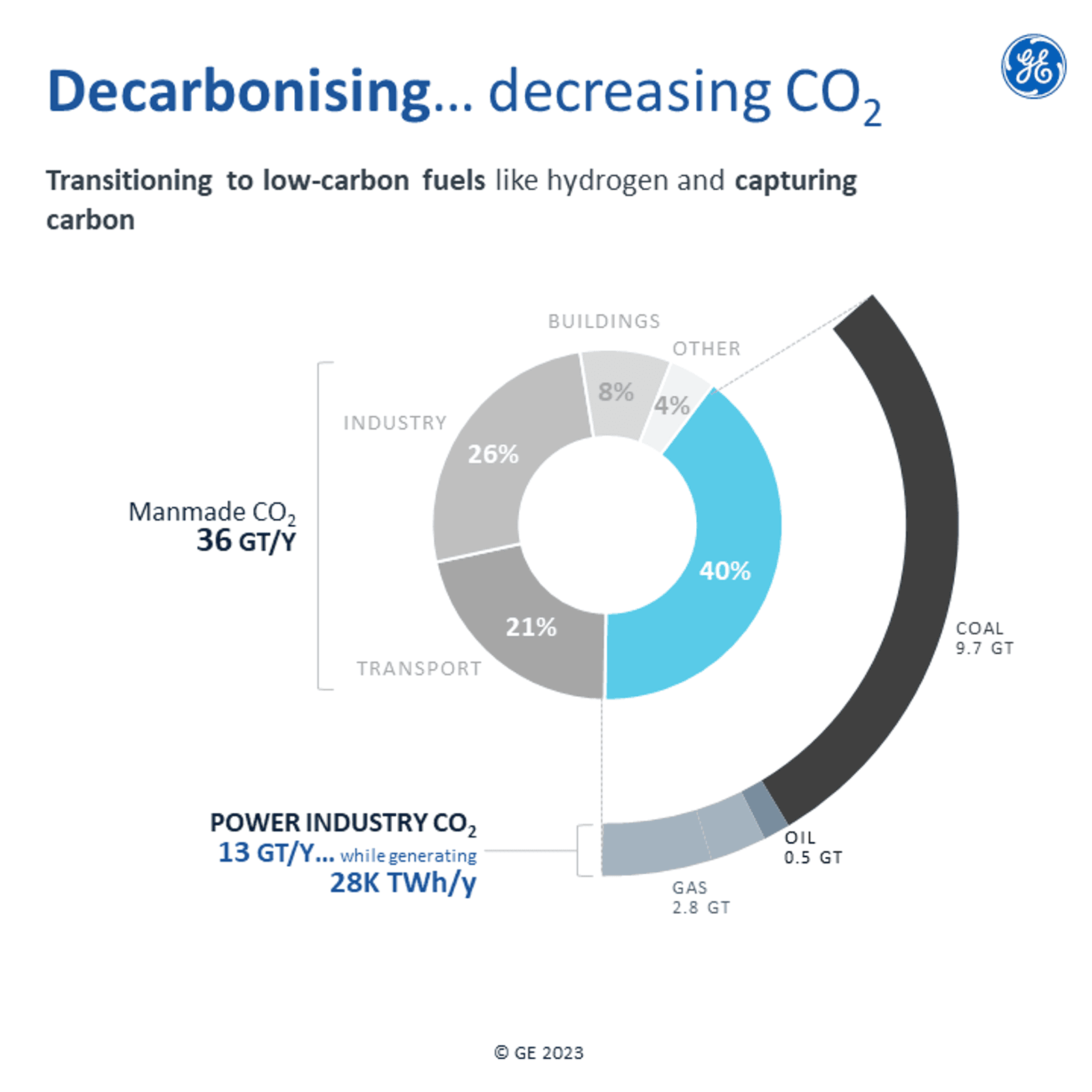
Natural gas is a fossil fuel and burning it in a turbine emits carbon dioxide. Nearly a third of the total emissions of CO2 in 2022 (energy-related) were due to the power sector (13 billion tons), mainly because of coal combustion (9.7 billion tons of CO2), and gas generation contributing 2.8 billion tons, globally, per the IEA WEO 2022.
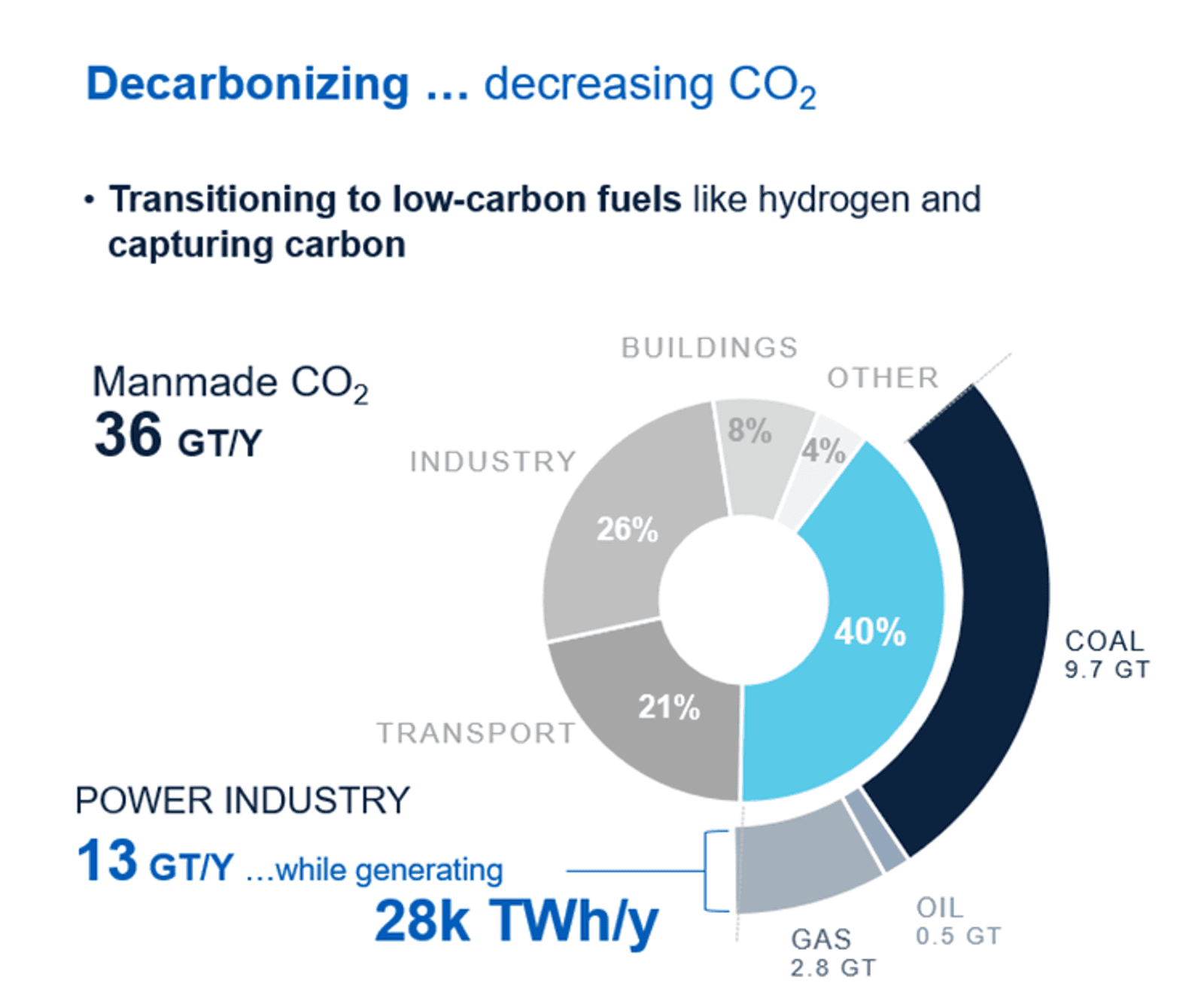
Decarbonisation of gas power assets is essential to meet our carbon neutrality pledges. Fortunately, solutions exist and are available today, both on the upstream - using low carbon fuels - and downstream – capturing the emitted carbon dioxide – directions.
As mentioned above, using low carbon fuels such as biomethane or hydrogen is possible in gas turbines. Some gas turbines have been running on hydrogen for decades and they can operate on a wide range of hydrogen concentrations. However, it is worth noting that replacing 50% of the volume of natural gas with hydrogen does not mean reducing 50% of the CO2 emissions. Because of the lower specific energy of hydrogen, a higher volume is required to obtain the same amount of calories and it is only possible to achieve a 50% reduction of CO2 emissions from combustion with a minimum hydrogen share of 75% share in the mix.
Another valid option is to capture the CO2 emissions of the exhaust flue gas of the turbine. Today, commercial-scale technologies based on the utilisation of liquid solvents allow for the capture of ~95% of CO2 from the combustion process. In a short-term future, decarbonisation with solid sorbents offer promising alternatives for more cost-efficient carbon capture.
With more than one string to their bow, gas turbines remain an essential piece of the energy transition. Solutions are available today for them to continue playing their irreplaceable role and generate efficient and low carbon power.
About the author: Isabelle Achin is Marketing Leader for Energy Transition at GE Vernova.
GE Vernova, a dynamic accelerator comprised of our power, renewable energy, digital and energy financial services businesses, is focused on supporting customers’ transformations during the global energy transition.