GE Vernova and CIC partner on green hydrogen production modules
Power Engineering International
Posted on: 15 May 2024
CIC announced a non-binding agreement with GE Vernova to lay out their intentions to collaborate on a design for deployment of hydrogen production modules.
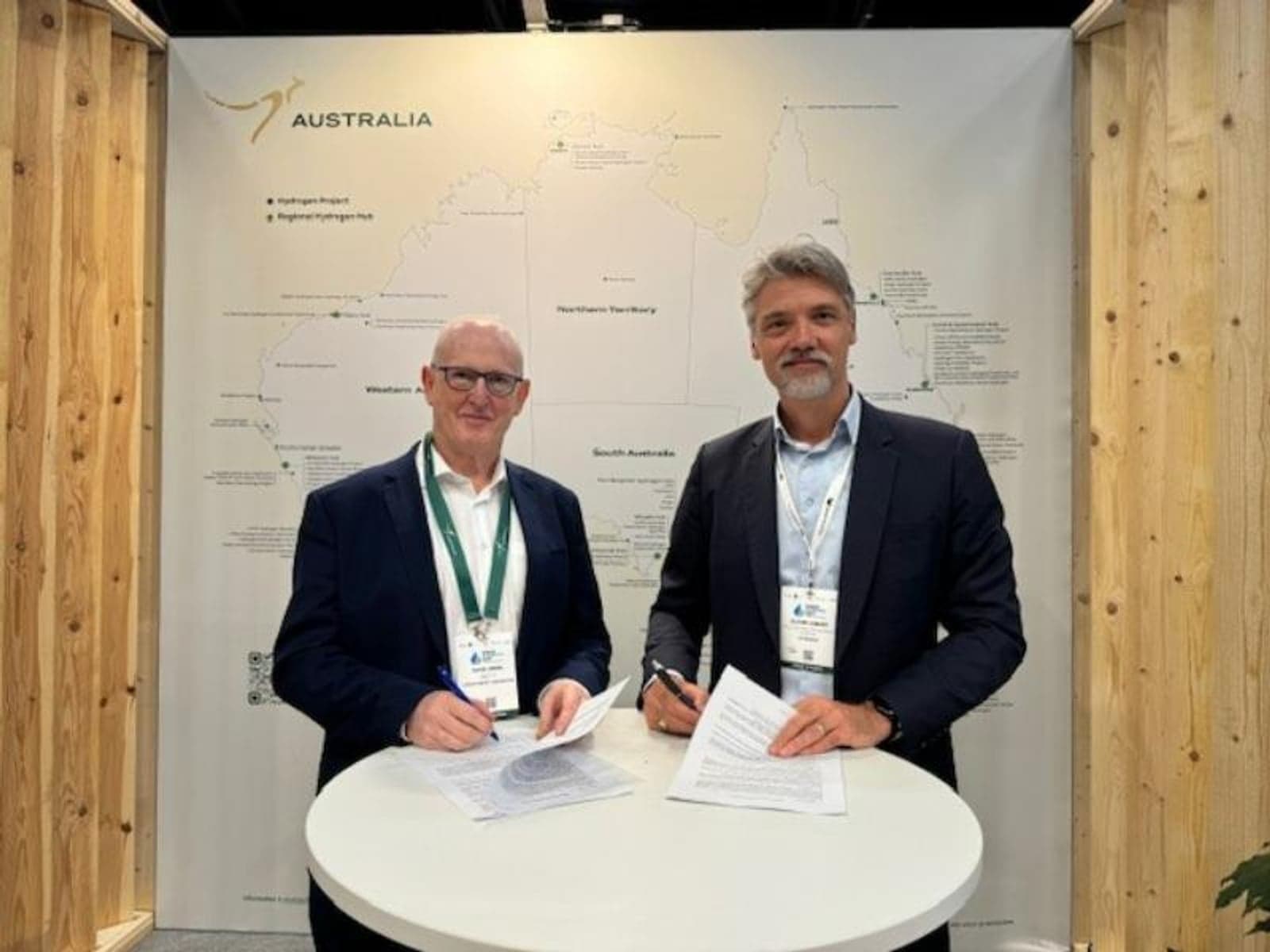
Climate Impact Corporation (CIC) announced a non-binding agreement with GE Vernova’s Power Conversion business to collaborate on a design of highly efficient green hydrogen production modules.
The ultimate objective of the partnership is to achieve a $2 per kilogramme production price for green hydrogen.
GE Vernova and CIC intend to co-develop an off-grid modular green hydrogen production technology that could form the building blocks of CIC’s flagship $10 billion Green Springs – a 10GW green hydrogen production project in Australia’s Northern Territory.
CIC’s Green Springs project is expected to deploy an expected 2,150 modules which in aggregate will produce more than 500,000 tonnes of hydrogen annually when fully operational, worth an estimated AUD$1 billion per year.
Have you read?
Belgium, Netherlands and Germany join forces to drive hydrogen economy
Solving the solid-state hydrogen storage problem through reticular chemistry
Each module comprises all the equipment and systems designed specifically for operation with off-grid intermittent renewable energy to produce low carbon-intensity hydrogen without connection to the electricity grid, town services or use of local water sources or desalinated water.
CIC chairman, David Green, commented, “CIC is delighted to be working closely with GE Vernova, a leading expert on decarbonisation, in approaching this project.”
According to CIC, this module design opens the way for a new wave of low-cost green hydrogen production opportunities in locations around the world where the best solar resources exist, typically in water stressed areas, without the need for expensive support infrastructure.
“Green Springs will demonstrate that renewable, sustainable hydrogen can be delivered at scale, in arid environments without accessing local water sources or using desalination, and in a way that pushes production efficiency closer to achieving a cost-competitive USD$2 per kilogram price point,” Green said.
“Through this agreement with GE Vernova, we hope to redefine traditional hydrogen production to be of the lowest carbon intensity, produced in a wider range of environments, and at a competitive price.”
Executive director for Microgrids at GE Vernova’s Power Conversion business, Olivier Jamart, said, “We need to look at new approaches to producing green hydrogen if we are to reach a USD$2 per kilogram production price. Disruptive innovation will be required to reach Green Springs’ target of USD$2 per kilogram price point. I am confident GE Vernova has the technology, experience, and track record to support CIC in their mission.”
Jamart added, “GE Vernova’s broad expertise in AC and DC coupled power electronic systems, along with our Energy Management System experience in mission-critical industries, enables us to take a system design approach with a clear focus on efficiency, availability and maintainability.”
Development of Green Springs Balance of Plant phase is currently underway and it’s hoped that the significant interest in the project could present further opportunities to deploy modular green hydrogen in similar climates around the world and unlock generation capacity in the energy sector and private, energy-intensive businesses.
David Green said, “The opportunity for green hydrogen to play its role in global decarbonisation is significant, but government, business, and investors around the world are all grappling with the same question – how we can bring down the production cost of hydrogen without sacrificing the sustainability opportunities it offers?”
Green added, “Equally, local communities are looking for socially responsible energy projects that consider and build around the local environment, rather than disregard it. This agreement, and the deployment of a modular approach at Green Springs, will demonstrate that flexible, scalable, environmentally-considerate, and cost-effective production are all simultaneously achievable.”