GHG emissions scopes and the need for effective carbon accounting
Guest/partner contributor
Posted on: 31 January 2025
Carbon accounting brings accuracy and consistency when measuring emissions, however, consistent metrics and collection methods are crucial.
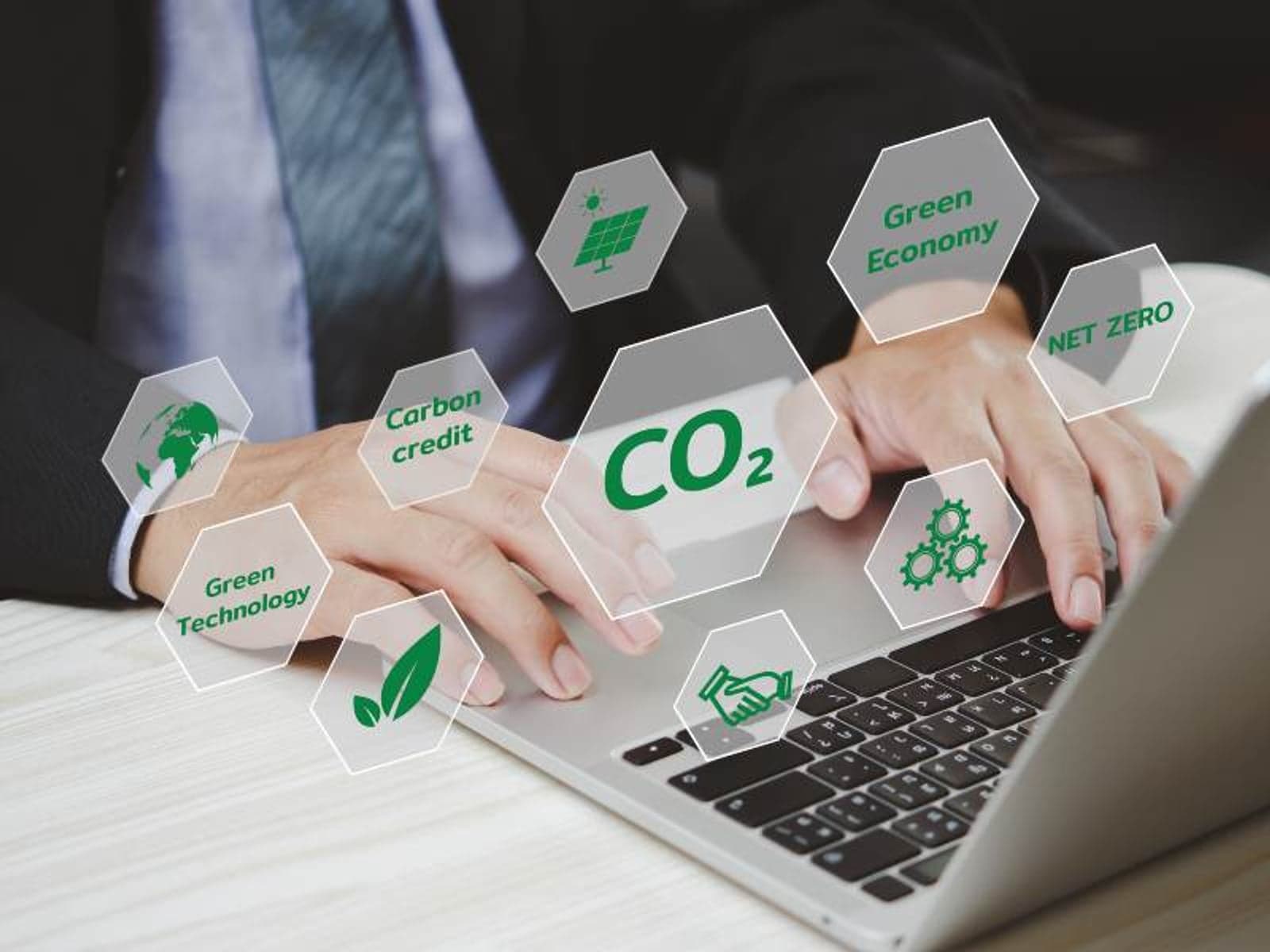
The field of carbon accounting has emerged to bring accuracy and consistency to the processes used by organisations when measuring their GHG emissions, however, as more countries report their emissions, consistent metrics and collection methods become crucial.
To this end, several standards have evolved to ensure consistency of the reported data, including:
The Science Based Targets Initiative (SBTi), a collaboration between CDP, UNGC, WRI and WWF, provides organisations with a climate science-based methodology for determining GHG reduction targets. The SBTi reported that, as of the end of 2021, 2,253 companies across 70 countries and 15 industries, had approved emissions reduction targets using SBTi methodologies.
Developed by the World Resources Institute (WRI) and the World Business Council for Sustainable Development (WBCSD), the GHG Protocol provides a framework for measuring and managing GHG emissions. It is the most common global standard for carbon accounting, adopted by all types of organisations in both public and private sectors and over 90% of Fortune 500 companies report their emissions using this framework.
Evolving climate regulations and disclosure standards
As the focus on emissions increases, a growing number of countries are requiring businesses to report on their environmental impact – and implement measures to reduce it. All members of the UNFCCC are required to report their GHG emissions annually to the United Nations (UN), and each country has implemented regulations requiring businesses to report on their environmental impact – and also to outline measures to reduce it.
The CDP is an international nonprofit organisation set up to help companies and cities meet their carbon disclosure obligations. Over 9,600 organisations, responsible for around 20% of global GHG emissions, disclosed through CDP in 2020, giving the CDP the world’s most comprehensive database of environmental data. As an accredited observer to the UNFCCC, insights from the CDP database play a key role in tracking progress towards the goals of the Paris Agreement.
The EU’s Corporate Sustainability Reporting Directive (CSRD) combines various reporting standards, including the GHG Protocol, (see below), and requires companies to report their social and environmental information in line with the new European Sustainability Standards (ESRS).
This directive currently covers 11,700 organisations, and a recent revision, effective 2025, will require more detailed reporting, including all three GHG scopes, along with other sustainability metrics across the whole value chain. The businesses covered by the CSRD will effectively be reporting on their environmental impact (Impact materiality), as well as the impact of sustainability matters on their finances (Financial Materiality).
The reporting requirements will be implemented progressively, in several stages, between 2024 and 2028, at which time the scope of the CSRD will be extended to cover non-EU parent companies with €150 million ($156 million) or more annual revenues in the EU and at least one EU located branch which conducts significant business. Over the coming years, approximately 50,000 companies currently exempt from reporting will be impacted by the CSRD.
Have you read?
Article 6 agreement will transform carbon markets as we know them
Energy Transitions podcast: Greening US gas assets for a decarbonised future
On a global level, the International Sustainability Standards Board (ISSB) issued its inaugural sustainability reporting standards – IFRS S1 and IFRS S2 in June 2023, creating a common language for companies to disclose corporate climate-related risks. These standards have received broad international support from investors, companies, policy makers, market regulators, IOSCO, as well as the G20 and G7 leaders.
Carbon accounting and emissions scopes
The GHG Protocol classifies GHG emissions into three different scopes (Figure 2).
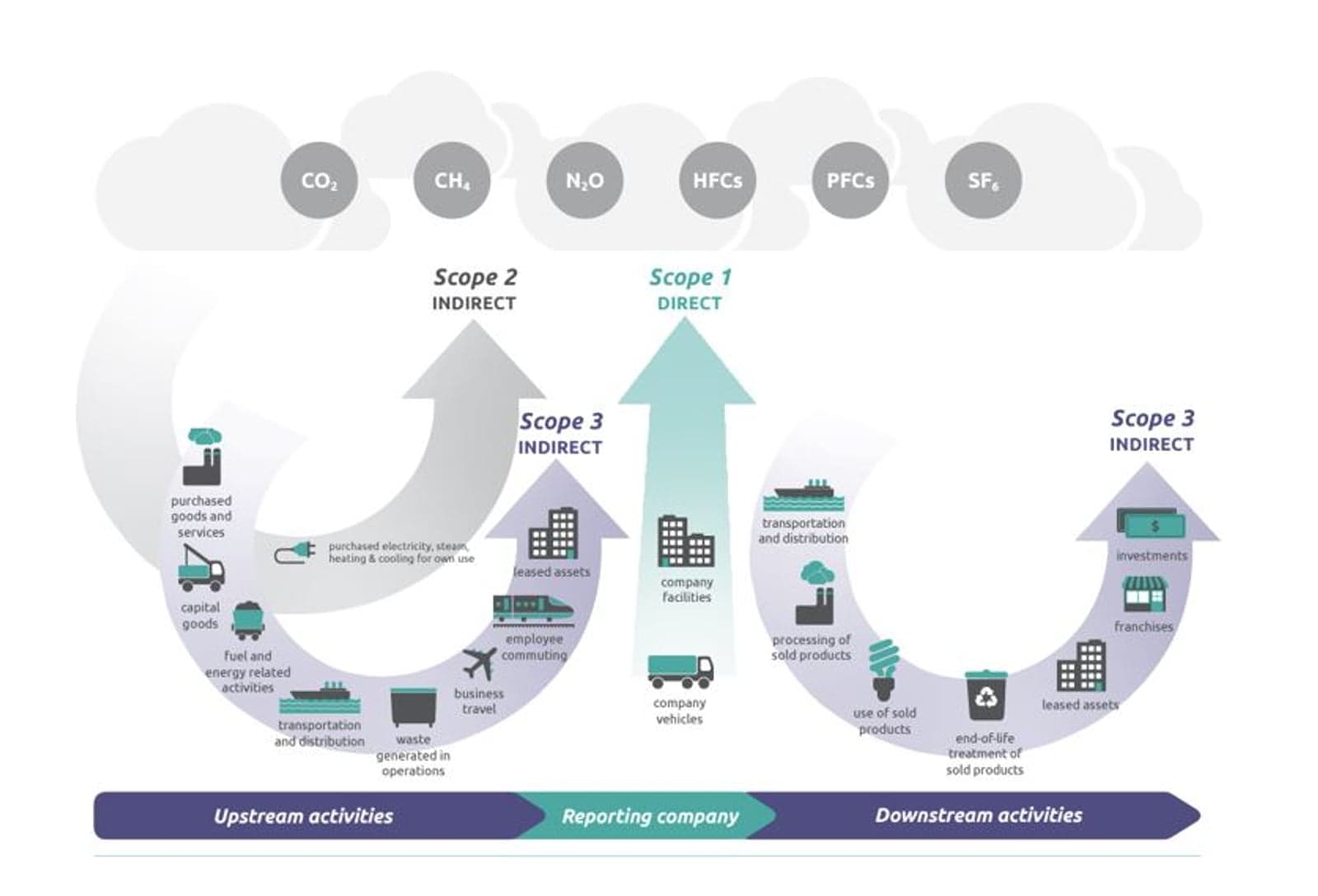
Scope 1: Emissions are GHG emissions directly produced by the reporting organisation. A generator manufacturer such as Rehlko, for example, will generate Scope 1 emissions from the processes and machinery used in the production and testing of its generator products, as well as from company-owned vehicles.
Scope 2: Emissions cover any utilities, such as fuel, electricity, and gas, purchased by a company to power its business operations. Scope 2 emissions are considered as indirect GHG emissions since they are generated offsite by the company’s energy providers. Measuring Scope 2 emissions gives a company the opportunity to improve its energy efficiency, for example, by selecting suppliers who maximise their use of renewable energy sources.
Scope 1 and Scope 2 emissions are similar as the reporting company can directly control them, either by improving the energy efficiency of its operations or by choosing more efficient energy suppliers.
Scope 3: Emissions cover any GHG emissions resulting from activities throughout the lifecycle of the organisation’s products or services which aren’t captured under either Scope 1 or Scope 2 emissions. Scope 3 emissions relate to both upstream and downstream activities of the reporting organisation. Examples of upstream emissions include all cradle-to-gate emissions related to raw and processed materials procured by the organisation. This includes resource extraction, manufacture and distribution to the point of arrival on the reporting company’s premises. Other activities responsible for upstream emissions include business travel, employee commuting and emissions from leased assets.
Downstream examples, including gate-to-grave, are generated over the lifecycle to the point of arrival on the reporting company’s premises. Other activities responsible for upstream emissions include business travel, employee commuting, and emissions from leased assets. Downstream examples include gate-to-grave emissions generated by the distribution, use, operation, and disposal of products sold by the operation. This includes end-of-life transportation and emissions from any franchises and downstream leased assets.
Also of interest: The European energy market is a ‘fudge’ says Ørsted’s Olivia Breese
Importance of carbon accounting for Scope 3 emissions
Understanding Scope 3 emissions enables an organisation to assess the environmental impact of all of its activities, and the GHG Corporate Value Chain (Scope 3) Accounting and Reporting Standard provides valuable guidelines for evaluating them.
Accounting for Scope 3 emissions helps identify the areas of the value chain responsible for the highest GHG emissions and can unlock operational cost-savings and innovative business models that drive collaboration across industries and their supply chains. It challenges the status quo of cost-driven decision-making in the procurement process and encourages businesses to take environmental impacts into account and set targets and strategies to reduce Scope 3 emissions over time.
The process of data acquisition across value chains can also help identify which suppliers have set more aggressive decarbonisation goals and which are lacking resources to support the carbon accounting exercise. Establishing this level of transparency between the company and its suppliers can accelerate the overall decarbonisation progress throughout the supply chain across various industries.
The cost and difficulty of measuring GHG emissions across the value chain cannot, however, be underestimated. According to ISS Corporate Solutions data, a global expert in governance, compensation, sustainability, and cyber-risk, fewer than 30% of companies globally disclose meaningful data for Scope 3 emissions. Among European companies, the figure is better, but more than 50% are currently only reporting emissions from business travel and employee commuting.
European companies leading the way in measuring, and acting on, their GHG emissions include L’Oréal, the world’s leading cosmetics company, which has been recognised for seven years in succession with an AAA rating for its environmental achievements.
Three climate-linked KPIs feature prominently in L’Oréal’s financing framework. One of these is a net-zero target 2025 for Scope 1 and Scope 2 emissions; the second targets a 14% reduction in “cradle-to-shelf” emissions by 2025 from a 2021 base year. The third KPI aims to have 50% of the group's packaging made from recycled or bio-based sources by 2025. Other organisations that have recognised the importance of Scope 3 emissions include Unilever, IKEA, JLL, AstraZeneca, Michelin, and Compagnie de Saint Gobain.
At Rehlko, we recognize the significant contribution of downstream activities to our GHG emissions. When our customers operate our generator products, they burn diesel fuels, contributing to their own, direct Scope 1 emissions and also Rehlko’s Scope 3 emissions.
As part of our focus on reducing our Scope 3 emissions, we have initiated a number of programmes, such as Conscious Care, which helps reduce the duration and frequency of genset test cycles, therefore reducing the use of diesel. At the same time, by ensuring that our gensets are certified to run on alternative fuels, such as Hydrotreated Vegetable Oil, (HVO), Rehlko can reduce our customers’ direct Scope 1 emissions and our Scope 3 emissions at the same time.
Improving accounting accuracy and identifying reduction opportunities are equally critical to limiting global temperature rise
Carbon accounting has become more sophisticated as pressures to reduce emissions in key regions such as EMEA grow, and global standards such as the GHG Protocol improve accuracy and consistency in measuring GHG emissions. The transparency enabled by these evolving accounting mechanisms highlights energy-inefficient organisations and processes and enables the deployment of alternative, greener options.
While accounting for Scope 3 emissions will give a true picture of a company’s carbon footprint, it is important not to lose sight of the overall goal – emissions reduction. Implementing a fit-for-purpose Scope 3 accounting framework can consume significant time and resources and will necessarily evolve over time, with shifting regulations and supply chains.
It is critically important that the ongoing quest for improved accounting accuracy does not take priority over the urgent need to identify and accelerate aggressive emissions strategies. Both sets of activities must proceed in parallel.
Looking ahead, Rehlko remains committed to working collaboratively with all customers on carbon reduction strategies to help them keep their businesses running in the most environmentally friendly way possible.