High stakes for Europe’s hydrogen push
Guest/partner contributor
Posted on: 19 December 2024
Jorgo Chatzimarkakis, Chief Executive of Hydrogen Europe highlights how the European Commission can leverage hydrogen to increase Europe’s competitiveness and reach net zero.
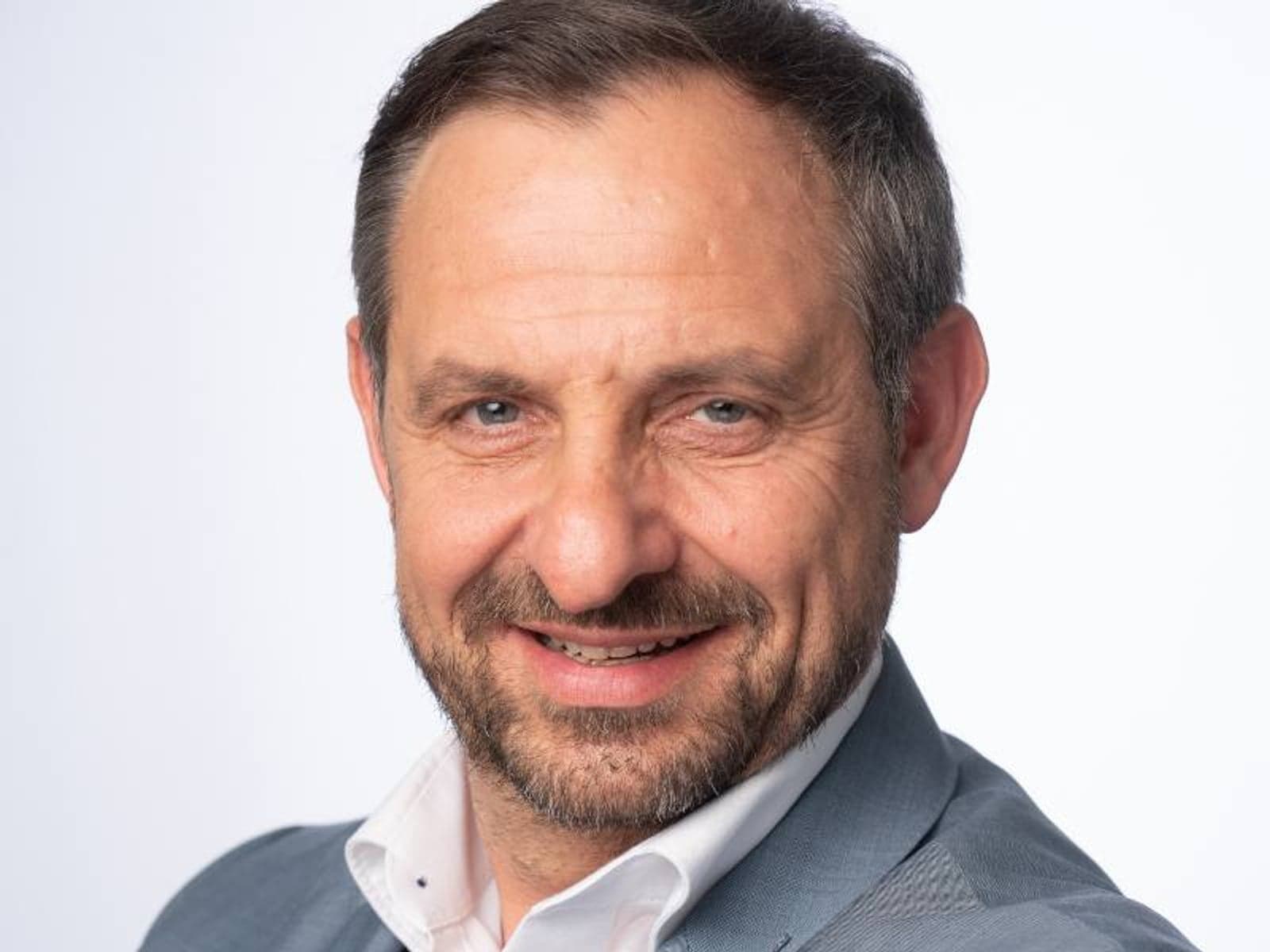
Jorgo Chatzimarkakis, Chief Executive of Hydrogen Europe highlights how the European Commission can leverage hydrogen to increase Europe’s competitiveness and reach net zero.
With the European elections in the rearview mirror, we have a new Parliament and Commission ready to take on the major challenges facing us all. Under Ursula von der Leyen’s second term as the Commission’s President, the energy transition will rightfully continue to be a policy priority requiring our best efforts and highest level of commitment to achieve.
Renewable, clean, and sustainable hydrogen are key components of this endeavour, and the Commission has made great strides since the launch of the 2020 Hydrogen Strategy in creating the framework for the market to grow. But the work is far from complete.
Some pieces of the puzzle are still missing, and some existing pieces must be improved for Europe to get all it needs out of a thriving hydrogen market: a complementary means to electrification through which we can achieve net zero, the improvement of our energy system’s resilience and security of supply, and retention of a substantial global market share in hydrogen technologies amid international competition.
Time is also of the essence, not least because of Europe’s ambitious climate targets but also because of the looming threat of climate change proper, which pays no heed to our timelines. We have yet to reach ‘peak oil’, and time is running out to even come close to the targets set in the historic Paris Agreement.
Hydrogen can provide the necessary flexibility for our renewables and help decarbonise energy and industrial sectors that are still reliant on fossil fuels. For that to materialise in time for our 2030 reality check, Europe needs to move from the notional inclusion of hydrogen in the energy mix to an earnest development of the hydrogen economy. We are already seeing success stories and the building of momentum.
Have you read?
How hydrogen took a trainee to the future of energy
Hydrogen market still sluggish shows IEA’s 2024 global review
In July 2024, within just one month, six European hydrogen projects collectively representing nearly 1GW of electrolyser capacity reached FID and are set to be built by 2030. This is very encouraging. However, the current state of market development and the absence of any large-scale projects in operation have prevented the European industry from scaling up enough to provide the economies of scale necessary to bring down the cost of equipment.
Before the European elections, Hydrogen Europe published its manifesto outlining 16 key recommendations, divided among three overarching pillars, for the new Commission to ensure the objectives laid out in the Green Deal are met on time with a thriving European industrial base creating jobs and growth for Europeans.
An EU industrial policy
The first pillar is centred on forming an EU industrial policy for a competitive, resilient, and sustainable Europe. This reflects the importance of putting European performance hand in hand with its sustainability goals. The many hours and euros spent on vital research and development of hydrogen technologies should see us reap the benefits – in decarbonisation but also in economics.
What is vital, when it comes to hydrogen, is to avoid a repeat of what happened with solar energy, which saw Europe left out in the cold after doing much of the heavy lifting to get the technology off the ground.
Key to this goal would be for the Commission to create a bona fide EU Clean Industrial Plan with key indicators for clean techs and their value chains, and subsequently assign an EC Vice President exclusively responsible for Industrial Policy to oversee the new plan and ensure EU competitiveness.
What makes up this plan as it relates to hydrogen and beyond? It is the development of a strong manufacturing base in Europe for hydrogen technologies and their components, with the support of new funding opportunities to derisk investments.
It is the acceleration of the buildout of renewable energy sources and the associated creation of a level playing field through sustainability requirements, the CBAM, common certification and standards.
By allowing clean technologies to compete within these parameters, which are essential to the energy transition, we will see a consolidated uptick in new projects, new capacity and offtake agreements across carbon-emitting sectors.
A clean-hydrogen market
The second pillar in the manifesto is about creating a thriving European market for clean hydrogen. This is already happening, with much of the primary regulation in place and the financial support coming courtesy of the European Hydrogen Bank, the Important Project of Common European Interest (IPCEI) programme, and other mechanisms.
Continuing, and increasing, the commitment to these funding sources will support the reaching of more FIDs by reducing risk and covering the price gap between production cost and the price that consumers can afford in a competitive global market.
Hydrogen Europe wants to see the creation of an investment-friendly regulatory framework aligned with the 2050 EU Climate Neutral strategy that, with economies of scale and continued advances in R&D and supply chains, will eventually bring renewable hydrogen to cost parity with current fossil fuels.
We hope to see swift adoption of the definition and methodology for lowcarbon hydrogen to include all production pathways capable of meeting strict emissions criteria. Introducing global certification schemes will support that goal for hydrogen produced in Europe and abroad, while the national implementation of existing European legislation, such as the Renewable Energy Directive (RED III) hydrogen targets, is paramount.
A European Hydrogen Grid Strategy
The third and final pillar is the development of a pan-European infrastructure that provides resilience and flexibility to the energy system.
The simple truth is that the astronomical cost of grid upgrades to accommodate the electrification of our societies can only be mitigated by the creation of a second, complementary infrastructure that does not rely on the power grid and provides a clean, transportable fuel capable of decarbonising hard-to-abate sectors as well as supporting the decarbonisation of the rest.
That fuel is hydrogen, which can be stored long-term and converted back to electricity on demand. A European Hydrogen Grid Strategy is needed to accelerate the rollout of IPCEI financing and unlock further funding, while a comprehensive storage strategy is also needed to ensure that we can avoid the expensive and useless curtailment of renewable power.
The creation of a European Network of Hydrogen Network Operators (ENNOH) will lead the development of the hydrogen network and coordinate national efforts with the electricity and natural gas operators.
The EU should also accelerate the development of hydrogen refuelling infrastructure and zero-emission fleets in the maritime and aviation sectors. In July 2024, Hydrogen Europe sent a letter to President von der Leyen to highlight some institutional and policy adjustments needed over the next five years to ensure that environmental, climate, social, economic, and geopolitical considerations are properly reflected in the EU’s legislation.
In the letter we reiterated the recommendations of the manifesto, which do exactly that. Hydrogen Europe will continue to work as hard as possible to prepare Europe for a carbon-neutral future in which an intelligently designed energy network incorporates all available complementary tools: renewable energy, short- and longterm storage, hydrogen and other lowcarbon fuels. Such a network will make our ambitions reality, and Europe must seize this opportunity.
Latest content
+2
Reclaiming energy sovereignty: the EU’s strategic response to a fragmented global order
Alexandra Garatzogianni, EUSEW digital ambassador, explains why energy sovereignty is vital for strengthening Europe’s resilience, advancing innovation and securing strategic leadership in a geopolitically volatile world.
- Guest/partner contributor
- 01/07/2025