How a startup mentality is re-energising GE Vernova
Kelvin Ross
Posted on: 29 January 2025
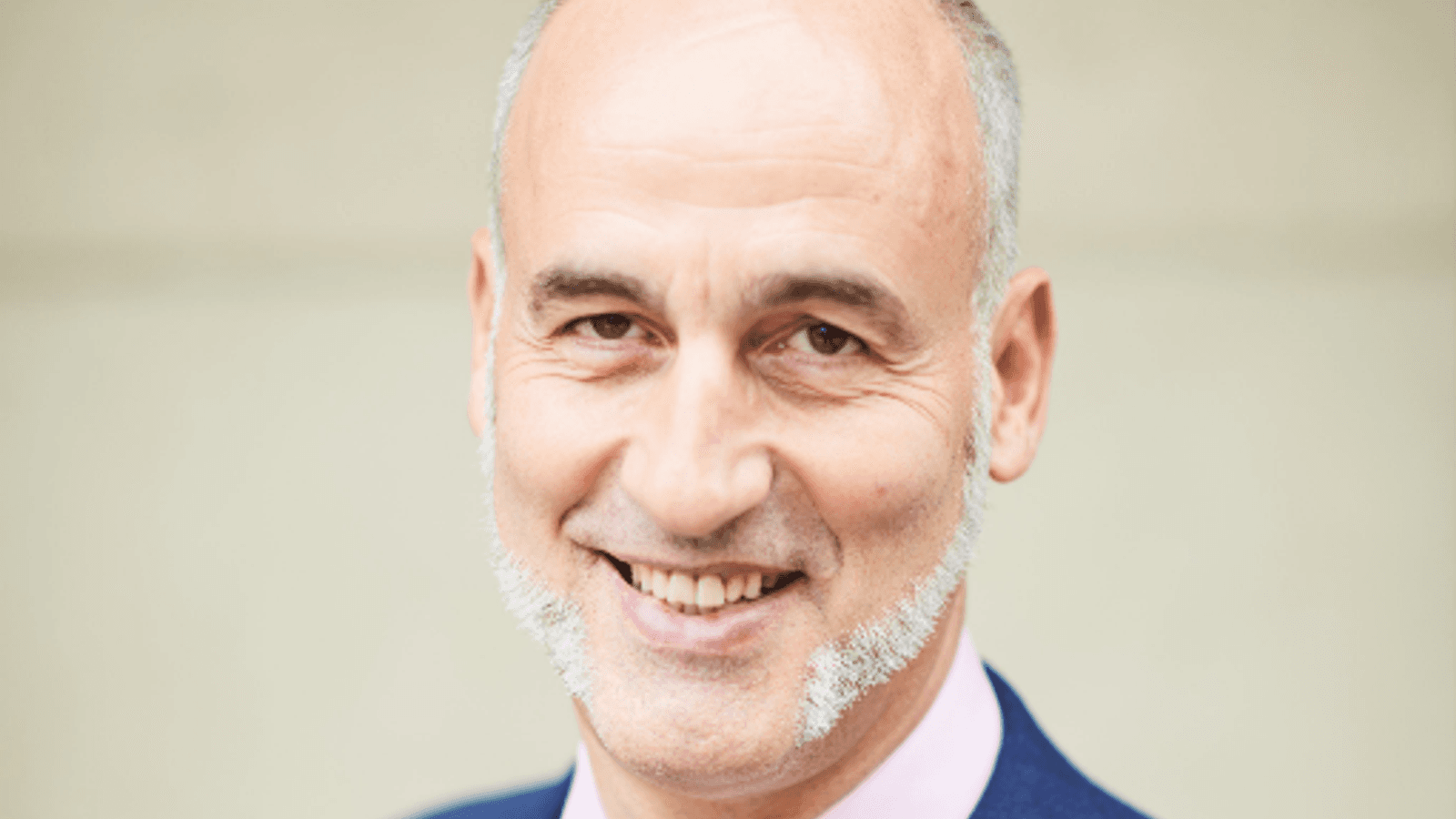
Markus Becker explains to Kelvin Ross how a start-up mentality is re-energising GE Vernova to tackle Europe’s pressing power challenges.
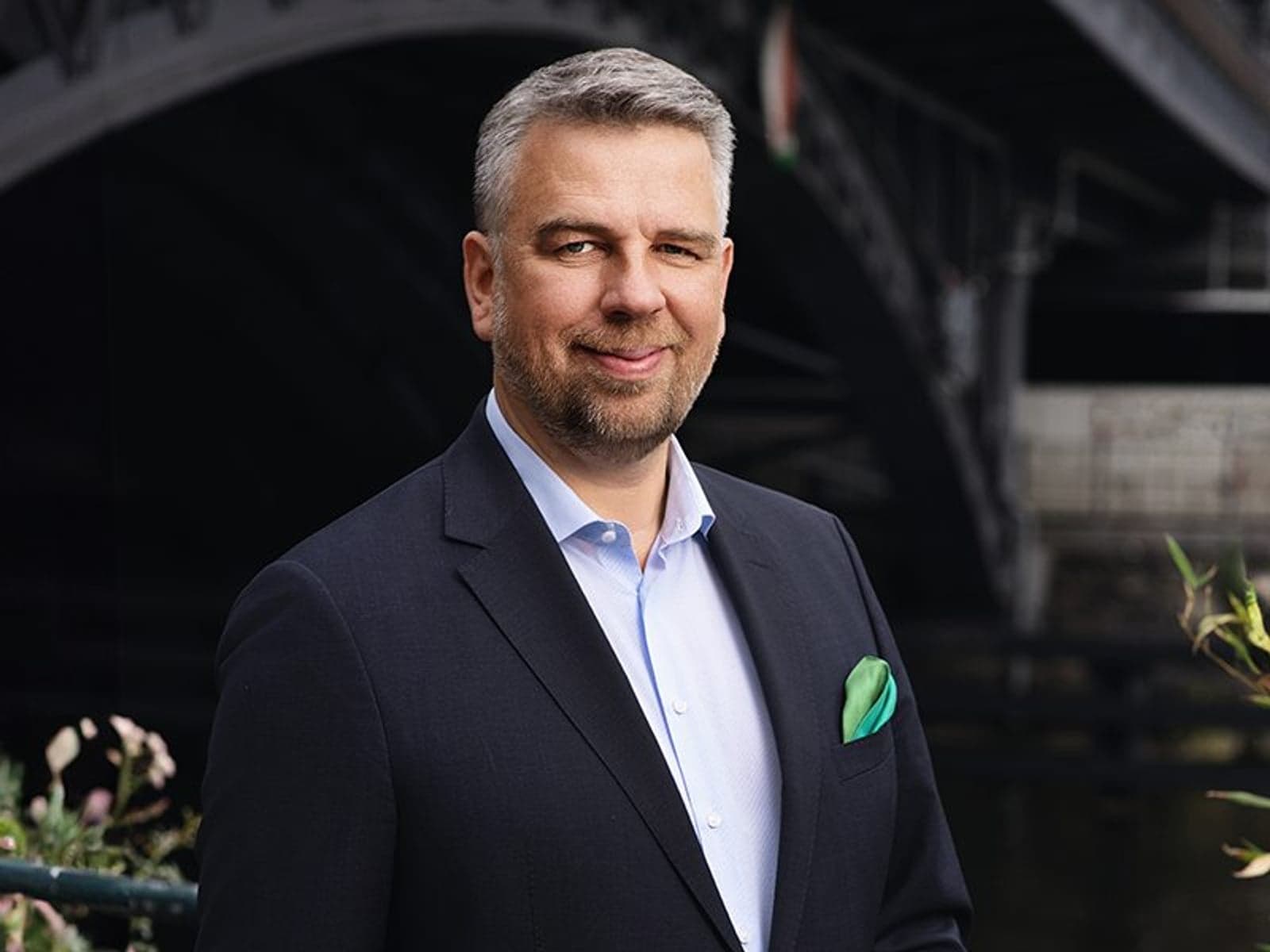
Markus Becker explains to Kelvin Ross how a startup approach is behind the mission of GE Vernova to tackle Europe’s pressing power and competitiveness challenges.
Markus Becker points at his feet. “We can wear sneakers again because we are cool,” he laughs. Becker is indeed wearing white trainers – as, co-incidentally, are two of his colleagues who join us for our interview – and the reason they find it funny is because they think it makes them look like the stereotypical,
twentysomething hipster who works at a start-up. (Neither Becker nor his colleagues are twentysomethings; neither am I, so we can all share the joke).
But behind the laughs is a serious point, because Becker works for GE Vernova, which does indeed consider itself a start-up… albeit a 130-year-old start-up.
GE Vernova Inc was formed this year from the spin-off of GE Power, GE Renewable Energy and GE Digital, all of which had previously sat in the wider GE portfolio alongside the health and aviation divisions.
However, now it’s a pure power technology company, and one that has made a boardroom decision to adopt the mindset of a start-up.
“The keyword for us here is focus,” says Becker, who is the Executive Director for Strategic Positioning and Business Development at GE Vernova’s Consulting business. “Because the past was very much this conglomerate approach: just take internal leadership meetings – energy was always just a third of the discussion. The rest was aviation and healthcare."
“Now we really have the focus, because we are a purpose-built electrification and decarbonisation company, and that brings with it this start-up kind of approach, because that is our mission and our purpose.”
And that, he says, “first and foremost requires the right mindset of everyone to collaborate, to try new things, to fail fast and be honest if something doesn’t work.
“Yes, we are built on this 130-year legacy of the old GE…but this is now. This is our ‘now’ to do things differently.”
Read more:
GE’s Claudia Blanco talks reshaping the industry through tech and leadership
Meet the rocketman of AI: Accenture’s Stuart Brown
What is it that needs to be different? And why? Becker says that for GE Vernova chief executive Scott Strazik, success looks like “steel in the ground. That’s how he measures success: it’s getting your hands dirty and actually doing something rather than talking about doing it.”
And Becker says this call for action, not words, is needed because “the energy transition has so far been, to a large extent, hugely over-promised and under-delivered”.
“That’s what policymakers are now struggling with: it’s easy to adopt good-looking targets in your Sunday speech, but then doing the hard work Monday to Friday in terms of implementation… that’s the hard part.”
‘Hard’ is a good description of the journey that the gas sector has been on in Europe in recent years: a security crisis combined with a price crisis. Yet it has come out of that particular tunnel and now gas, rather than being the ‘bridging fuel’ to renewables, is now seen as their companion.
Becker gives his take on the role of gas: “I think you need to distinguish the fuel from the technology.
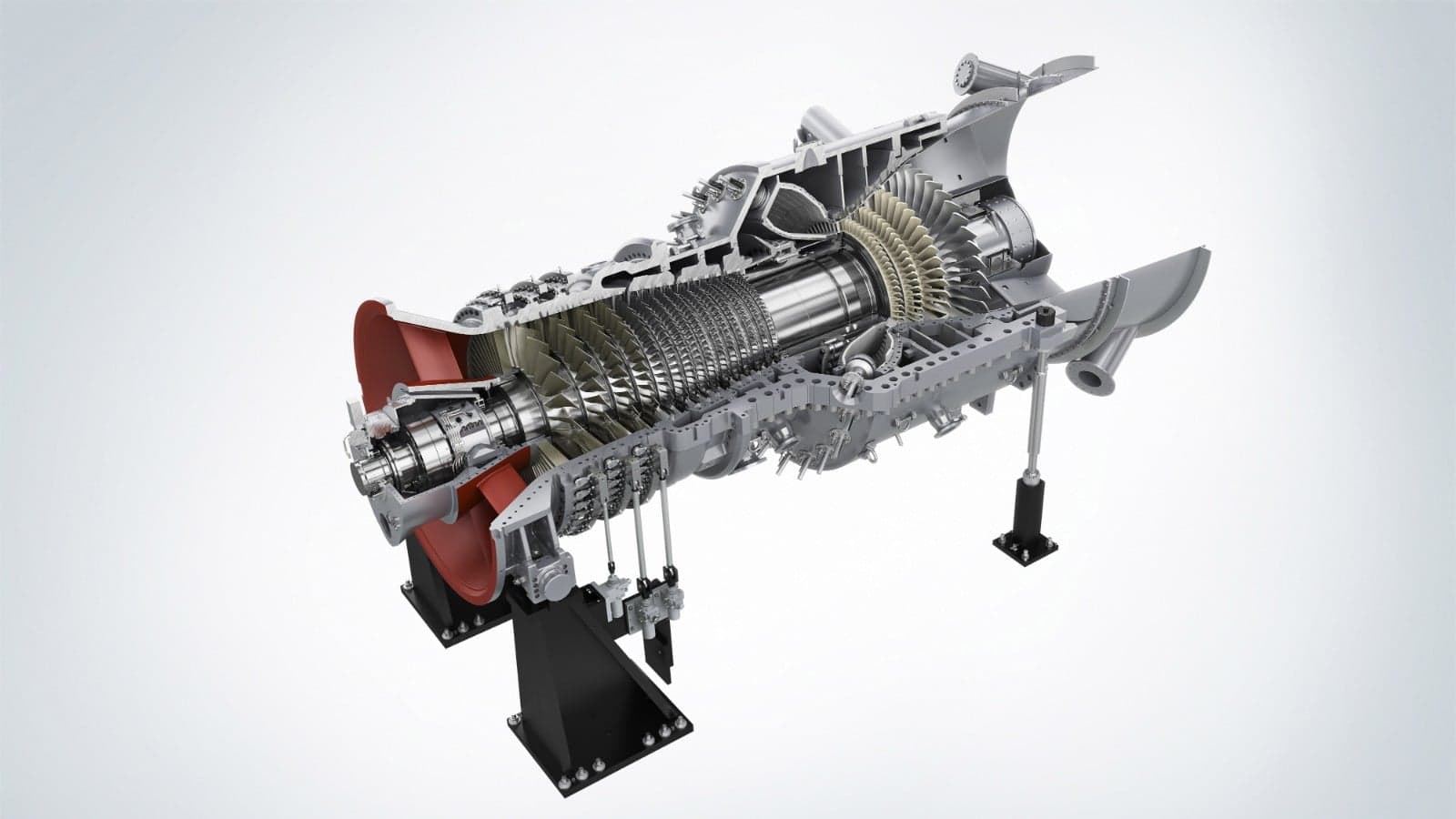
Our strong belief is that rotating assets – turbines operating on gaseous fuels – will still be needed even in the decarbonised grid of the future, simply because renewables come with intermittency. There’s a need to provide flexibility both on the supply and the demand side.”
Yes, we are built on this 130-year legacy of the old GE… but this is our ‘now’ to do things differently.
He explains that GE Vernova “had this discussion with various stakeholders around the taxonomy, where we really tried to educate them that we need to separate the fuel from the technology".
“We said: ‘You still will need the technology because you need these rotating assets for frequency and grid stability. Let’s have a discussion on the fuel and what we can do pre or post-combustion to decarbonise’.”
And that, he adds, is why GE Vernova is feeling “very bullish”.
“We are in a lucky position. We bring a unique perspective as a systems level company. You really need to understand the constraints of the grid. You need to know how to secure flexible and dispatchable power. And that’s the unique opportunity we now have as a system-level startup in that space.”
A system-level startup needs system-savvy workers. How is GE Vernova tackling the workforce issues of recruiting, retaining and reskilling that pervade the whole energy ecosystem? “As much as we are a technology company, at the end of the day, it’s always about the people,” says Becker. “People come first – this is really a key part of the culture."
“Given the growth that we are expecting in terms of electricity demand from electrifying transport and heating, and with the AI trajectory that we’re seeing, this is a growth industry, and it should therefore be attractive for people who are looking for a career.
“And because we need to transition the entire system, a company [like GE Vernova] that offers growth and career opportunities across so many different technologies under one roof should also be very exciting.
“We need to ensure we get the right system-level engineers. You cannot spell system without ‘S-T-E-M’:
science, technology, mathematics. That is the future. We want these backgrounds because climate change is the biggest challenge to humankind.”
Becker mentioned the European Commission: he knows a thing or two about energy policy and advocacy. He was GE’s Europe Head of Government Affairs and Policy for six years; he was on the board of the US-Ukraine Business Council, and he currently sits on the board of WindEurope. So with a changing of the guard this year in Brussels, what does he expect to see? What does he want to see?
“I think there are two sides to it,” he says. “Firstly, the decarbonisation and electrification train has left the station, as both are not only indispensable and economically viable but also essential to meet our climate objectives.
The energy transition has so far been hugely over-promised and under-delivered.
“Moreover, the energy transition is not merely about reducing emissions. It’s a powerful driver of innovation, job creation, and competitiveness. Nations that invest in these technologies are positioning themselves at the forefront of the new energy economy, thereby securing their economic future.
“I think we will therefore see a shift now to industrial policy – or, better, to re-industrialisation by electrification. That’s where I think the focus will go. How do we make sure that the energy transition is also ‘Made in Europe’ and that value creation is happening here and not in China or elsewhere?
That’s an important aspect.”
He adds that “we will also probably see a shift to emphasise the security aspect more in addition to the
climate aspect: because of geopolitics and extreme weather events, how do we protect critical infrastructure?”
And one of the biggest questions of all will be “how do we finance it? How do we make sure that we have liquidity in the market to finance, for example, the grid expansion or long-term storage? Those are probably some of the key issues for the next European Commission.”
Industrial competitiveness
The need for a Made in Europe energy transition goes to the heart of the bloc’s industrial competitiveness, which many believe is in peril, not least because of the Inflation Reduction Act (IRA) legislation passed by the Biden administration in the US.
Becker concedes that Europe’s response to the IRA “probably has not been strong enough”, however he is quick to caveat that “maybe the EU has done what it could do given diverging interests between member states, and because it is not a government: it does not raise taxes, so it cannot give a tax rebate like the IRA. So there’s a systemic difference between the two political systems.”
But he adds that “Europe needs to do more in this space and make strategic choices. Europe needs to bring back market-based principles, deepen its market integration, accelerate the development of pan-European energy infrastructure, and be realistic about the future of energy-intensive industry subsidies because we will not be able to subsidise our way through this transition.”
Recent years have seen several ‘hypes’, not least around hydrogen, and Becker believes now is the time for a reality check.
“With hydrogen, there was a lot of excitement because of what politics put on the table. What will be important for this next phase of the transition is a reminder to everyone that we cannot negotiate with nature, you cannot ban the laws of physics… and you need a business case.
“There are a lot of ‘wannabe’ hydrogen producers – but if there’s not a hydrogen buyer, you don’t have a project. It’s as simple as that.”
And he is adamant that GE Vernova must be vocal in the European energy dialogue: “We must try to be one of the voices of truth. Given that we have such a portfolio, there’s a role for us to play, to bring that knowledge and experience of more than 100 years that goes all the way back to Thomas Edison.”
At the mention of Edison, I ask Becker what would happen if we could bring Edison, Tesla and Westinghouse back to life for a day and show them the energy system of today. He laughs: “Well, I think at least they’d see we resolved the battle of their day, the DC versus AC debate, and in fact we
needed both in the end.
“Yes, it’s still the same cable physically, but the industry it serves has transformed. We are now in a world constrained by finite resources, where the circular economy and artificial intelligence are not just concepts, but realities – they are all providing us with new challenges, but more importantly,
new opportunities.
“So I think Edison, Tesla and Westinghouse would find themselves like kids in a candy store.”