How renewables and energy storage can repower Ukraine
Enlit Editorial Team
Posted on: 6 December 2024
Ukraine needs to repair and renew its energy system to deal with the immediate energy crisis but the country must also rebuild a resilient system to meet climate targets, a conference in Brussels was told.
Ukraine needs to repair and renew its energy system to deal with the immediate energy crisis but the country must also rebuild a resilient system to meet climate targets, a conference in Brussels was told.
And this is where storage and renewables can play a role, writes Vic Wyman in Brussels.
The Repower Ukraine With Energy Storage and Renewables conference heard how millions of people could suffer hardship within weeks as the expiry at the end of 2024 of a gas transit deal between Russia and Ukraine is expected to halt the flow of Russian natural gas to countries which include Austria, Slovakia, Czechia and Hungary.
Moldova to the south of Ukraine would also be badly hit as gas from Russia's Gazprom currently flows through Ukraine to fuel a 2520MW power plant in the country's Transnistria region which produces about two-thirds of Moldova's electricity. The plant can run on coal — but coal from the Russia-occupied Donbas region of Ukraine.
The risk has been clear since Russia's full-scale invasion of Ukraine in February 2022: Russian transit flows fell from more than 40 bcm in 2021 to less than 15 bcm in 2023, according to an International Energy Agency report in September 2024.
Gas risk for Ukraine
From January, Ukraine — normally able to meet domestic gas demand for power generation and heating from its own production and storage — might need to import gas from Central and Eastern Europe if winter turns colder than on average. Lows of -20°C are not uncommon.
However, most prices are fixed below market rates, with residential heat producers paying less than half the market rate, at least until the end of April 2025. That has hit gas supplier Naftogaz badly.
Exclusive Ukraine energy content
Meet the gamechanger bringing renewables to Ukraine
How Ukraine is evolving its energy system by building grid resilience
DTEK boss channels spirit of Ukraine boxer Usyk to fight power plant bombings
Russia has regularly targeted all of Ukraine's energy infrastructure, including much hydropower. In 2022-23, about half of Ukraine’s generation capacity was either occupied by Russian forces, destroyed or damaged, and about half of large substations were damaged. Russia's occupation of the Zaporizhzhia nuclear plant reduced available Ukrainian generation capacity by 6GW.
By mid-2024, intensified attacks left Ukraine with only about a third of its pre-war generation capacity. In the summer of 2024, said the IEA, capacity fell 2GW below peak demand of 12GW, which it predicted to increase to 18.5GW this winter.
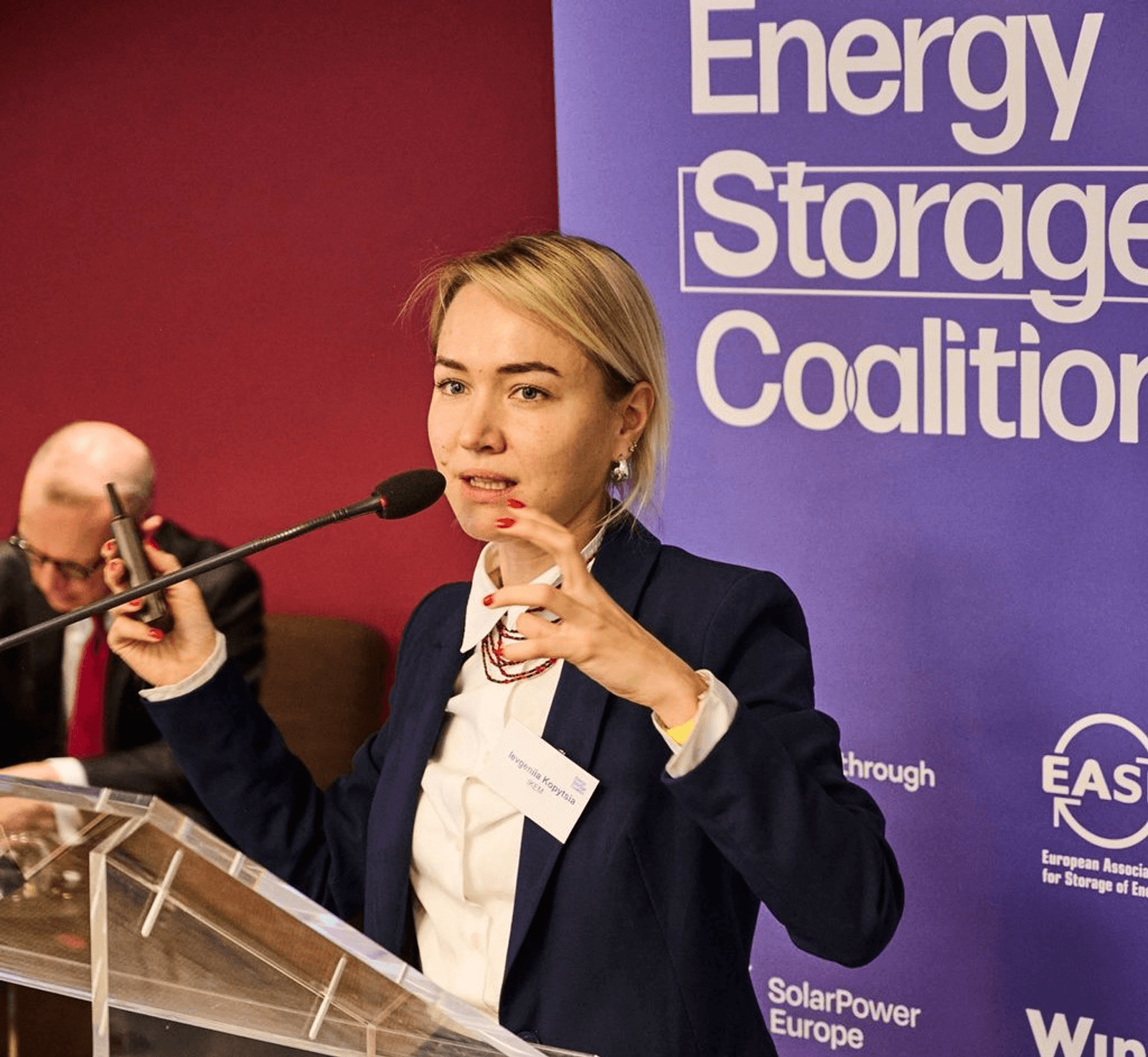
"Today Ukraine struggles to produce 9GW," said Ievegeniia Kopytsia, associate research fellow at the Institute for Climate Protection, Energy and Mobility (IKEM) in Berlin.
One effect has been rolling blackouts across the country. "We are talking about survival," said Doriana Forleo, director of the Energy Storage Coalition, which comprises the trade associations SolarPower Europe, The European Association for Storage of Energy and WindEurope and the net-zero organisation Breakthrough Energy.
Also, between 2022 and May 2024, 18 large combined heat and power plants, 815 boiler houses and 354km of district heating pipes were damaged or destroyed, at a direct estimated cost of $2.4bn, reported the IEA.
Extreme cold in coming months would hit the population and the overstretched health system hard, it added. Lack of heat or electricity could lead to more refugees internally and abroad.
Long-term efforts
The widespread view is that although Ukraine needs to repair and renew its energy system now, it must also rebuild a resilient system that allows it to meet climate targets.
"Working on the topic will require huge investment," said Forleo, at an Energy Storage Coalition meeting in Brussels, Belgium on repowering Ukraine with energy storage and renewables.
The European Investment Bank (EIB), which has focused on networks and energy efficiency in Ukraine, has provided €2bn of emergency support since the war started.
EIB launches €600m Ukraine Energy Rescue Plan
The EU is providing up to €50bn of financial support, including loans and grants, in 2024—27. Supporting rebuilding up to now "has been a challenge", said Marcus Lippold, a team leader in DG Near, the European Commission directorate for EU policies related to its eastern and southern neighbours. "This rebuilding cannot just be done by the government."
Forleo told Enlit Media that Ukraine needed both public and private investment. "We need it and we need it yesterday."
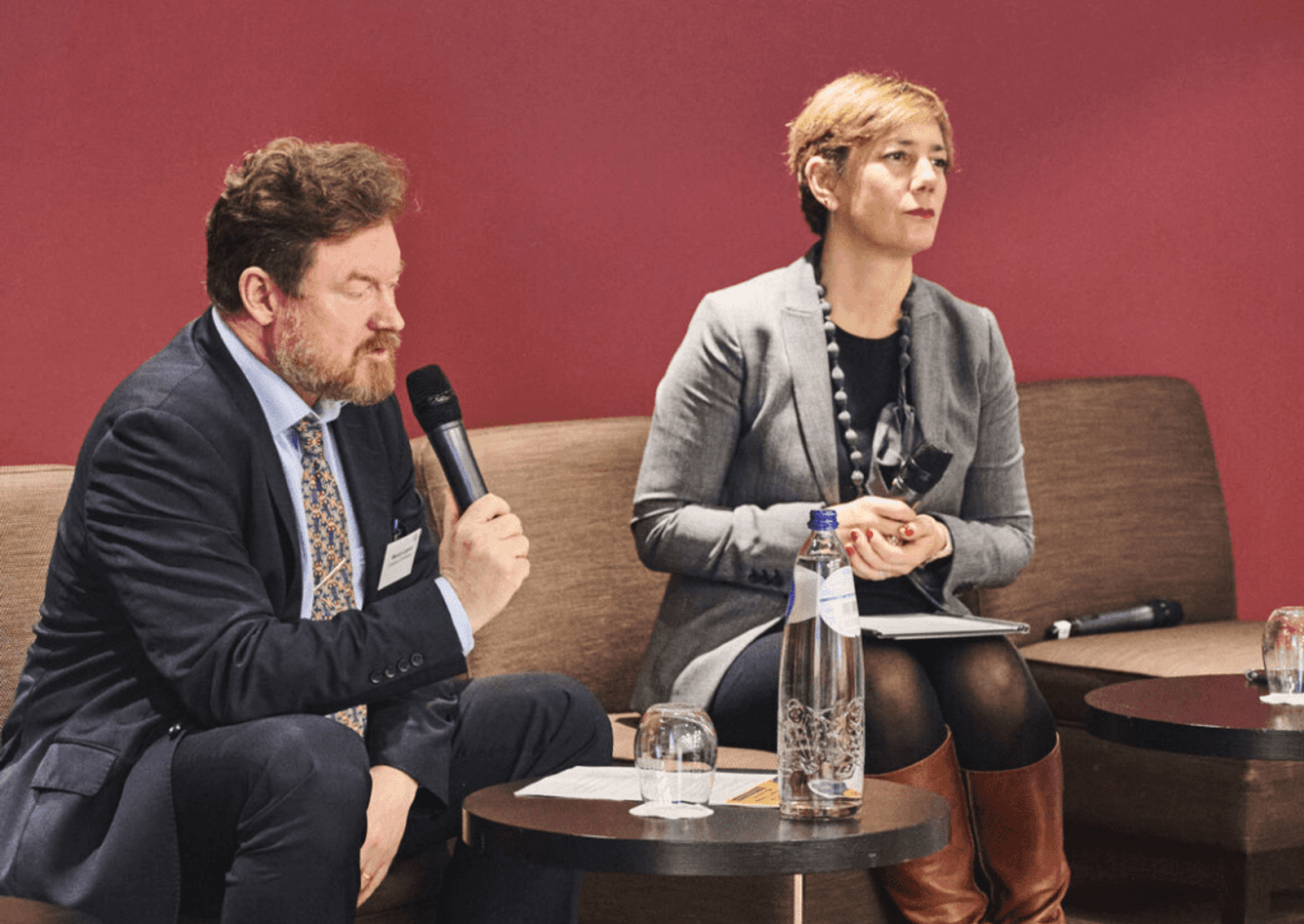
Lippold said the near-term focus was on the electricity transmission, including links to the three nuclear plants still under Ukraine's control: "Russia has recently begun attacking transmission substations of the nuclear fleet." Nuclear power generated half of Ukraine's pre-war electricity (coal-fired plants supplied 23% and gas-fired plants 9%).
Major pivot
However, Ukraine has been moving away from centralised energy production to boost security of supply, typically with renewables. Kopytsia pointed to 650MW of renewables installed in 2022—23. That included 371MW of solar units, 287MW of which was on homes.
However, Ukraine still suffers from the grid operator Ukrenergo's pre-war failure to pay $1bn to renewable energy producers, said Alexander Antonyuk, energy representative for Eastern Partnership at the EIB: "There were issues before the war and they are still there." Much remained unpaid, he told Enlit Media: "There's still a legacy."
Before the war, Ukraine's power system was interconnected with the Russian and Belarusian grids, but with a 2017 plan to synchronise with continental Europe's system in 2023. On the day of Russia's invasion, Ukraine had just disconnected from the Russian and Belarusian system, for a planned 'isolated mode' test.
Ukraine and Moldova asked for an emergency synchronisation, which was achieved in days rather than the planned months. The IEA praised "an extraordinary effort" by European transmission system operators and Ukrenergo, coordinated by the European Network of Transmission System Operators for Electricity, with the support of the European Commission.
Continental Europe can provide Ukraine and Moldova with 1.7GW, with a few hundred megawatts of emergency supply for a few hours. However, fixed price caps limit imports and the structure of the energy market suppresses prices further, said Kopytsia.
Much of the rebuilding effort is linked to the country's proposed joining of the EU, including reform of energy markets and regulations. That would also ease electricity imports from the EU. "That is not really being used by Ukraine," said Lippold.
Uncertainties abound
Ukraine has changed laws to boost energy investment, but investors cannot be certain that they will get their money back, said Yolanda Garcia Mezquita, head of unit at the Energy Platform Task Force of the European Commission's energy directorate, DG Ener: "We need to create a new strategy for investment."
It is also difficult to find insurance for projects. "It is not just on the table," said Olga Michelot, co-owner of solar energy firm Helios Strategia.
Lippold also pointed to the Ukrainian government's focus on big projects, with a lack of skills and management hampering small projects, such as roof-top PV. Much of the effort, especially on electricity distribution, has been locally rather than by central government, he said: "We need to work at the central level but also from the bottom-up." Business parks have organised supplies for tenants, for example.
Also, as suppliers abroad are not keen to send engineers there, Ukraine is sending engineers abroad for training, said Vadym Utkin, energy storage lead at Ukrainian energy company DTEK.
DTEK and GE Vernova partner on restoring Ukraine’s energy infrastructure
Lippold acknowledged the need for more energy storage, but said how it fitted in was unclear: "Everyone knows it's needed." Dennis Hesseling, head of the IEA's gas, coal and power markets division, said: "It's a relatively new topic in Ukraine." Utkin pointed to the lack of Ukrainian capacity markets, for example. Large-scale storage is also a new area for the EIB.
Read now:
IEA: Ten energy actions for Ukraine as winter approaches
A parallel IEA effort to improve Ukraine's energy planning has been hindered by the lack of data, said Hesseling, and the effects of war: "The situation changes every day."
Yet, in the gloom of war, some see positives. "I'm quite impressed by the way that Ukrainian institutions are working on this," said Hesseling about the move towards more distributed and resilient energy systems. He also praised the management of the existing energy system: "It is quite impressive."
He told Enlit Media that many saw Ukraine's fight to survive its energy crisis as a major achievement: "Others will want to learn from that."
Kopytsia echoed that: "It can become a role model for the EU."