How utilities can wield the power of innovation to face Industry 4.0
Pamela Largue
Posted on: 27 September 2024
Utilities can struggle with quick and strategically aligned innovation, however, time is money and effective innovation will be critical to meeting grid modernisation targets.
Utilities often function in a way that challenges quick and strategically aligned innovation, however, as our energy and digital transitions gain momentum, time is money and effective innovation will be critical to meeting our grid modernisation targets.
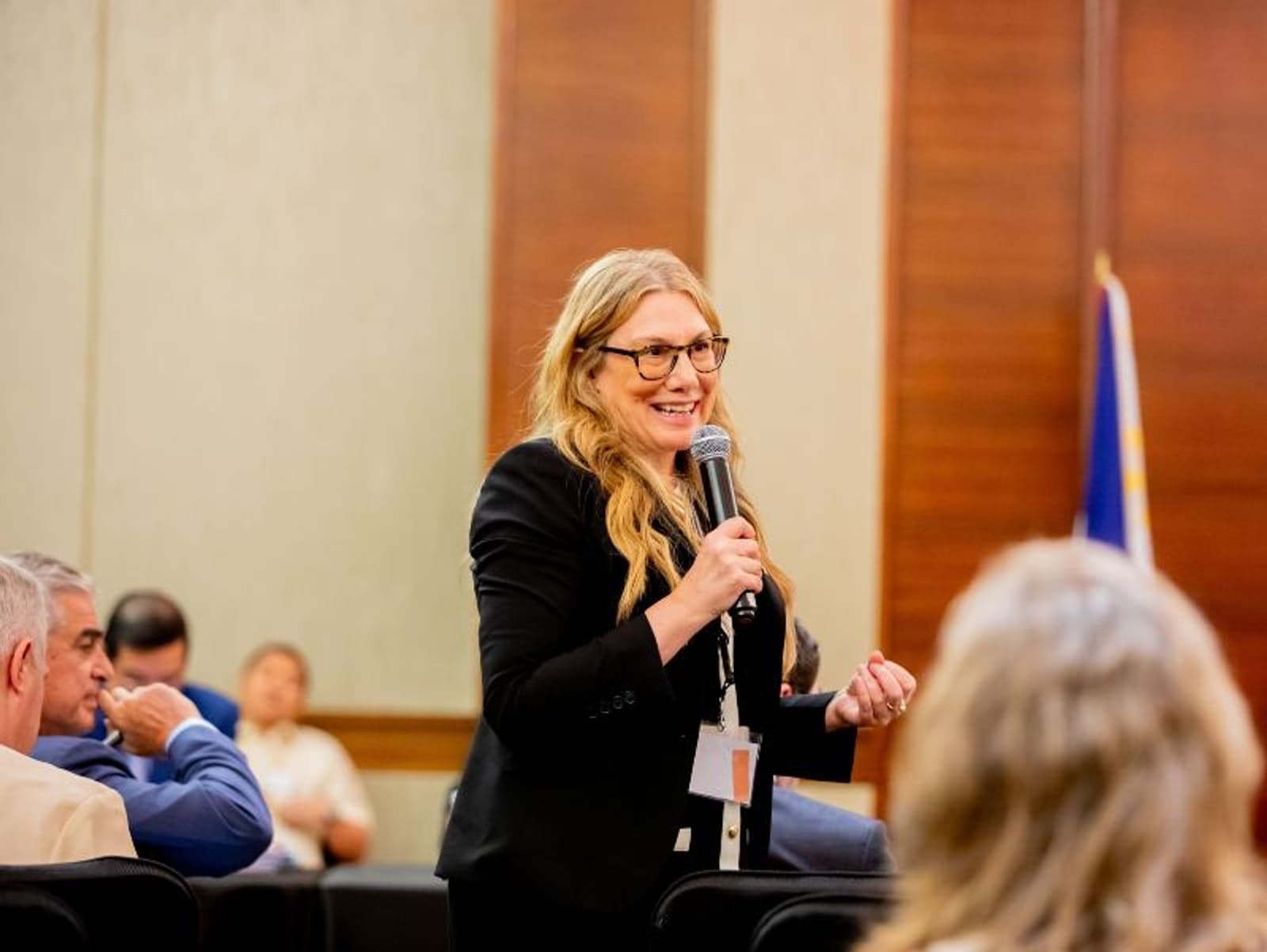
Kim Getgen, chief executive and founder of InnovationForce explains why utilities often struggle to get the most out of their innovation strategies, stating that utilities are masters of operations and driving complex projects at scale, but sometimes less adept at agile thinking.
Said Getgen: “When we ask utilities to innovate, it’s like putting on a new set of clothes. It’s going to feel uncomfortable because most utilities don’t know how to take in the new and get it through an approval process…”
The fact is that innovation is harder for utilities because they are highly regulated, risk-averse and have minimal budgets at their disposal, explained Getgen.
Also, regulation creates bureaucracy, a maze that can delay the innovation process and cause utilities to fall into a state of continuous improvement.
And Getgen suggests this needs to be avoided at all costs.
Referring to a well-known quote to illustrate her point, she said: "Electric light did not come from the continuous improvement of the candle, and that is what we are dealing with right now in the energy industry. It is breakthrough, it is transformational and it's changing everything."
Have you read?
National Grid projects win funding for transmission and distribution innovation
SPEN wins £21m in innovation funding across three projects
Why we need more innovation
According to Getgen, "utilities spend from 0.1% - 0.5% of their EBITDA on R&D, so that amounts to $1 billion to $6 billion annually.
"For the industry, we need to be spending $50 billion at a minimum a year over the next 20 years to even get close to some of the modernisation that we have been talking about in the transition."
To hit our ambitious decarbonisation targets, said Getgen, the grid will need to change from the inside out, and what used to work in a centralised system won't be effective in a decentralised system with intermittent sources of energy.
This is Industry 4.0 she said, and "the technology advancement that is coming in our modern world is hitting the utility's backyard more than any other industry."
She referenced the digitalisation of assets, grid modernisation strategies, the introduction of VPPs and advancements in mobility, 5G and AI. "All this new tech is coming to a service territory backyard near you."
But it's not only the technology that's changing.
There is also a radical change in business processes to help utilities ingest this technology, with new people coming into the industry to provide different perspectives.
"It's a party and doors are wide open."
How to innovate
While Getgen emphasises the exciting aspects of innovation, she added that this is unknown territory, which means some leaders might need to unlearn skills and behaviours that are no longer relevant.
Ultimately, speed and strategy in equal amounts are the keys to successful decision-making.
"On average it is estimated that it takes an organisation 12 months to make a decision on a pilot," said Getgen, adding that time is expensive.
Once the pilot is cleared, data suggest it takes around three to four years to get the pilot started and to start production, and that's not even production at scale.
"...[decision making] needs to be faster, we can't take 12 months to make decisions when you have Industrial 4.0 in your face."
According to Getgen, a faster process will also prevent startups from "dying on the runway" or entering "pilot purgatory" because they run out of venture-backed funds.
To remedy this, Getgen suggests design thinking and agile and lean ways to run pilots. "Come up with a challenge statement that you can test in 90 days or less" to test the potential of the thesis.
She highlighted three main considerations:
- Provide tight challenge statements or problems then couple your test plan to that problem. Rapid pilots will help you learn faster and will build creative agility in your organisation,
- Strategic alignment is critical to allow leaders to prove that they are strategically aligning what they are testing with the areas of focus,
- Collaboration between global utilities to share learnings and drive ecosystem innovation that maximises value for global grids.
Kim Getgen will be moderating a panel at Enlit Europe in Milan, from 22-24 October. Join the session,
Unblocking Europe’s Innovation Pipeline, to learn more about how to ensure Europe’s innovation ecosystem functions properly.
Key pitfalls and how to overcome them
There are barriers to overcome, emphasised Getgen, and despite regulation and budget constraints, she highlighted culture as one of the main hurdles.
Getgen highlighted some of the most important pitfalls to successful innovation. These include:
- Political barriers - it's important to establish who owns the project and who makes the decision. A well-defined and standardised procedure will help to avoid turf wars.
- Bureaucracy - innovators need to understand that they are part of a big machine that won't change for them. Rather they need to change their innovation process and adopt the necessary checkpoints to increase the chances of success.
- Status quo thinking - one of the most challenging aspects to overcome. It's important to include the people who will use the innovation in the decision-making process to ensure successful adoption.
Getgen also highlighted the capabilities necessary to spur innovation:
- Creative abrasion - to ensure healthy conflict and create cultures of psychological safety
- Creative agility - creating cultures of learning and experimentation
- Creative resolution - facilitating integrated and transparent decision-making
"If your company of innovators feels that the decisions are being made fairly, you have a higher likelihood of overcoming that status quo thinking."
Overcoming the fear factor
"When I listen to utilities...I do hear a lot of fear...it is a real shame when I'm talking to innovators behind closed doors, they are trying to take on the impossible..."
Getgen offered sound advice to CEOs and utility leaders to overcome this fear. "It's time to get inspirational and aspirational about your goals and align them to the art of possible that could be coming through your innovation programme and support those leaders..."
She encouraged leaders to allow ideas to flow from the front line and to foster a democratised and inclusive problem-solving process.
Utility leaders play a critical role in inspiring a culture of innovation. "This is a moon shot, how are you inspiring the rest of the organisation to hit this moonshot."
Listen to the full conversation with Kim Getgen, CEO and founder of InnovationForce, in this episode of the Energy Transitions podcast:
Related tags
Latest in Digitalisation
All articlesMembers only content
+3
Cybersecurity and digital infrastructure resilience for a complex grid
Cybersecurity is considered the second most significant threat facing the energy sector after geopolitical issues including conflicts, trade wars and access to critical minerals.
- Enlit Editorial Team
- 03/06/2026