How women engineers are boosting the EV charging industry
Guest/partner contributor
Posted on: 19 June 2024
To mark International Women in Engineering Day| Charlie Allen and Uma Singh highlight how their degrees enable them to develop EV solutions.
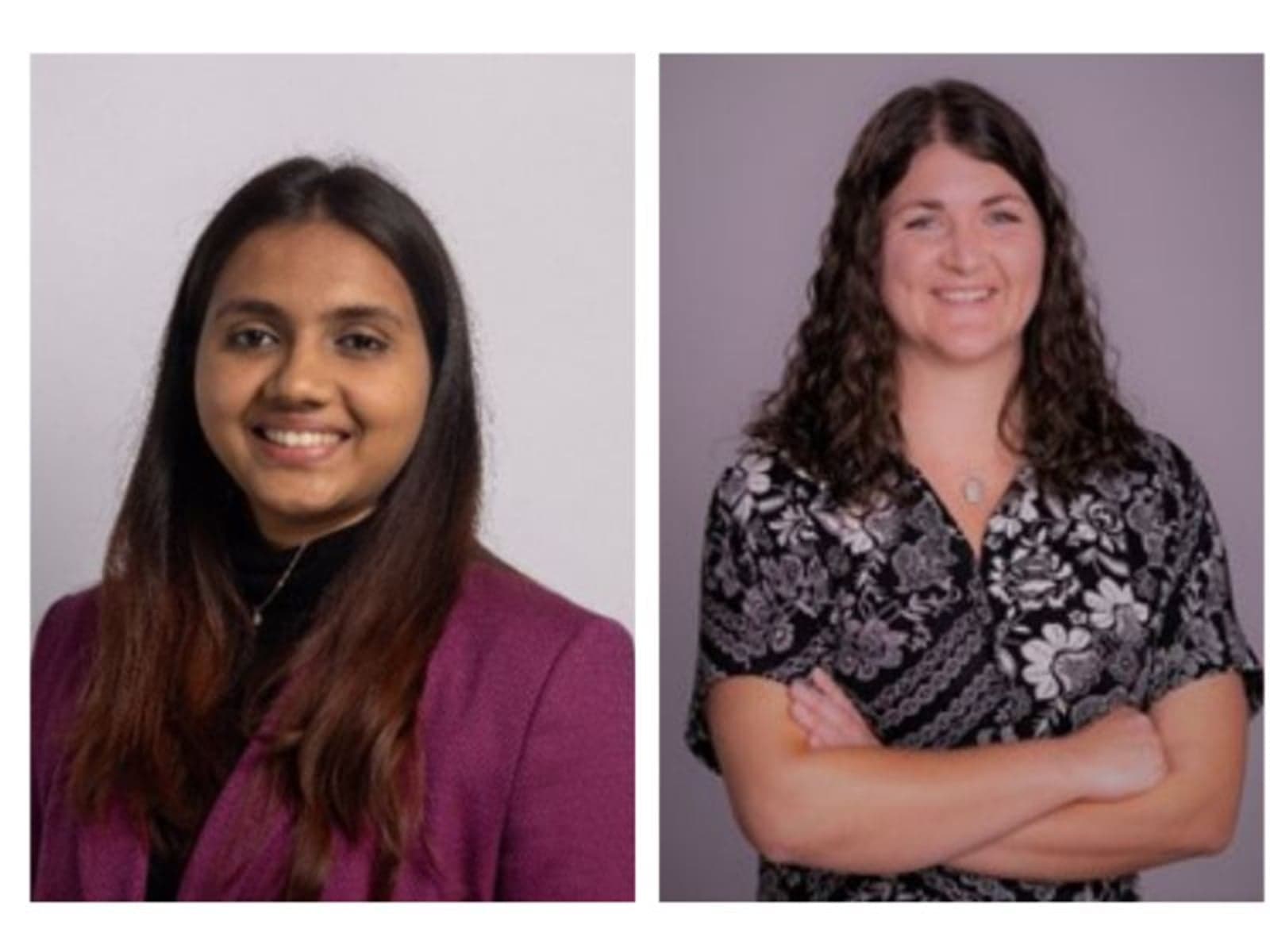
To mark International Women in Engineering Day, Charlie Allen and Uma Singh discuss how their degrees enable them to develop electric vehicle charging solutions
Engineering is a discipline designed to solve the world’s problems – and this is absolutely relevant to how it contributes to the urgently-needed rollout of electric vehicle charging infrastructure.
Engineering is behind the technology, installation and powering of charge points, and will be instrumental in achieving the UK government’s ambition to install 300,000 public charge points by 2030.
However, in 2023 the percentage of women employed in engineering and technology occupations decreased from 16.5% (in 2022) to 15.7%, a decline of 38,000 women, according to Engineering UK. Despite this drop, the overall proportion of engineering and technology occupations within the UK workforce remained steady at 19.2%.
Women’s falling representation in this industry is especially concerning considering that the trend appears to be unique, with women constituting more than half (56.1%) of all other occupations combined. Efforts to promote diversity and inclusion in engineering are therefore crucial to address this issue and ensure a more representative workforce.
With this goal in mind, and to mark International Women in Engineering Day, Charlie Allen, senior public sector partnership manager, and Uma Singh, data and insights analyst, discuss how their engineering degrees brought them to work for EV charge point operator Believ and how the industry is now becoming more diverse.
Have you read?
Breaking barriers: Two women on the path to engineering success
Women in energy: ‘We have to tap into the potential of that 50 per cent of the planet.’
Why did you choose to do engineering degrees, and did you have an idea of what you wanted to be?
Charlie: I chose mechanical engineering because of the subject’s versatility and relevance across various industries and roles. It’s also a discipline that lends itself to making a positive change in the world, through the creation of solutions that help solve the challenges industries face. This fascinated me.
Uma: I opted for an electronics and communication engineering degree because I was fascinated by the combination of technology and software – from smartphones to EVs. Also, maths and science were my favourite subjects, so it was a no-brainer to choose a path in engineering. After completing my degree, I got a job at a well-known technology and engineering company, where I worked in the mobility sector, specifically testing EV software and electronics.
Tell us about your career path, how did you get to Believ?
Charlie: While at university, I did a number of industrial placements – working in anything from medical diagnostics to aerospace and submarines – in order to work out where I saw my future. When I graduated, I looked more holistically at engineering and joined the sustainability-focused engineering consultancy, Ricardo, in its performance products division, before moving to its strategic consultancy division. This is the role that got me interested in EVs and the challenges around EV charging infrastructure. I subsequently worked for West Sussex County Council, leading its charge point rollout. This position got me heavily involved in the delivery side of charge points, and after gaining more experience I joined the public sector team at Believ.
Uma: During my early career, I gained valuable insights into the automotive sector and was especially interested in the business analytics side of things. So much so that I pursued a master’s degree in the subject, which deepened my understanding of industry dynamics, data analysis, and emerging trends. Driven by my passion for the EV market, I joined the team at Believ, where I can contribute to this exciting and rapidly evolving sector, while serving an important consumer need.
What does your role at Believ entail?
Charlie: My role as head of business development at Believ is about working with local authorities to enable the EV transition so that all drivers have the means to charge an EV. We’re working with several councils to deploy charge points on residential streets, town centres and in car parks. My engineering background and previous local authority role help me to support Believ in our mission to create the UK’s most reliable charging network that anyone can use safely and easily.
Uma: In my role as data and insights analyst, I work to analyse the consumer and understand their behaviours, trends and customer journeys. The goal is to create the very best experience for our drivers. Currently, I am working towards a tool that will enable us to clearly comprehend the characteristics of a site, and what the utilisation of a charge point is likely to be.
Do your engineering backgrounds help you in your current roles?
Charlie: Yes definitely – having a background in engineering means that I have a technical level of understanding of the technology being installed – and am able to explain the challenges, technical requirements and operation of the hardware. This is a helpful reassurance to both our teams and councils.
Uma: Of course,like Charlie, my engineering knowledge equips me well for an industry embedded within power and technology. Also, in all my previous roles programming, logical thinking, problem solving and quantitative thinking are all useful tools and skillsets that I have carried over.
Why is it important to celebrate International Women in Engineering Day?
Charlie: International Women in Engineering Day is an important day to celebrate women in an industry that is progressing but is still male-dominated. To mark the day, but also all throughout the year, we need to showcase that engineering is a varied discipline and career and can be suited to so many different people. By encouraging a diverse mix of people to study engineering, we will drive a more gender-balanced workplace.
Uma: Engineers help shape the way the world evolves. There are now more opportunities for women to get into engineering and take part in this process, which is important to celebrate. As the industry is growing, it also makes sense that employers attract talent from a wider pool than it has traditionally done. A more balanced workplace will lead to greater innovation and problem-solving in this crucial field.
How can we encourage more women into engineering?
Charlie: Everyone needs to understand what the industry is and what diverse opportunities it offers, and this starts at school. There is sometimes a misconception that engineering is all about hard hats and construction sites, so we need to get the message out at an early age that that simply isn’t the case.
Uma: I agree. We need to help women, no matter the age, identify that engineering is much more than civil or building work. We now have engineering roles suited for everyone, such as in the digital space with building websites, UX, and cyber security, as well as product development and environmental engineering. Also, hybrid and remote working models now offer women much more flexibility to balance work with personal responsibilities, making engineering careers more accessible and appealing.
What advice would you give young women looking to do engineering degrees and further education?
Charlie: Get a variety of experience! When I was at university the insights I gained from placements was invaluable. It is all about understanding what areas work for you and what interests you. So, use your time to try out different things and meet like-minded people. They may be further along in their career and will be able to give you guidance and advice.
Uma: Engineering is nearly always about solving a problem for the environment or society. If you’re passionate about problem solving, and having a deeper understanding of technology, study engineering. With the right attitude, you will succeed… no matter what!