Hydrogen co-firing: Addressing 'the elephant in the room'
Pamela Largue
Posted on: 7 February 2024
When discussing hydrogen co-firing| the question becomes will we have sufficient supply and is this the best use of the hydrogen molecule?
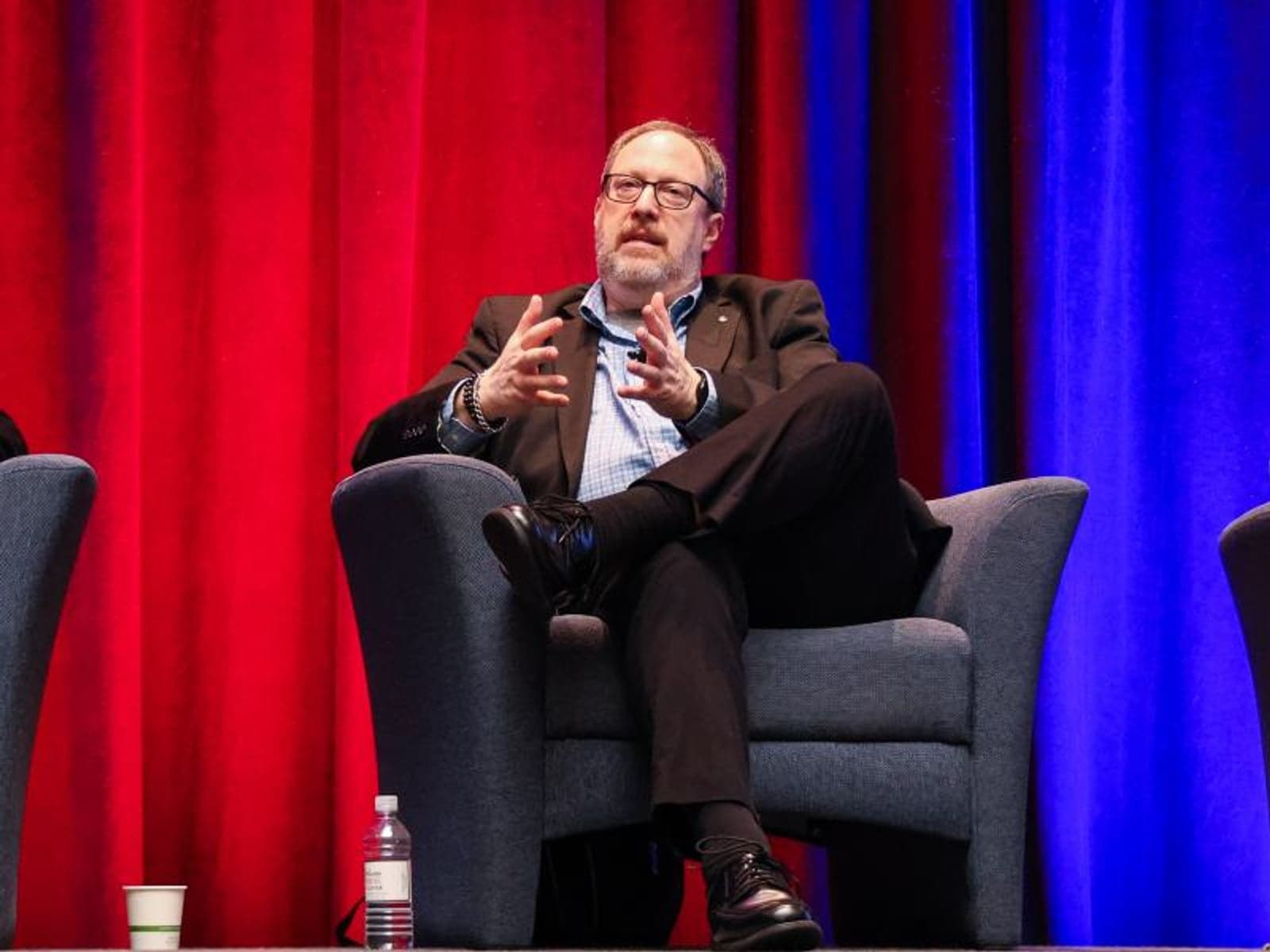
Hydrogen, as an alternative fuel for gas turbines, will play a role in decarbonising traditional power generation, however, concerns have been raised by industry leaders about whether there is a sufficient supply of green hydrogen to sustain this green transformation.
"I get into conversations about hydrogen co-firing [and] the thing that comes up almost every time is 'are we really going to have supply'?"
This was the question posed by Jason Jermark, vice president of Global Services Operations at Siemens Energy, who refers to the hydrogen supply issue as the "elephant in the room".
Jermark was joined by industry heavy hitters, such as Jeffrey Goldmeer, Emergent Technologies Director - Decarbonization, GE Vernova and Benjamin Thomas, senior manager of Hydrogen Production Engineering of Mitsubishi Power Americas for a panel discussion on the future of gas turbine decarbonisation.
Decarbonising gas assets with hydrogen and ammonia was front and centre of the discussion at POWERGEN International, which took a candid turn to explore some of the headwinds facing the sector.
Hydrogen as an alternative
"To be honest, years ago I was sceptical of it," said Jermark.
"If you think about the scale that’s going to be required, to be able to support the vast amount of [gas] generation that we have, is it going to be possible… and is this really the best use of the hydrogen molecule?"
According to Jermark, there has been a four-fold increase in hydrogen supply projects globally in the last few years. An increase in projects in action and an increase in the speed of production prove the industry is asking for hydrogen to future-proof generation, he suggests.
“Because of the continued interest in the production front, it leads us to believe the supply will happen.
"It may not happen at the scale and speed that some would like, it also may happen in pockets, based on local availability, but it is going to be there."
Hydrogen as an alternative to gas is not new. Siemens Energy has been using hydrogen in various applications for over four decades, with about 2.5 million operating hours accumulated across that time frame.
The market is maturing, said Jermark, spurred on by the IRA and applicable tax credits in the US, as well as other carbon tax regulations in the EU and Asia.
However, even if supply is available, the panellists questioned whether hydrogen in co-firing is the best use of the molecule.
Have you read?
Hydrogen: a vital component to decarbonise our grids
Baker Hughes unveils hydrogen gas turbine ‘milestones’
The role of ammonia
Jermark stated that while the hydrogen gas turbine market is more mature than ammonia, ammonia has a higher energy density and a broader available network to transport it.
"Ammonia is also an interesting application...there's a lot of discussion about using it as alternative co-firing for gas turbines – our focus is how can we have the infrastructure in place to be able to transport it."
Benjamin Thomas added that the outlook is quite complex in Japan, where LNG is currently being imported. The country needs products that can work in a variety of situations. There are different grid profiles to respond to in Japan, as wind and solar are developed, which is why there is a big focus on developing ammonia, a big focus for countries without a large hydrogen supply.
Also, in South Korea, a country focused on decarbonising its gas-fired combined cycle plants, it's critical to secure the hydrogen required and to transport it effectively. "The best way to do that is with ammonia as the carrier," added Thomas.
Also of interest
World first: Gas turbine successfully operates with 100% green hydrogen
GE Vernova and IHI to develop a 100% ammonia capable gas turbine
Thomas explained that this drive for decarbonisation is opening up opportunities for partnerships and wider developments such as that of zero carbon propulsion systems, providing support for the international maritime organisation remit in reducing emissions.
Jeff Goldmeer highlighted that when it comes to ammonia, there is a technology challenge and an economics challenge.
"Study after study has shown that if you want to move hydrogen over long distances, you don't want to do it as hydrogen, you need to move it as another molecule.
"Ammonia tends to be one of the simplest and cheapest molecules, a lot of people want to talk methanol but then you need to source carbon. Ammonia just needs nitrogen, which is easily available."
According to Goldmeer, from an economic perspective, ammonia makes the most sense.
There are technical challenges, however, emphasised Goldmeer. "We acknowledge ammonia does have a toxicity issue," adding that even small amounts of ammonia will create a NOx problem.
"You need to be 99.9% ammonia-free in your hydrogen to avoid a NOx problem, so we are acknowledging the NOx problem and understand the need for a new combustor.”
Despite these technical challenges, Goldmeer and the other panellists agreed that there's a well-established industry in the production and safe use of ammonia.
Currently 15-20 million tonnes of ammonia are moved by ship around the world and many ports already have ammonia bunkering capacity, proof of the molecule's technical and economic viability.
No matter the molecule or path to decarbonisation, the industry experts agreed that it's a complicated journey and requires time and collaboration.
Concluded Jermark: "I don't think there's a one-size-fits-all answer [to that] which is why the situation is so complicated."
Listen to this episode of the Energy Transitions Podcast with Javier Cavada, President and CEO of Mitsubishi Power EMEA, for insights into achieving speed and scale in decarbonising generation.