Hydrogen electrolysers: Breathing life into a net zero future
Guest/partner contributor
Posted on: 14 December 2023
Electrolysis and the use of hydrogen as a fuel have great potential to decarbonise historically polluting industries| writes Zeeshan Sami Khan| of PTR Inc.
Electrolysis and the use of hydrogen as a fuel have great potential to decarbonise historically polluting industries, writes Zeeshan Sami Khan, Senior Hydrogen Analyst at PTR Inc.
For example, previously associated with molten metal, roaring flames, and sooty emissions, the steel-making industry is now transitioning to hydrogen as a reducing agent.
Moreover, the transportation sector, dependent on fossil fuels for a long time, is ushering in the era of hydrogen-fueled mobility. These examples show that hydrogen is one of the potential solutions to meeting the net-zero emission goals of different countries.
This article discusses different electrolyser technologies and their market landscape while highlighting potential challenges that the technology faces.
Hydrogen Electrolysers: A comparative analysis
There are different types of hydrogen electrolysers in the market, each tailored for its unique application, including AEM, PEM, SOEC, and Alkaline electrolysers.
Anion Exchange Membrane (AEM)
AEM technology is known for its agility as it can respond rapidly and seamlessly to the variable nature of renewable energy. However, it is still in its initial stages, due to which many industries view it with excitement and caution. The real test lies in scaling and establishing long-term reliability.
Proton Exchange Membrane (PEM)
PEM is a typical example of an electrolyser in large-scale hydrogen production. This technology is compact and efficient as its design is geared towards modern industrial applications. However, it is expensive as it relies on precious metals like platinum, giving industries a second thought to opt for it.
Solid Oxide Electrolysis Cells (SOEC)
SOEC operates effectively in prolonged and high-temperature environments integrated with solar or geothermal power. This leads to the rising efficiency of SOEC in extreme temperatures.
However, the strength of SOEC can serve as a drawback. The high operational temperatures challenge material durability, restricting the SOEC as a long-term solution. The equipment will have to be replaced with new material regularly, leading to increased expense.
Have you read?
European hydrogen backbone buildout well under way
Lhyfe awarded €14m grant for Spanish hydrogen project
Alkaline
Alkaline electrolysers are trusted and reliable, as they have been the backbone of the industry for decades. However, as more efficient technologies emerge, alkaline electrolysers can face competition from other electrolysers and ultimately become obsolete if the demand for other electrolysers increases in the future.
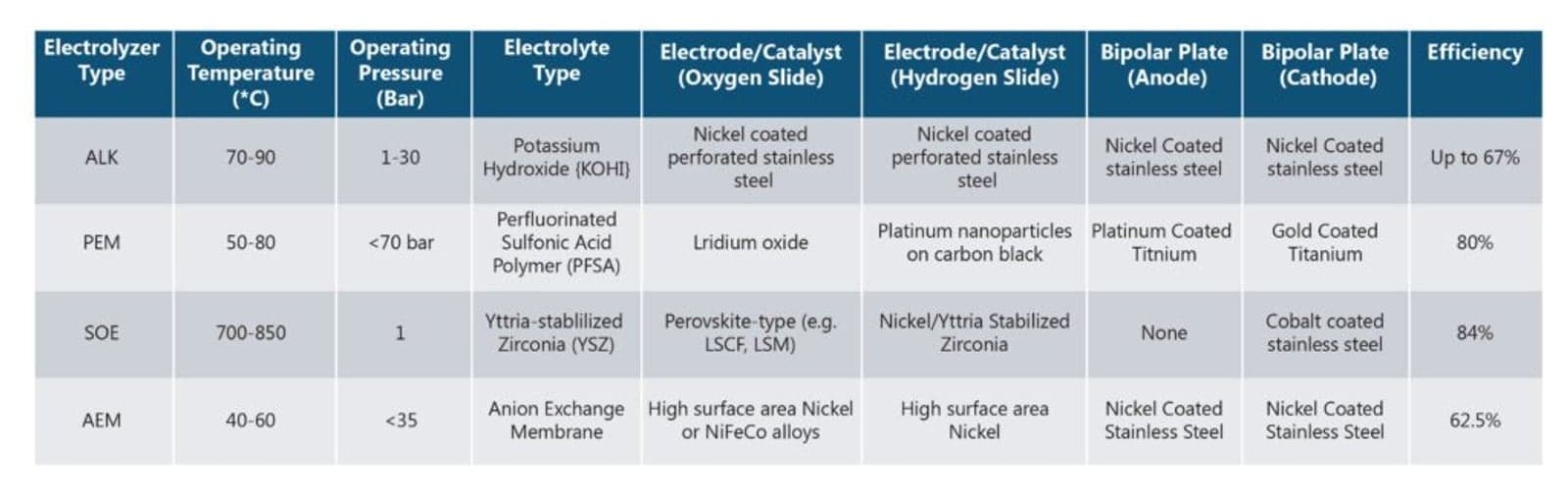
The figure below illustrates a comparison between various properties of prominent hydrogen electrolysers.
Key players in electrolyser manufacturing
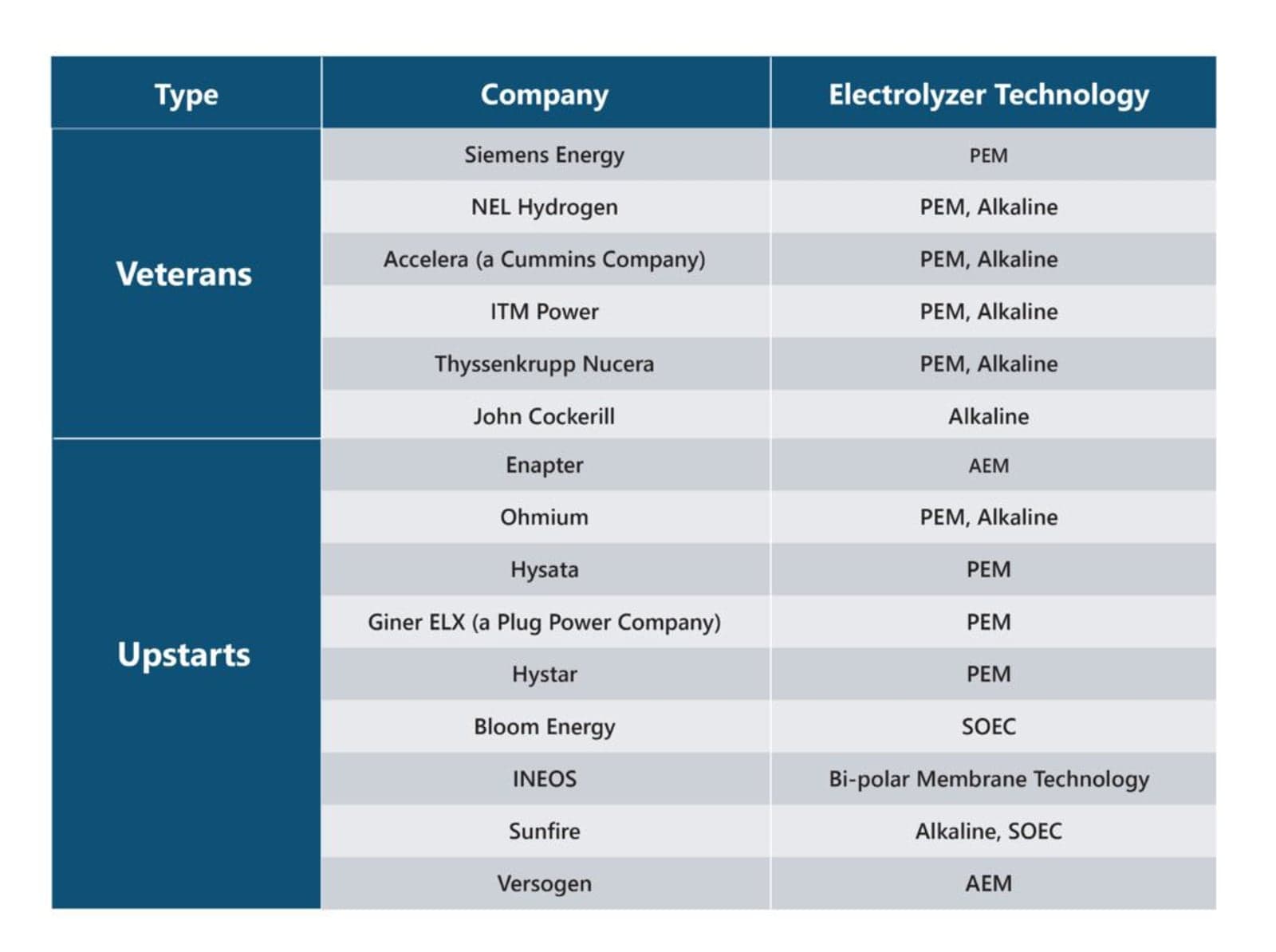
Multiple OEMs manufacture electrolysers. Some of the companies, such as Siemens Energy and NEL Hydrogen, are veteran players in electrolyser manufacturing, while companies such as Enapter and Ohmium are upstarts in electrolyser manufacturing.
Figure 2 below shows the list of the veterans and upstart companies involved in electrolyser manufacturing. As can be seen in Figure 2, PEM electrolysers are dominant in the industry, but as the market matures, AEM and SOEC will gain prominence.
Electrolyser supply and demand landscape
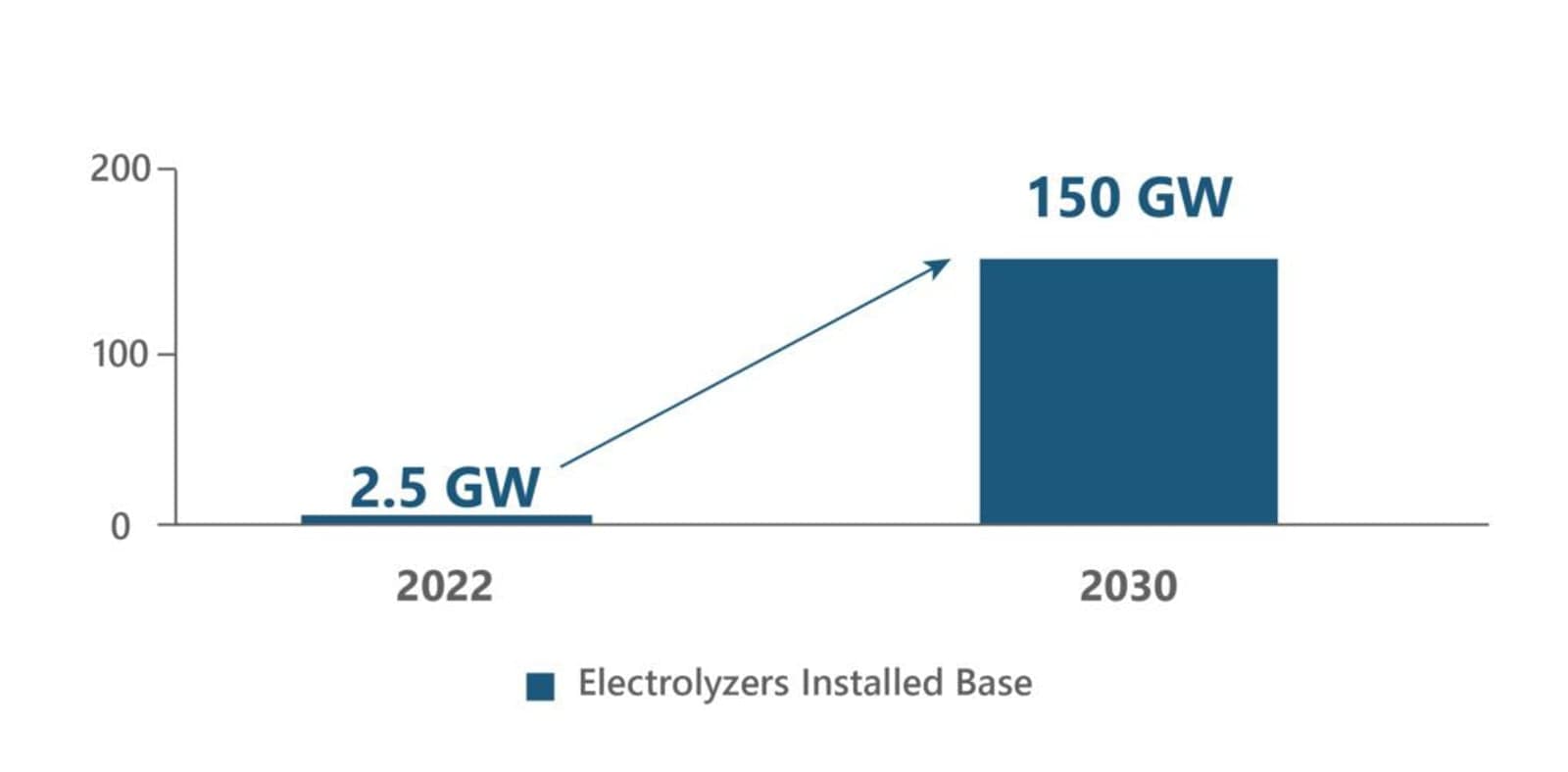
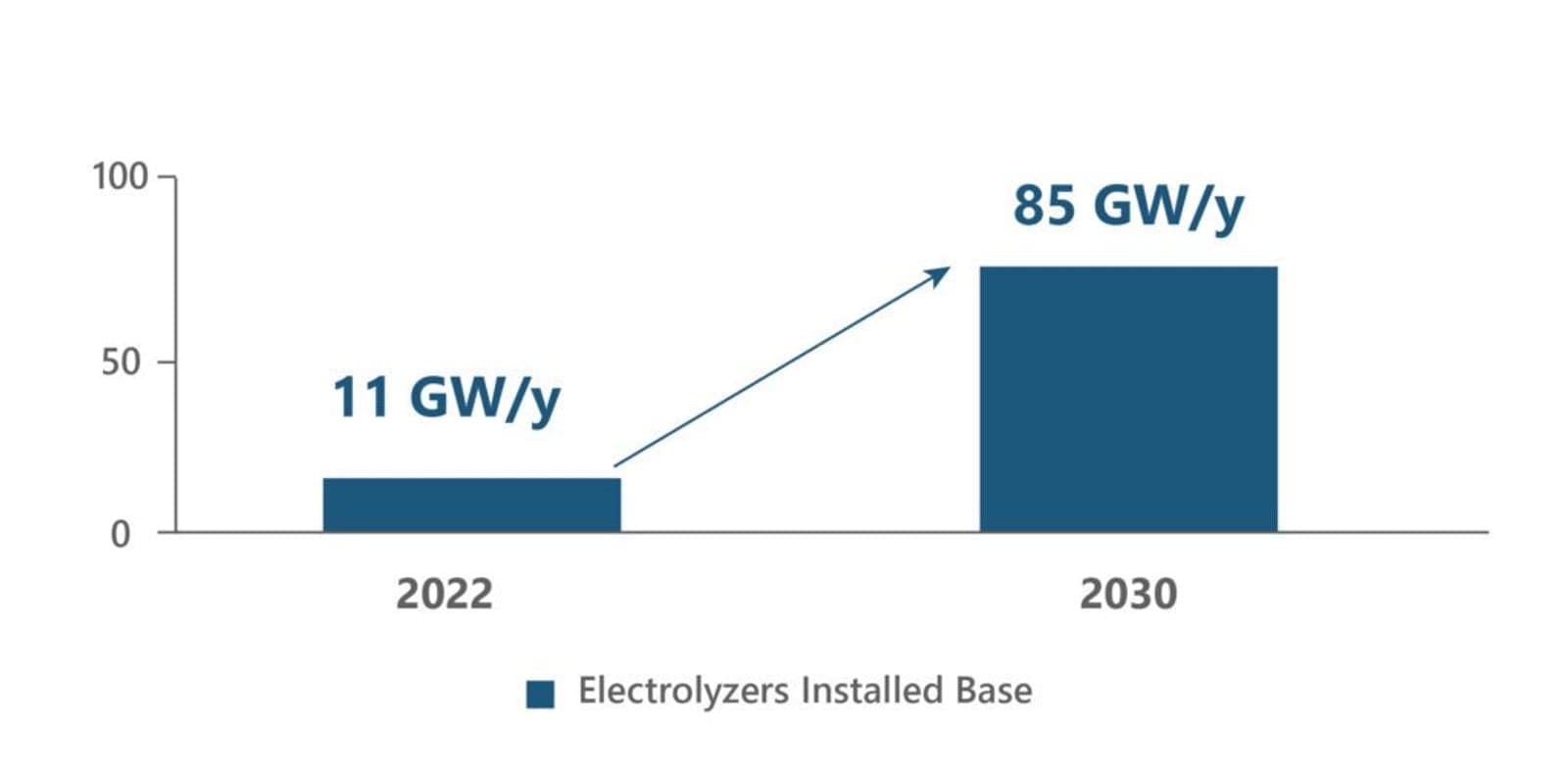
According to PTR, the total electrolyser installed capacity could reach 2.5GW by the end of 2023 and 150GW by 2030. Moreover, PTR estimates that global electrolyser production capacity will rise from 1GW/year in 2022 to 85GW/year in 2030 based on current announcements and future initiatives. The expected growth of total electrolyser installed capacity and production capacity per year is shown in Figure 3 and Figure 4, respectively.
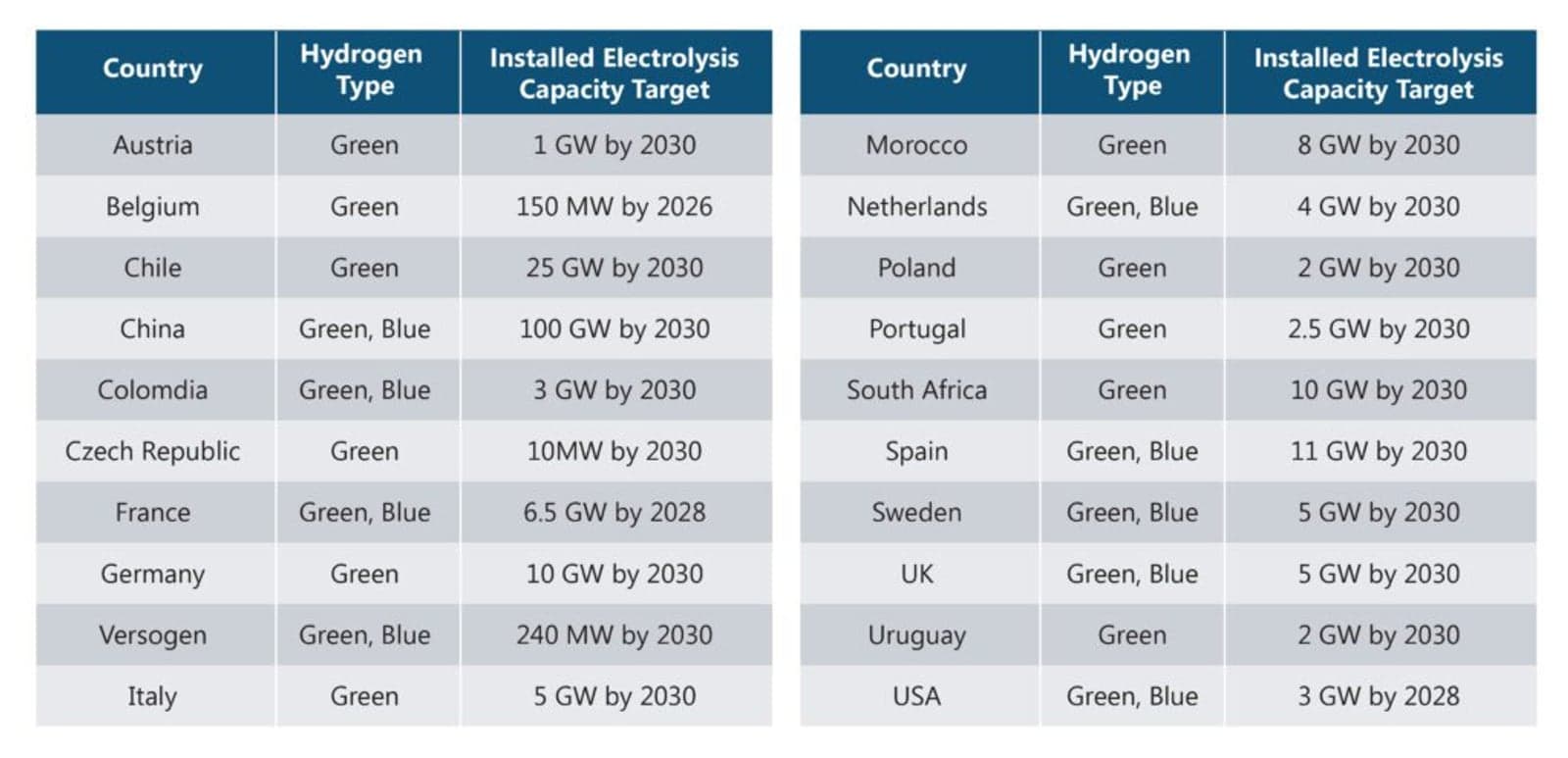
Different countries have set goals accordingly to increase the capacity of electrolysers by 2030. Around 20 countries worldwide have announced targets for installed electrolysis capacity in their National Hydrogen Strategies, shown in Figure 5 and these figures reiterate that governments are considering hydrogen-based solutions as the electrolysers market is expected to rise until 2030.
Challenges and bottlenecks
Although the electrolysers market is expected to rise, some challenges must be overcome to achieve a green future. These challenges are high costs, rare earth metals, and implementing announcements.
High cost
The amount of investment required is huge to carry out electrolysis. There is a paradox - mass adoption will drive down costs, but high costs deter mass adoption. As research deepens and technology matures, we can hope for a more cost-effective market landscape. According to the PTR analysis, it is expected that there will be a reduction in electrolyser’s cost of approximately 15-20% by 2030.
Rare earth metals
The strategic importance of materials like platinum group metals (PGM), iridium, and nickel in certain electrolysis technologies is immense. The limited availability of these materials has economic and geopolitical ramifications and as nations compete to control these resources, supply chain resilience becomes critical.
Announcements versus action
With announced policies, it takes time to implement these policies in the real world. The difference between goals set and tangible action is vast and although a decent number of ambitious projects have been announced, it is yet to be seen how many of them will see the light of day.
Looking forward
Electrolysis stands at the crossroads of our sustainable future, offering hope and tangible solutions to some of the most pressing challenges, especially the decarbonisation of historically polluting industries.
As the world moves towards a sustainable future, the blend of established veterans and innovative upstarts in the market is expected to play a crucial role. It is noteworthy that currently, the majority of the OEMs are producing PEM electrolysers, but as the market matures in coming years, it is expected that AEM and SOEC will gain traction.
Amidst the challenges lie untapped opportunities for innovation, collaboration, and transformation for OEMs of electrolyses, promising an industry revolution and a reshaping of the world.

About the Author
Zeeshan Sami Khan is the Senior Hydrogen Analyst at PTR Inc. Zeeshan earned his BS degree in Mechanical Engineering from the University of Engineering and Technology, Taxila. Previously, Zeeshan worked as a Consultant at National Engineering Services Pakistan and was involved in the design, construction, and commissioning of RLNG fired Combine Cycle Power Plants.