Hydrogen floating power hubs to ‘green’ ports to be studied in Britain
Jonathan Spencer Jones
Posted on: 4 September 2025
The ‘Hydrogen Floating Power Hub Feasibility Programme’ has secured £1 million ($1.3 million) through the government’s Clean Maritime Demonstration Competition.
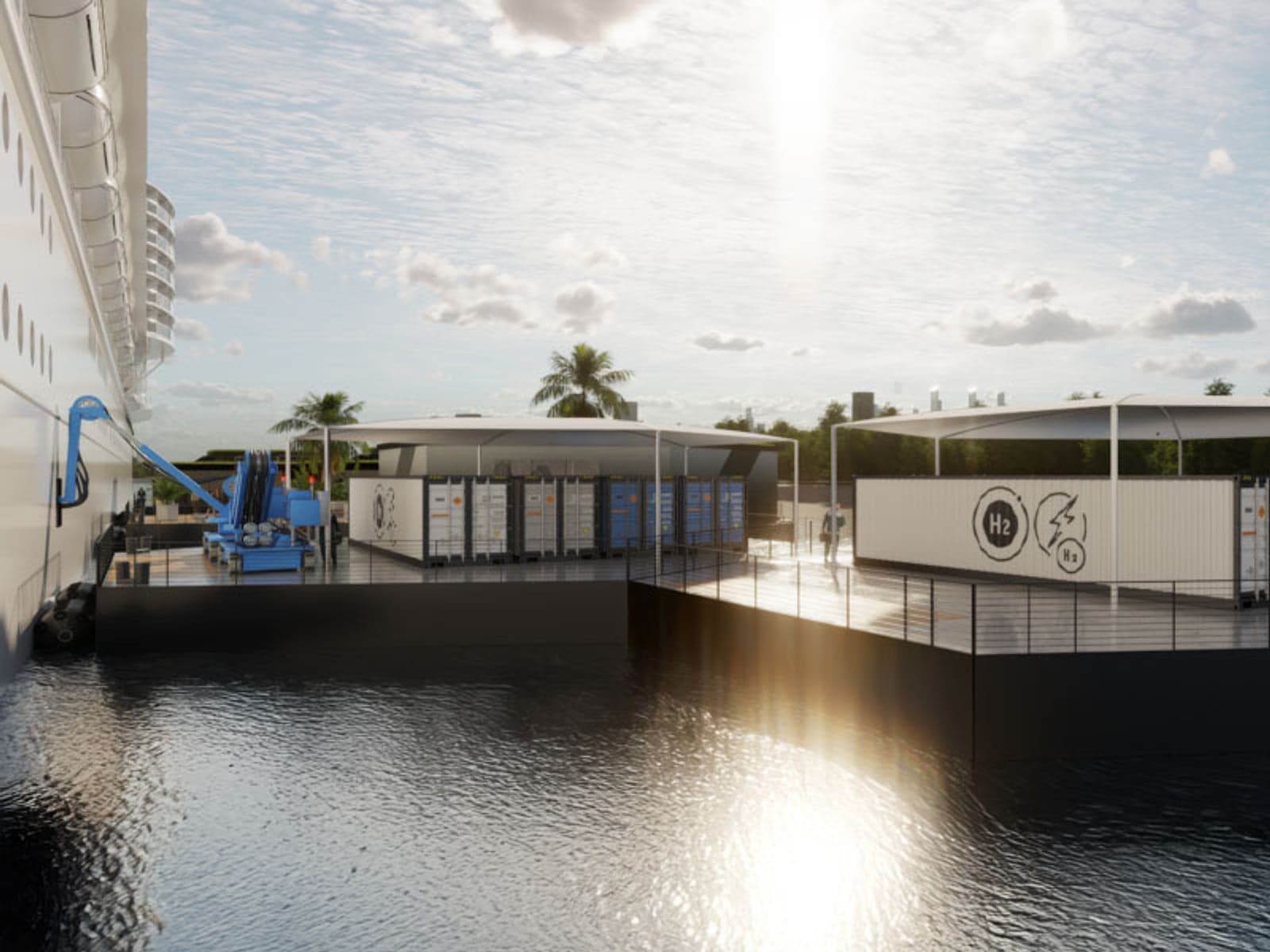
The ‘Hydrogen Floating Power Hub Feasibility Programme’ has secured £1 million ($1.3 million) through the government’s Clean Maritime Demonstration Competition.
The programme, which is led by clean infrastructure provider ELIRE Infra, is due over the next six months to 31 March 2026 to evaluate the technical and commercial viability of deploying floating hydrogen power infrastructures to replace or supplement fossil fuel-based port energy systems and thereby support maritime decarbonisation.
Subject to a positive investment decision, the project could lead to the launch of the country’s first fully operational hydrogen power hub by 2028.
“Hydrogen’s power density far exceeds that of traditional industrial batteries,” said Luke Jenkinson, Founder of ELIRE Infra, part of the ELIRE Group.
“This allows us to create cleaner, smaller footprint energy systems that are scalable and modular, ideal for ports with space or grid constraints. We see this as a transformative step for maritime decarbonisation both in the UK and globally.”
Have you read?
Advancing sustainability: The EU’s drive for cleaner maritime operations
How Valencia is decarbonising port operations with hydrogen
ELIRE Infra’s hydrogen floating power hubs combine hydrogen fuel cells with other renewables such as solar and biofuel-powered microturbines as a microgrid to deliver up to 5MW of clean energy.
With a floating self-contained modular design, deployment is considered possible in a range of port settings, from dense urban harbours to remote coastal hubs, to provide connectivity to craft ranging from large ocean-going vessels to smaller riverine e-vessels.
The feasibility programme is due to be delivered by a consortium including the Offshore Renewable Energy Catapult, Ricardo UK, Rux Energy UK, Schneider Electric, Triton Anchor Europe, the University of Strathclyde and Sealand Projects.
Together, the consortium will address the technical, regulatory and commercial barriers to deployment, with each member leading defined work packages across project management, structural design, hydrogen storage, electrical systems, platform integration, installation and commissioning.
The study will also model capex, opex, revenue stacks, and certification pathways, moving the concept to investment readiness by Q2 2026.
An inaugural trial deployment of the power hub is set to take place in the River Thames at Greenwich during autumn 2025.
ELIRE Infra believes that the River Thames is set to be a major node in the future hydrogen economy as a busy and strategically placed urban waterway and thanks to its proximity to distribution, logistics and industrial infrastructure.
The floating power hub project is one of 30 awarded funding for feasibility studies in the latest Round 6 of the Clean Maritime Demonstration Competition.