Is the UK's offshore wind project pipeline at risk?
Guest/partner contributor
Posted on: 23 January 2026
Neil Gordon of Global Underwater Hub highlights growing concern about the pace of offshore wind project delivery in UK waters.

Visit the world’s energy hotspots – from Norway to Nigeria – and it won’t be long before you hear a Scottish or English accent. For decades the UK underwater supply chain has been regarded as a global leader: highly skilled, deeply innovative and internationally competitive across everything from oil and gas to offshore wind.
It is always in demand, a fact borne out yet again by Global Underwater Hub’s 2025 Business Survey.
Released in November, the study showed a clear majority of respondents (76%) still consider the UK underwater industry to be world leading. This international reputation, however, balances somewhat uneasily against growing concern about the pace of project delivery in UK waters.
For the third-year running, companies report that overseas markets offer more dependable timelines, more attractive investment signals in relation to final investment decisions, project awards and government policy, and more assured project progression.
While sentiment toward global opportunities continues to strengthen – 85% of companies expect international activity to rise in the short term – confidence in the UK’s ability to deliver projects on time has eroded further. Worryingly, respondents on average believe that only 39% of projects will keep to time.
In offshore wind, where the UK once set the global pace, this has become a particularly acute concern.
Offshore wind is high priority but low momentum
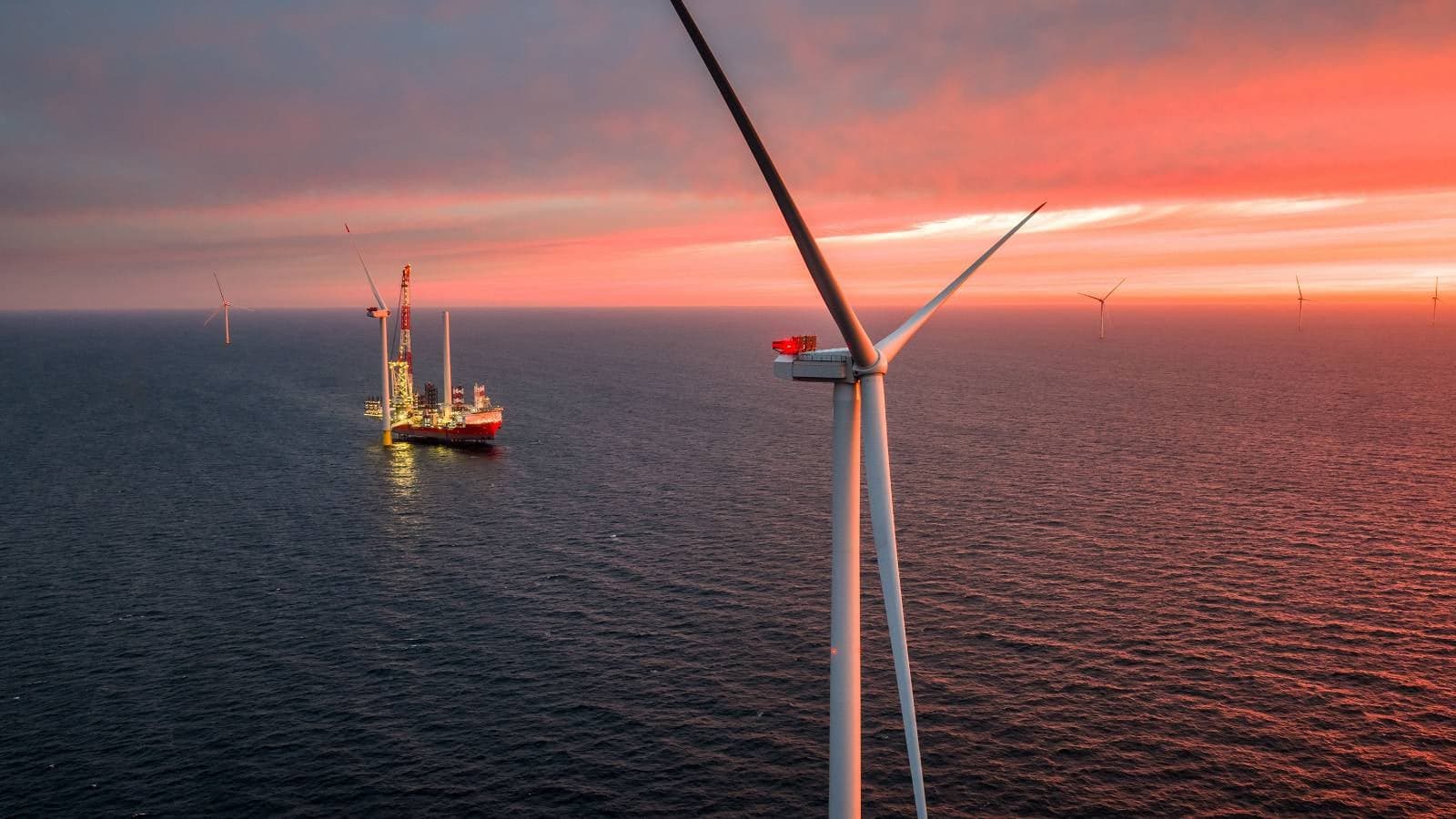
Offshore wind remains a strategic pillar for the underwater industry; 91% of companies surveyed view it as a primary or secondary market. In the long term it overtakes oil and gas as the top focus area, underscoring the central role it must play in the UK’s energy future.
The widening gap between intent and execution is one of the most significant risks the UK now faces.
A stark contrast between ambition and momentum currently exists though. Companies are eager to invest and expand into offshore wind, but increasingly look overseas to secure continuity of work, with 43% of total revenue across the underwater supply chain now generated through exports.
The widening gap between intent and execution is one of the most significant risks the UK now faces. When domestic projects slip to the right, vessels, equipment and specialist teams inevitably migrate to markets where opportunities are more concrete.
Once redeployed, such assets and skills may not return quickly, or at all, when UK demand eventually increases.The award of a record 8.4GW of offshore wind capacity through the UK’s Government’s AR7 auction is a positive step towards correcting this.
Have you read?
New plan puts wind at centre of Ireland’s electrostate ambitions
Injunctions lift freeze on key US offshore wind projects
It will play a critical role in delivering the country’s net-zero and clean energy ambitions, while also supporting supply chains, sustaining jobs and driving wider economic benefit.
Crucially, the skills and expertise required to deliver key elements of the two floating projects awarded Contracts for Difference, Pentland and Erebus, are firmly embedded in the UK. Dynamic cables, floating substructures and mooring and anchoring systems have all been built up over decades in the oil and gas sector and clearly demonstrates the transferability of subsea knowledge.
What the supply chain needs now is confidence that those projects awarded CfDs will progress as planned.
The autumn of discontent
Last year’s Autumn Budget did little to bolster confidence in the nation’s wider energy project pipeline.
In some areas it has actively undermined it. While references to clean energy investment and grid reform were included, these were overshadowed by continued inaction on the Energy Profits Levy (EPL), Exhibit A in UK energy project pipeline blockers.
For a supply chain that depends on stable, long-term investment across traditional and new energy sources, this move sends precisely the wrong signal at precisely the wrong time.
Introduced under exceptional market conditions that have long since expired, the EPL is now doing little else other than acting as a structural deterrent to investment.
The first priority is to improve the cadence and visibility of domestic projects in multiple energy sectors.
Oil and gas companies, many of whom are also the developers, financiers and infrastructure owners of offshore wind projects, are reassessing UK capital commitments. Several have already warned of reduced spending, delayed final investment decisions, project rationalisation and, in some cases, redundancies.
These delays aren’t simply confined to oil and gas: they spill directly into the renewables’ timelines. In our survey, domestic government policy was already the single biggest factor dragging down market sentiment. Government skirting around the windfall tax only amplifies that negativity and injects new uncertainty into the project pipeline.
On a more positive note, the announcement in the North Sea Future Plan of a strategy to encourage new subsea tiebacks as part of existing fields and infrastructure is to be welcomed.
Over the past year, on behalf of our members we have advocated government for this, which has the potential to give the UK’s subsea supply chain a much-needed boost. Moving these from drawing board to seabed now becomes the priority.
What the UK must do next
Protecting the UK’s world-leading position and ensuring our ability to fully support offshore wind will require government and industry working together to restore confidence and accelerate progress.
This includes adherence to the pledge of a just energy transition.
The first priority is to improve the cadence and visibility of domestic projects in multiple energy sectors. This means establishing a rolling, transparent pipeline of offshore wind and underwater projects with clear milestones between announcement, allocation round, final investment decision and construction.
The opportunity to consider subsea tie-backs supports our supply chain in the short-term, while continuing to lower carbon production, increase revenue and protect jobs.
Also of interest: UK must extend gas-fired fleet to beat blackouts says report
Equally important is long-term policy stability. Businesses cannot make multi-year investment decisions against a backdrop of shifting or unclear policy frameworks.
Strengthening the skills pipeline is also essential. With 85% of companies expecting their need for technical personnel to increase – and 15% anticipating a rise of more than 50% – the UK needs a coordinated approach to recruitment, retraining and education.
Finally, while offshore wind will dominate long-term opportunity, the UK must support strategic diversification across adjacent markets such as CCUS, subsea telecoms and defence.
A fit for purpose strategy
Looking at the broader picture for a moment, a secure and balanced energy transition requires energy policy to be uncoupled from party politics and election cycles.
An urgent cross-party committee is needed to work with industry, trade unions and other stakeholders to shape a long-term UK energy strategy.
With a 20-year mandate, far beyond today’s four-year political cycles, the committee should focus on the national interest. This would give industry and investors the clarity and stability needed to plan, innovate and scale.
If the UK can match strategic intent and an accelerated project flow with consistent policy, our energy sector, with offshore wind at its heart, will become an engine of national industrial growth.
ABOUT THE AUTHOR
Neil Gordon is Chief Executive of Global Underwater Hub, the trade and industry development body for the UK's Underwater Sectors.