Japan's TEPCO begins discharge of Fukushima treated water
Pamela Largue
Posted on: 24 August 2023
TEPCO has started discharging ALPS treated water stored at the Fukushima Daiichi Nuclear Power Station into the sea.
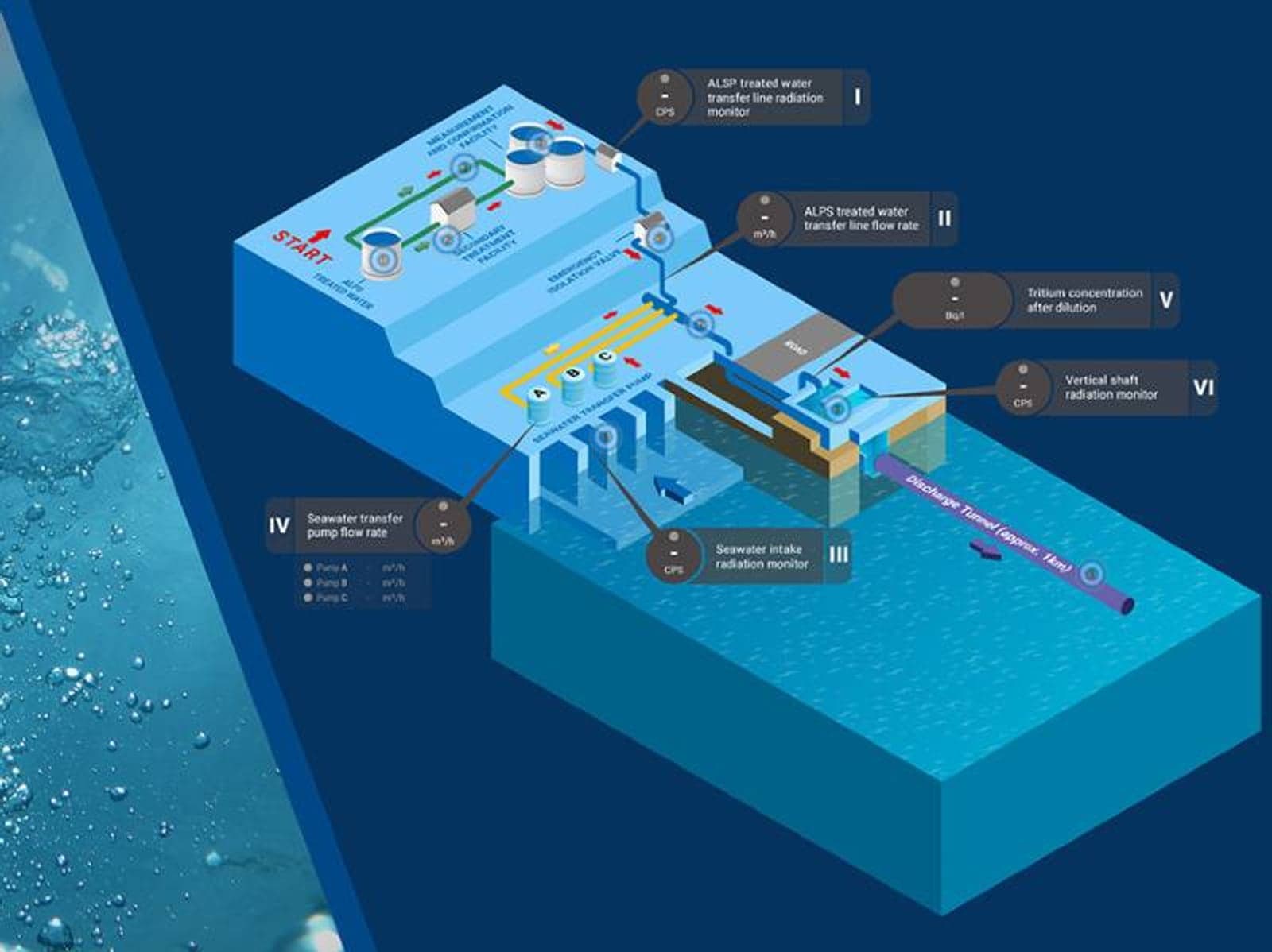
Japan’s Tokyo Electric Power Company (TEPCO) has started discharging ALPS treated water stored at the Fukushima Daiichi Nuclear Power Station into the sea.
This has been confirmed by the International Atomic Energy Agency (IAEA) team that is on site to monitor the process and ensure relevant safety standards are adhered to.
As part of monitoring efforts, IAEA experts this week took samples from the first batch of diluted water prepared for discharge. Their analysis confirmed that the tritium concentration in the water that is being discharged is below the operational limit of 1,500 becquerels per litre.
Additionally, the IAEA is also launching a webpage to provide live data on the water discharge. The data provided includes water flow rates, radiation monitoring data and the concentration of tritium after dilution.
Since the accident, over 1.3 million tonnes of nuclear wastewater have been collected and stored in a tank farm at the plant. Storage space is about to run out, which leaves the Japanese government with few choices but to release the wastewater into the ocean.
Discharge of the treated water could take more than three decades to complete.
Have you read?
Jacobs builds robot to retrieve radioactive debris at Fukushima
How safe is Fukushima’s waste water disposal plan?
Treatment process
ALPS refers to the Advanced Liquid Processing System, whereby a multi-nuclide removal system removes various radioactive materials from contaminated water.
According to Japan's Ministry of Economy, Trade and Industry, the water has been purified and treated until it satisfies safety standards for all radioactive materials other than tritium, which cannot be removed.
However, the water is significantly diluted with seawater before discharge so that it fully satisfies safety standards. The tritium concentration after dilution is less than 1/40 of the safety standard (or 1/7 of the WHO standards for drinking water).
Yay and naysayers
The decision to release the treated water has been a polarising one, with environmentalists, activists, local Japanese fishing communities, and the general public expressing concern about contamination and the effects thereof.
Reports are that while South Korea's government has endorsed the plan, North Korea's foreign ministry predicts "catastrophic consequences" and China has reacted more adversely, with Hong Kong and Macau banning seafood from Fukushima and nine other Japanese prefectures.
In a statement issued by TEPCO, the energy company apologised for "the great burden and inconvenience that it has caused on the people of Fukushima, and the whole of society..." and promised to remain vigilant throughout the decommissioning process, gaining the trust of the Japanese people and international community.