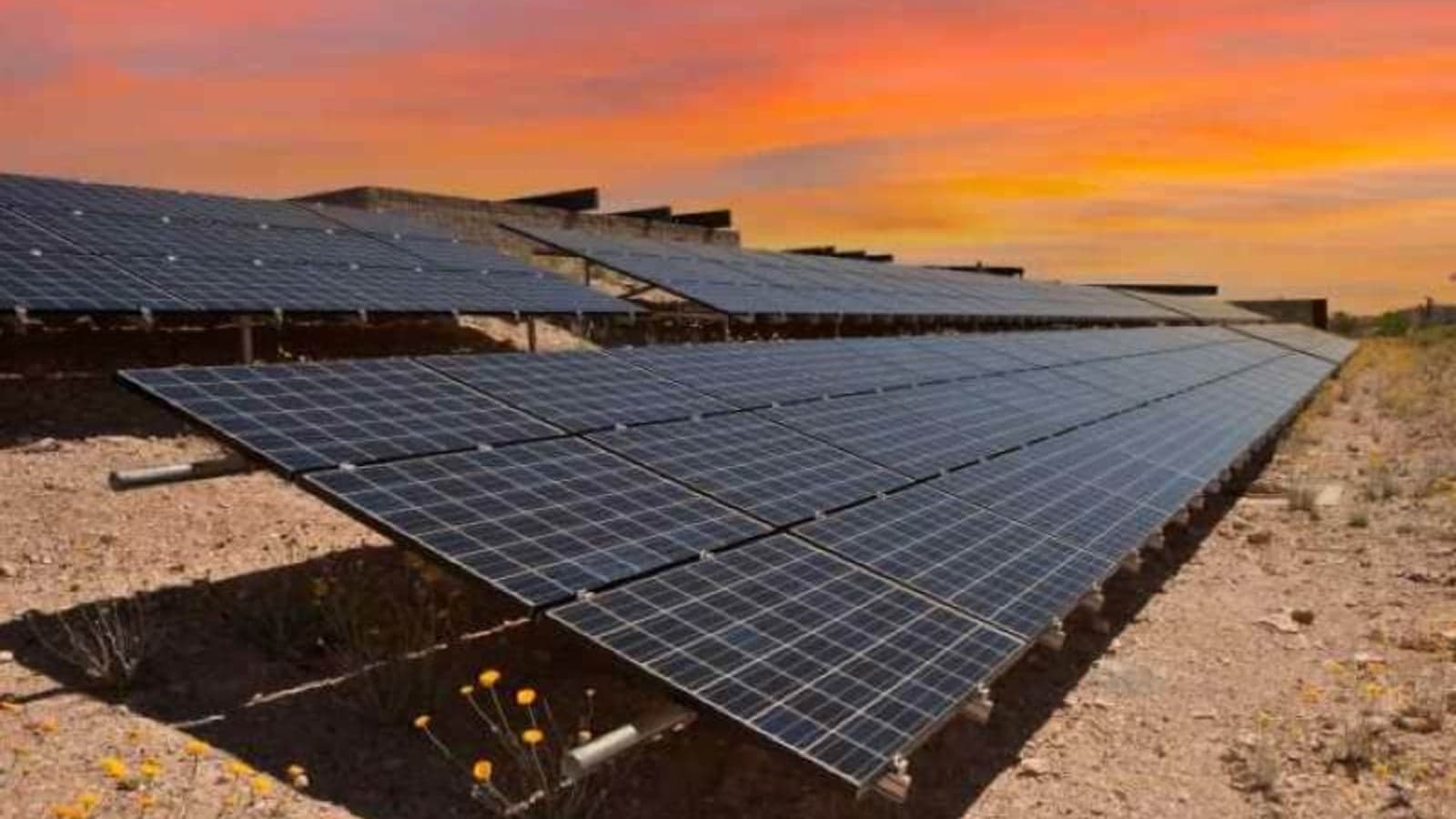
Planning for power: Lessons from NEOM
Guest/partner contributor
Posted on: 26 August 2024
NEOM offers valuable instruction to address the challenges brought by the piecemeal evolution of the energy markets| writes James Drummond of PSC Consulting.
NEOM, a futuristic city being built in the Arabian desert that will be powered 100% by renewables, offers valuable instruction to others hoping to address the challenges brought by the piecemeal evolution of the energy markets and the infrastructure that underpins them, writes James Drummond of PSC Consulting.
Reports that Saudi Arabia is scaling back some elements of its flagship NEOM project do nothing to blunt the scale of its prodigious ambition. According to Bloomberg, medium-term ambitions for The Line, a futuristic conceptual city, have been toned down from the planned 170 km long, 500 m-high, and just 200 m-wide mirrored masterpiece.
Instead, the linear urban space will now see just a few kilometres built and less than a third of a million inhabitants by 2030. By then, it had been envisaged that as many as 1.5 million people would inhabit the futuristic cityscape, eventually having a population of up to 9 million.
Nonetheless, with no roads or cars and powered by 100% renewable sources, even in its smaller iteration, The Line will still serve as a breathtaking exemplar of many of the most desirable – if not necessary - elements of the future world city.
The brainchild of Crown Prince Mohammed bin Salman, The Line is just one part of the $1.5 trillion NEOM project, which encompasses multiple developments and is designed as a showcase and testbed for technologies that could potentially revolutionise modern life.
It’s clear that by stripping back the city's idea to its first principles and starting from scratch, Saudi Arabia has an opportunity to avoid many of the planning mistakes that have proved exceptionally challenging for more conventional cities and their infrastructure.
Have you read?
UAE power mix will continue to be dominated by thermal power – report
ACWA Power closes financing for Uzbek solar+storage system
Indeed, putting any interim problems aside, this approach to developing the various elements of NEOM can offer important insights for the energy system worldwide.
Planning for power
While the US is facing difficulties in rolling out renewable energy projects at scale due to decades of underinvestment in the grid and a challenging regulatory landscape that can make permitting very complex and time-consuming, the NEOM model could offer instruction. For example, one of the key projects under the NEOM umbrella is the world’s largest utility-scale commercial green hydrogen project.
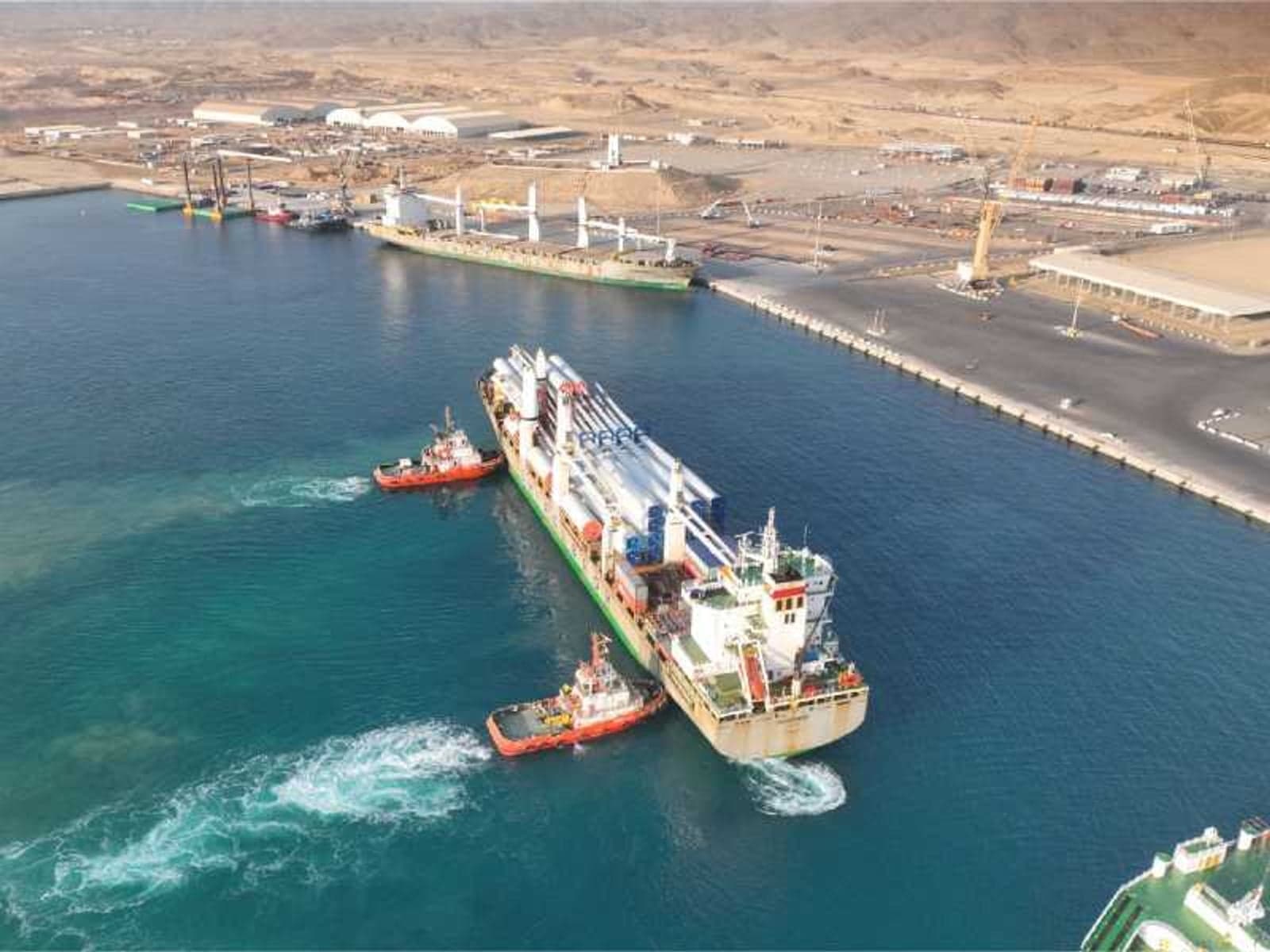
Located in Oxagon, NEOM’s industrial city, and powered entirely by renewable energy, the joint venture project between NEOM, Air Products, and ACWA Power will see the integration of around 4GW of renewable capacity coming from solar, wind, and storage when commissioned in 2026. The US$8.5 billion development achieved financial close a year ago, and the first tranche of wind turbines was delivered last November.
The project is expected to produce some 600 tonnes of hydrogen a day through an electrolysis process and up to 1.2 million tonnes per year of green ammonia.
NEOM Green Hydrogen Company has secured a 30-year off-take agreement with Air Products for all of this green ammonia, which is seen as an important clean energy vector. The overall goal is to provide power for projects like The Line whilst paving the way for the large-scale adoption of green technologies.
Given that this type of project may become typical, the work underway at NEOM could certainly inform developments in nations like the US, transitioning economies, and in a wider, global context. There are potential lessons to be learned for a lot of economies that are moving away from conventional thermal generation to renewables.
An example could come from Australia, where, like the US, has an energy economy that has traditionally been based on large centralised thermal generation often using coal and gas. The energy transition has seen large volumes of renewables installed, but investment in the transmission system has not kept pace as a large proportion of the renewable capacity has come from domestic rooftop solar.
With the absence of business cases to build transmission lines, multiple decentralised networks have emerged as a result. Now, to mitigate some of the unforeseen consequences of that lack of network infrastructure, new transmission capacity is needed. However, building new transmission lines in Australia is proving challenging due to stiff public resistance.
In contrast to more developed economies, some nations lack the financial capacity to invest in large-scale renewable projects and instead might turn to a more distributed system of microgrids that may mitigate the need for large capital investments.
However, this sticking plaster approach potentially sets in train similar future scenarios that will need to be addressed to raise the standard of living for a developing nation. At some point, microgrids will need to be connected to provide a reliable electricity supply.
The same issues arise in many jurisdictions and can take years to resolve. According to the IEA, for example, the average lead time to build a new overhead electricity line in Europe and the United States between 2010 and 2021 was over a decade.
Also of interest
Assystem to conduct assessments for 20GW solar projects in NEOM
ThyssenKrupp to install 2GW electrolysis plant for Air Products in NEOM
Integrating transmission
Given that at some point in the development trajectory, for large-scale renewables to be successfully deployed, associated transmission system buildouts will also be required, which can present a substantial hurdle to reaching net zero goals in a timely way.
NEOM is embracing that reality by making a substantial investment in a high-capacity HVDC system even as its renewable generation rollout is in the earliest stages of development.
NEOM’s utility company ENOWA, for instance, is to build three 3GW HVDC links between the NEOM Industrial City and Yanbu, with the first 525kV phase due for completion in 2027.
By planning the transmission system in parallel with a longer-term renewable energy strategy, NEOM is demonstrating a coherent clean energy philosophy that can hold valuable lessons for both developed and developing nations.
The same considerations also apply to other system assets that will be required to ensure the security of supply in a renewable energy-powered energy network.
For NEOM and a 100% renewable network, storage will play a significant part in alleviating some of the constraints that network architecture creates. Choosing how to set out planning requirements that can accommodate storage or potentially the use of hydrogen as a thermal resource and putting in place the required mechanisms are critical.
A lack of willingness to build these market structures and instead develop stopgap measures can stifle the necessary scale in development. The result could be the need for far more substantial expenditure on ancillary service procurement and balancing services over an extended period. These costs, which are ultimately borne by consumers, could be largely avoided through the development of a long-term strategy.
Learning how to make a market
Alongside planning for physical assets, an equally important long-term measure is to put in place the market rules to support the security of energy supply, for example, mechanisms such as a capacity payment market structure and security of supply standards.
While these certainly exist in developed energy market structures, they have successively evolved and are introduced to address challenges as they emerge, allowing the market model to limp on without having to do anything too radical. More profound changes, such as the transition from a thermal-based network to a renewable one, need a more drastic change of view.
A case in point comes from the UK, where there has been up to 600GW of generation capacity with applications for connection agreements in place. The UK’s total installed capacity is only about 67GW and such an unrealistic scenario can only have emerged because the market structure allows bad decisions to persist.
At some point, market operators have to acknowledge that the introduction of another small change to existing market structures may not actually help and may even actually hinder the energy transition in the longer term. Again, NEOM has been able to take certain lessons from these difficulties and put in place appropriate market structures from the start.
For transitioning economies, there are architectural things seen in NEOM that may be of benefit. For example, it may not be necessary to accommodate as many buyers and overhead lines. Instead, a large proportion of the generation capacity could be constructed in one location with bulk power movements along very specific corridors.
The key lessons from NEOM are very much centred around the long-term planning of the future electricity system, determining how much power will be needed, its location, how it's going to be generated, and then designing the power market and the transmission system around that.
This contrasts with many markets, which have often shied away from state-mandated measures and instead wholly relied on market forces such as independent power producers. While there are some benefits to this approach, the negative implication is that a twisted web of decisions emerges that don't necessarily make sense in the long term.
Instead, at NEOM, they are taking a step back and looking at the plans to build three cities and the generation requirements that will entail, in broad terms, in say, 2030, 2040, and 2050. Having drawn those conclusions, it is a relatively straightforward endeavour to develop the appropriate market structures and build a wholesale architecture in one go.
This approach is instructive for all nations and there is some evidence that lessons are already being learned. In the US, for example, last October the Department of Energy announced up to $3.5bn in funding for 58 projects across 44 states all of which are focused on improving the resilience and reliability of the grid in the face of a changing climate.
The first step, then, as amply demonstrated by NEOM, is to determine the end state and all other considerations to ensure long-term, reliable, and affordable security of energy supply with a transmission system to match can emerge from that simple premise.