Raw materials in the EU – batteries to benefit
Jonathan Spencer Jones
Posted on: 28 March 2025
The European Commission has adopted 47 projects to boost domestic strategic raw materials capacities in the EU, with batteries set to benefit in particular.
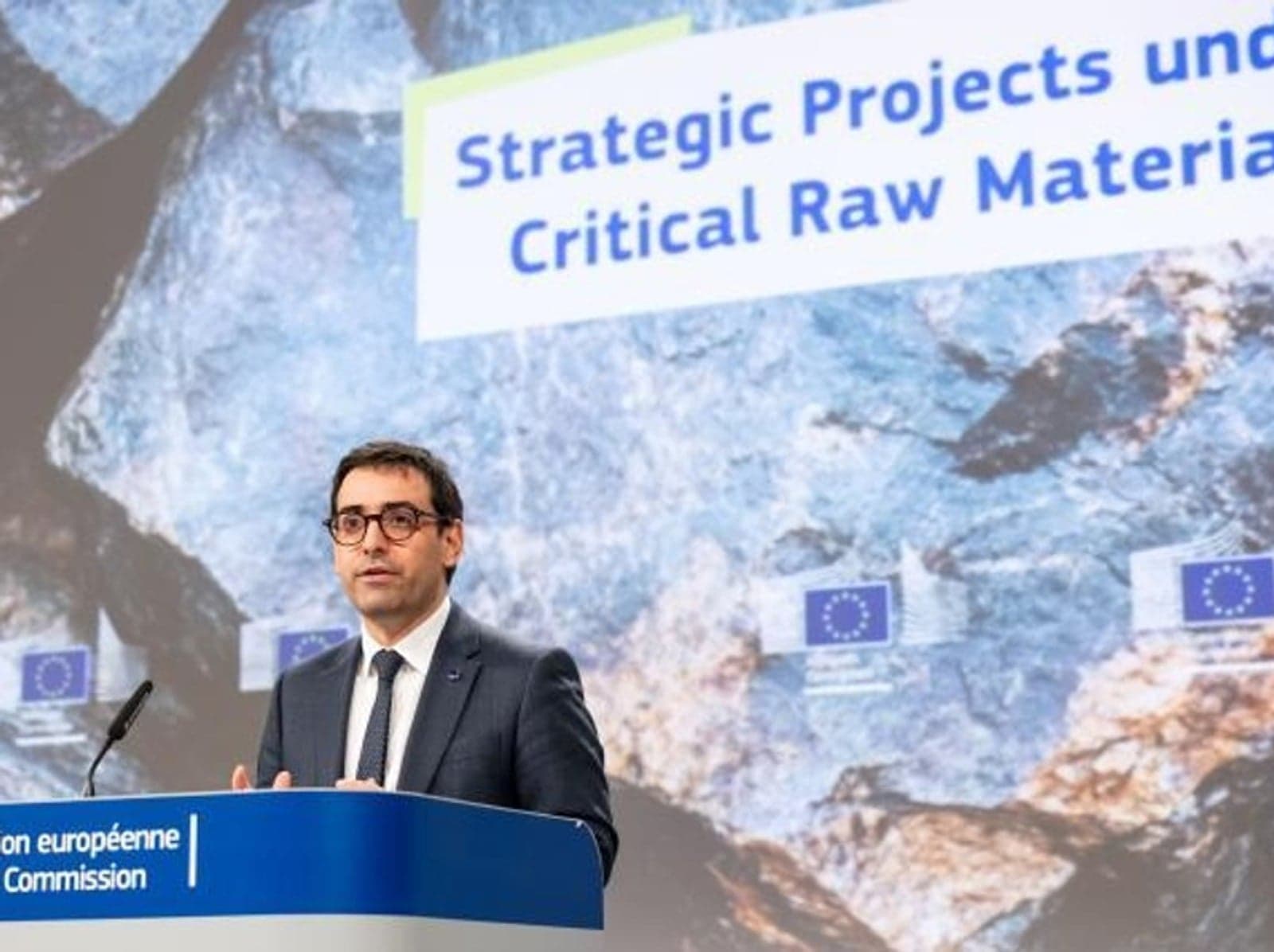
The European Commission has adopted 47 projects to boost domestic strategic raw materials capacities in the EU, with batteries set to benefit in particular.
The projects, which should strengthen the European raw materials value chain and diversify sources of supply, are considered to mark an important milestone in the implementation of the Critical Raw Materials Act to develop local availability of these products.
Under the Act, European extraction, processing and recycling of strategic raw materials are targeted to meet 10%, 40% and 25% respectively of the EU demand by 2030.
In helping to meet these, the projects should contribute significantly to Europe's green and digital transitions, supporting for example the drive and circularity approach for electric vehicles as well as other industries such as aerospace and defence.
Also of interest
What’s in the Net Zero Industry and Critical Raw Materials Acts?
EU Energy Projects podcast: Europe’s competitiveness – Balancing ethics, growth and innovationhttps://www.enlit.world/projects-zone/eu-energy-projects-podcast-europes-competitiveness-balancing-ethics-growth-and-innovation/
Commenting on the projects, Stéphane Séjourné, Executive Vice-President for Prosperity and Industrial Strategy, said that raw materials are at the start of Europe’s most strategic supply chains but relies for many of them on third countries.
“We must increase our own production, diversify our external supply and make stockpiles. We have identified 47 new strategic projects that, for the first time, will help us secure our own domestic supply of raw materials. This is a landmark moment for European sovereignty as an industrial powerhouse.”
Project overview
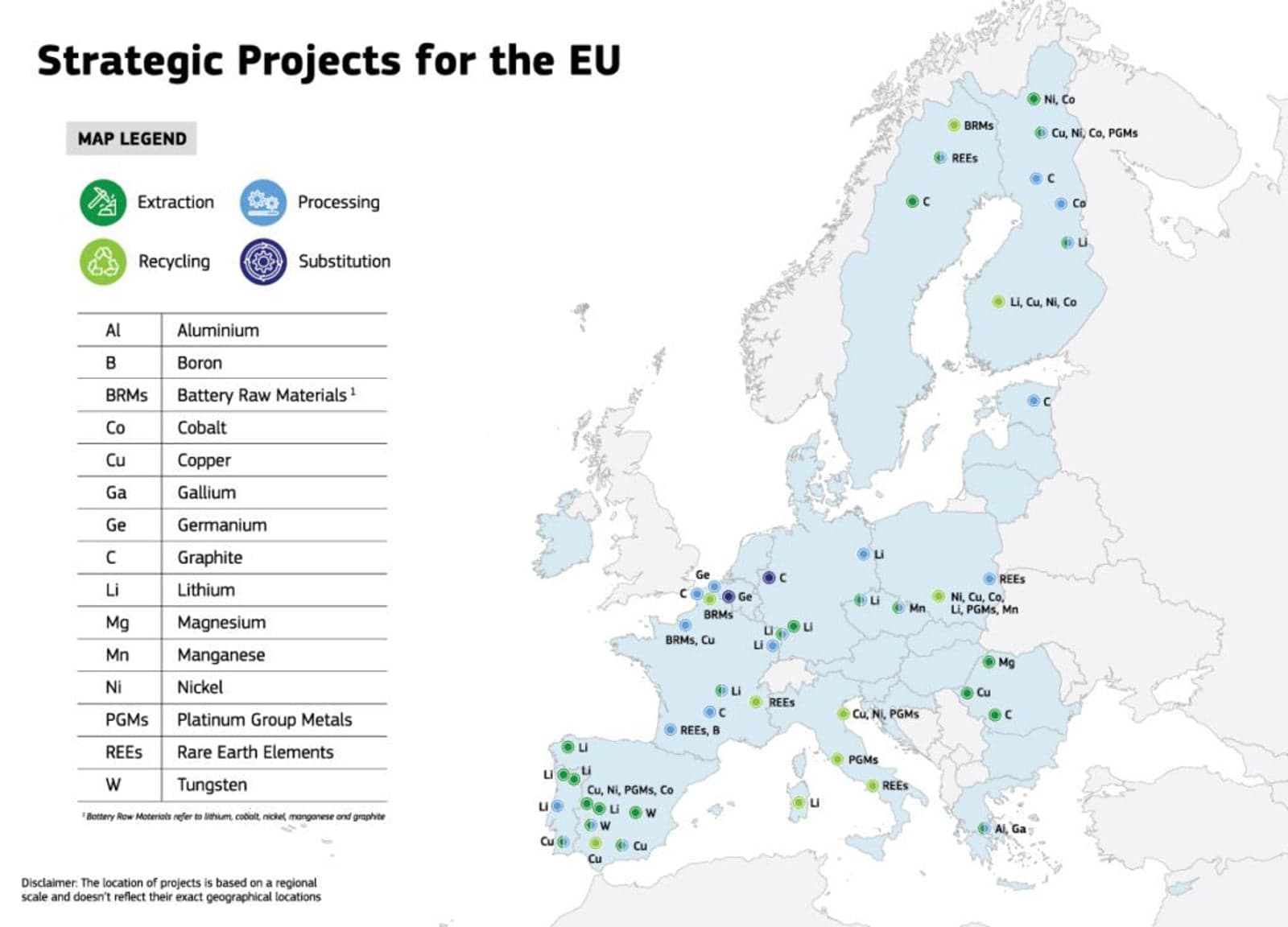
The 47 projects are located across 13 EU member states: Belgium, France, Italy, Germany, Spain, Estonia, Czechia, Greece, Sweden, Finland, Portugal, Poland and Romania.
They cover one or more segments of the raw material value chain, with 25 projects comprising extraction activities, 24 processing, 10 recycling and two the substitution of raw materials.
They also cover 14 of the 17 strategic materials listed in the Critical Raw Materials Act. These include lithium with 22 projects, nickel with 12, cobalt with 10, manganese with seven and graphite with 11.
With these the EU should fully meet its extraction, processing and recycling 2030 benchmarks for lithium and cobalt, while making substantial progress for graphite, nickel and manganese, a release states.
Furthermore, with these five materials needed for batteries and almost two-thirds of the projects set to produce battery-grade output of one or more of them, the battery supply chain is set to be one of the biggest beneficiaries of the projects.
To become operational, the projects have an expected overall capital investment of €22.5 billion ($24 billion). They will be able to benefit from coordinated support by the Commission, member states and financial institutions to become operational.
They will also benefit from streamlined permitting provisions, not exceeding 27 months for extraction projects and 15 months for other projects.
Noteworthy among the project lineup is Northvolt’s NorthCYCLE project in Sweden for the ongoing recycling of battery grade manganese, lithium, graphite and nickel and cobalt from end-of-life batteries.
With the company having filed for bankruptcy earlier in March, this project now appears to be in jeopardy.
With this first project call awarded, a second call is being planned, currently for the end of summer.