How an Italian company is redefining how the world stores power
Pamela Largue
Posted on: 22 October 2025
Sizable Energy is moving closer to commercialising its patented offshore pumped hydro system after raising $8 million in its latest funding round.
Sizable Energy, an Italian pioneer in long-duration ocean energy storage, has announced it has raised $8 million in its latest funding round.
This investment round, led by Playground Global and supported by Verve Ventures and Unruly Capital, is moving Sizable Energy closer to its goal of cost-effective duration energy storage (LDES).
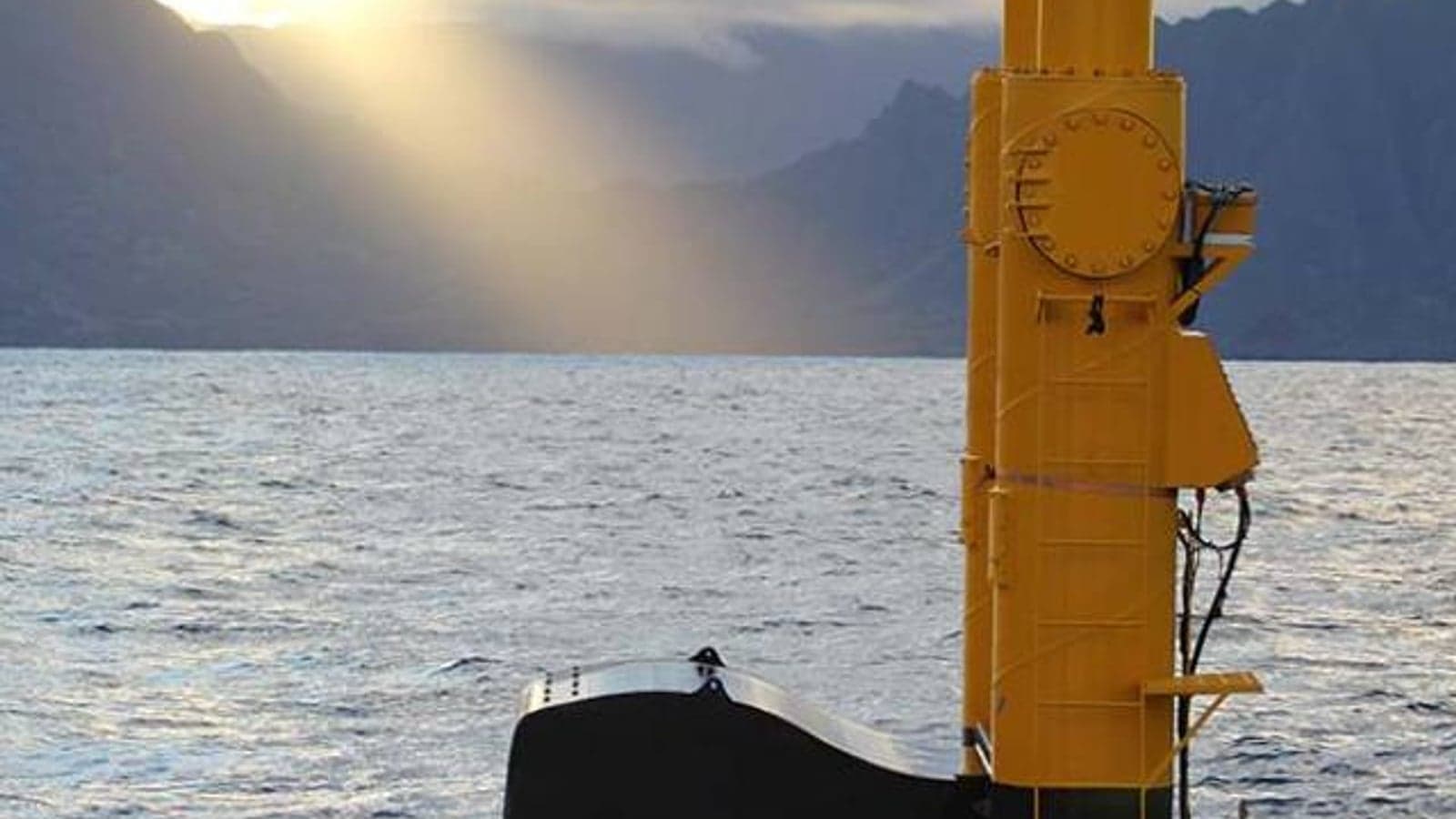
And this storage solution is unique. Dr Manuele Aufiero, co-founder and chief executive of Sizable Energy, explains that the team has taken the concept of pumped hydro and moved it offshore.
"Instead of pumping massive amounts of fresh water up a mountainside to power hydroelectric dams, we use a saturated sea-salt brine that’s about 20% denser than seawater – and less corrosive than freshwater. The fluid moves between a floating surface reservoir and a sea-floor reservoir, which means we don’t need land, dams, or freshwater at all.”
Aufiero adds that the solution doesn’t rely on specific site requirements and is modular in nature, which allows for faster deployment with less environmental impact.
Sizable Energy’s Gravity Battery can be differentiated from other LDES technologies because of the following innovations:
- Modular marine design: The system uses standard maritime components and materials, allowing the system to easily scale from megawatt-hours to gigawatt-hours.
- Co-location and rapid deployment: Building offshore means shorter timelines, and pairing with floating wind allows for the sharing of infrastructure such as cables, substations, and maintenance.
- Sustainability: Sizable exploits the gravitational potential of a 20% heavier-than-seawater solution, such as saturated sea salt brine, inside seawater. Unlike traditional pumped hydro, says Aufiero, this system uses unrefined salt, which can be sourced as a by-product from industrial processes like desalination.
- Cost stability: Sizable Energy’s materials deliver competitive CAPEX and LCOS for 8–24 hour durations, with zero degradation over time. Said Aufiero: “At large scale, we’re projecting LCOS around one cent per kilowatt-hour, which is incredibly competitive”.
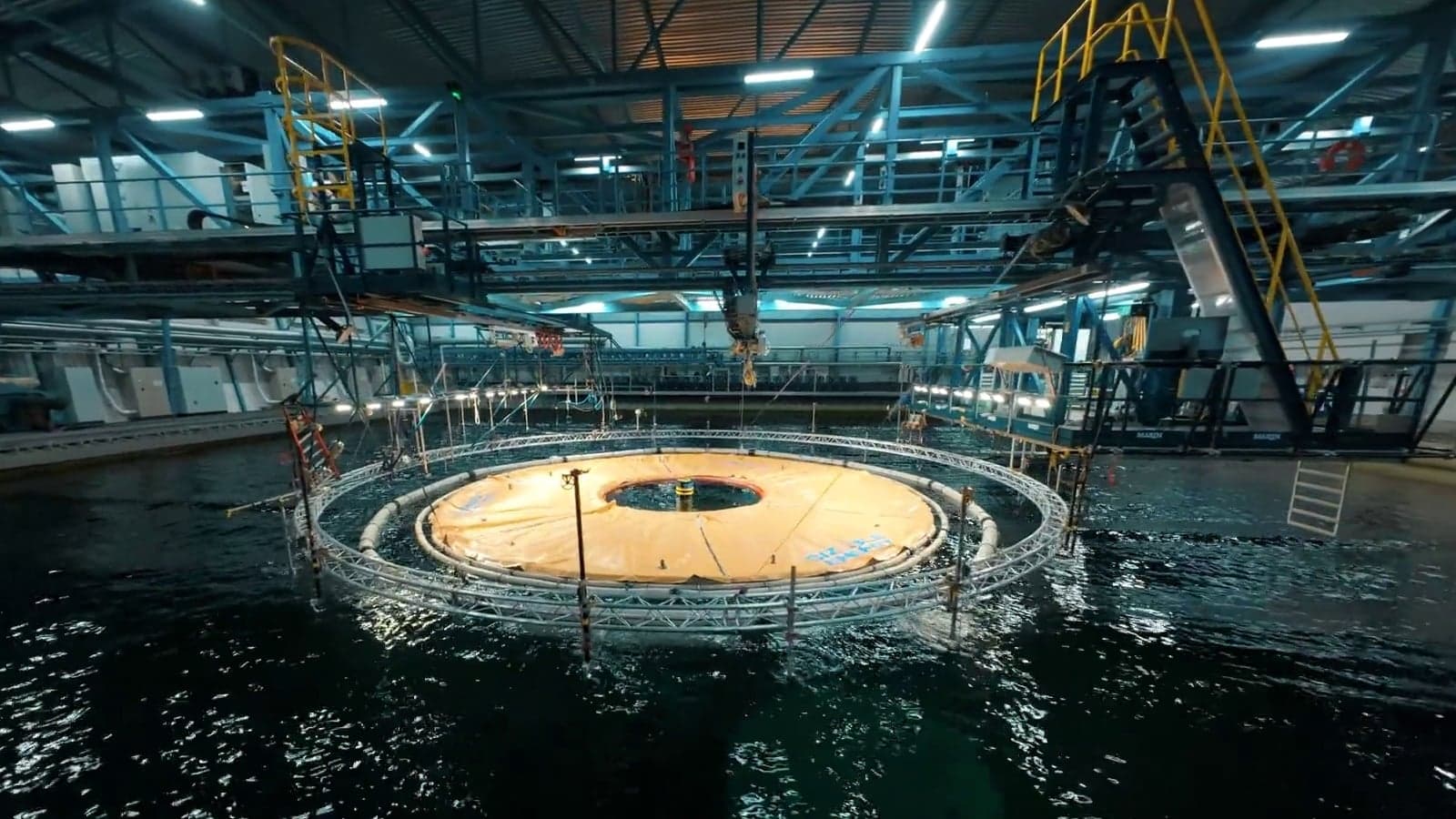
The energy storage technology has been tested and validated at the Maritime Research Institute Netherlands (MARIN), proving the system can operate reliably in harsh ocean environments
Sizable Energy has also started deploying its next sea trial off the coast of Reggio Calabria, Italy. This pilot will validate all key floating components, as well as demonstrate the full-scale assembly and deployment process.
Have you read?
Battery tech roundup: Five developments in key BESS markets
Bottleneck battling storage project to be built in ‘relief area’ in Germany
With this milestone approaching, the company is preparing for commercial project development in 2026 across multiple global sites.
Aufiero said the next step "is a megawatt-scale demo in 2026, followed by our first grid-connected commercial pilot in 2027. This [funding] round gets us through pilot deployment and technology qualification. We anticipate raising additional funding – combined with other sources of revenue and non-dilutive funding – to scale commercial deployments.”
Rahul Meka, principal at Playground Global, shared his enthusiasm about the solution: “In terms of scale and economics, Sizable offers the only technology option. The key goals and milestones are for Sizable to derisk the system at a 10MWh scale – which is unheard of in the seed stage regime. Once that's done, we are into the commercialisation domain.”
Markets and applications
Aufiero highlights that this solution will hold the most promise for populated coastal areas with water depths of at least 500 meters, where LDES would be essential for grid stability and resilience.
Also, areas with high renewable energy penetration, with times of high peak demand or with excess energy in the grid would benefit. As this would smooth out the duck curve and prevent curtailment.
Added Aufiero: “Today 90% of the world’s energy storage is in land-based pumped hydro which requires rapid elevation gain in mountainous areas near population centers in valleys. This in-ocean pumped hydro solution provides long-duration energy storage in the ocean from land-based or offshore sources.”
Aufiero continues to explain that because of this fact, the Gravity Battery is ideal for co-location with floating offshore wind.
“By sharing cables and substations, we can cut capital costs, shrink the seabed footprint, and make renewables far more efficient overall.”
Also of interest: Paris Pledge launches to accelerate pumped storage hydro in Europe
An inspired journey
Aufiero explains that the journey with Sizable Energy started with a key insight from their background in nuclear engineering.
“Working on advanced reactors showed us that while developing reliable, clean power generation is essential, it's ultimately not sufficient on its own.
“The other half of the equation—the part that makes clean energy truly dispatchable and available 24/7—is scalable storage. This inspired our mission: to design a solution for gigawatt-scale storage that avoids the typical constraints of rare materials, significant land use, or massive construction projects.”
They found the answer in the ocean, using the principles of gravity coupled depth.
“Now, we’ve shifted from proving the science to building an industrial-scale, long-duration energy storage platform that is designed to last in the ocean for 30 years. We’re not just creating another clean energy technology.
“We’re helping redefine how the world stores and uses power.”