John Kerry on Europe's energy security 'toxic complacency'
Kelvin Ross
Posted on: 24 June 2026
Ex-US secretary of state and other politicians tell London Climate Action Week how Europe sleepwalked into crisis and offer optimism on how to get out of it.
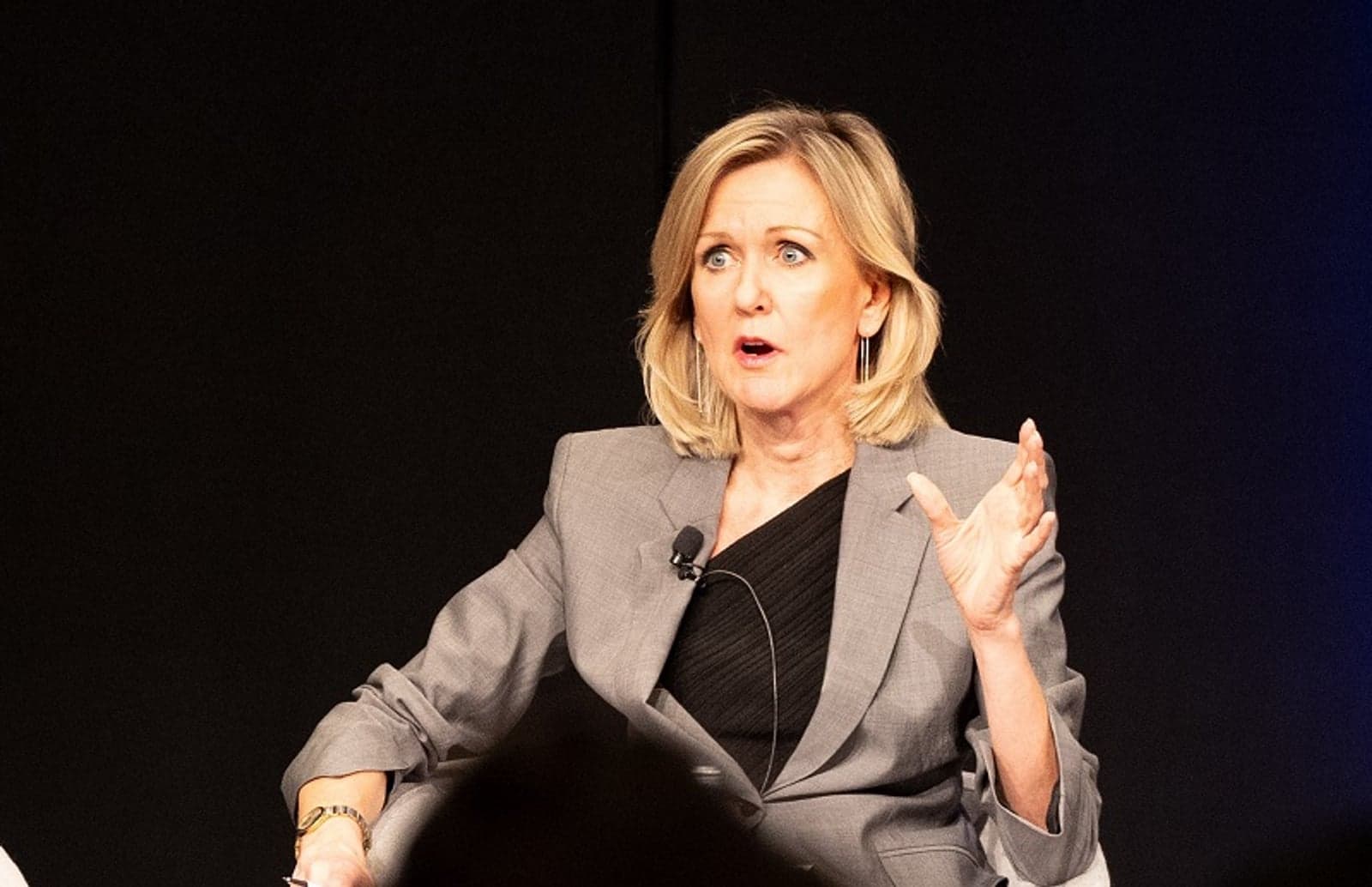
Political heavyweights including former US secretary of state John Kerry and ex-Italian prime minister Matteo Renzi delivered a blistering assessment of how Europe got itself into its present energy security crisis – and then set out a roadmap on how to get out of it.
Kerry and Renzi were speaking on a panel discussion during London Climate Action Week alongside former Nato Deputy Supreme Allied Commander in Europe Richard Shirreff, European Commissioner for Energy and Housing Dan Jørgensen, and chaired by Ann Mettler, president of Catalyse Europe.
Mettler described the relationship between geopolitics and energy security as “undoubtedly one of the most defining questions of our time”.
To set some context for where Europe now finds itself, she went back to 1992, when Chinese leader Deng Xiaoping said ‘the Middle East has oil; China has critical minerals’.
At the time, Mettler said “that may have sounded just like a simple observation, but in retrospect, it sounds like an announcement of action, an announcement of commitment, and an announcement of delivery”.
First electro-state
Because over the following decades, she said China “systematically built leadership across the technologies that now underpin the energy transition: solar, wind, batteries, electric vehicles, and, of course, the critical mineral supply chains that support them.”
All of which she said makes China “the world's first electro-state”.
In comparison, she reflected on the EU in 1992: “Europe's energy import dependence on fossil energy was roughly 37%. By 2025, that figure had risen to 55%. Europe became more dependent on imported fossil fuels, and as we began to focus and commit to decarbonisation, we simultaneously developed new dependencies.”
Exclusive:
Listen to Ann Mettler in our Energy Transitions Podcast
Now, said Mettler, Europe “finds itself in a very uncomfortable reality: we cannot import energy security, but neither can we entirely outsource it”.
“How did we get this so wrong? How could we screw up like this,” she asked Shirreff, who in turn answered that Europe was guilty of a “toxic complacency” which led its political leadership to believe “that we lived in an easy world, with easy supply chains and easy energy”.
“And nowhere more is this writ large than in the undermining of defence as the core of security. And with that goes energy security.”
'Energy is logistics'
Shirreff said that “energy security has got to be part of defence policy” and quoted WWII US army general Omar Bradley, who said ‘amateurs talk tactics, professionals talk logistics’.
“Energy security is logistics and it needs the same principles as those of defence: mutual support and keep a reserve.”
He also called for a move to a much more distributed energy system, “where dependencies on vulnerable supply chains from toxic regimes are minimised”, a tactic which has kept the lights on in under-attack regions of Ukraine in recent years.
More on energy security:
What the Nordics can teach Europe about energy security
Speaking at the Octopus Energy Tech Summit, former Italian prime minister Renzi blamed Europe’s energy security mis-steps on too much focus on what he called an “ecological approach” and not enough on pure innovation.
He said energy “is geopolitics, energy is security, energy is defence. Energy is the capacity to attract talent. What is the problem now? We invest too much in targets and we have forgotten the importance of growth and opportunities.”
An innovation spectator
He said Europe had become “a spectator and not a protagonist in the great competition between the USA and China” but added that with a change in mindset, energy could become “the most important pillar of European unity”.
“We have to invest in the very great talents we have in this part of the world, and transform with digitalisation, electrification, and with innovation.
“If Europe wakes up, we will play a role. The alternative is we become only spectator and we lose everything.”
“If for the future we invest in innovation in new technologies, we'll be believable. If we continue with an ecological approach, we will lose this fight. Innovation is not our enemy.”
Renzi, who is now Strategic Counsellor for the Tony Blair Institute for Global Change, said AI should be embraced.
“We have to explain that artificial intelligence and quantum computing is the best friend of energy's future. We consider artificial intelligence a problem for the future: the problem for the future is not artificial intelligence… it's natural stupidity.”
Kerry slams duplicity
Former US Secretary of State John Kerry said the reason so many agreements made at so many COP summits have failed is because of “duplicity from a lot of powerful corporations”.
“They say they're going to try for net zero, but there's no genuine major coordinated effort… and we’re still listening to powerful forces that just don't want to give up on their current revenue streams who put out a lot of disinformation.”
Degrees of separation:
Patricia Espinosa on the 1.5 climate gap - Read now
“We're not paying attention to – or honouring – the basic facts. And in a democracy, if you can't agree on what the facts are, you really can't make decisions.”
He quoted his former Senate colleague Daniel Patrick Moynihan who said ‘everybody's entitled to their own opinion, but you're not entitled to your own facts’.
“We're seeing people who are prisoners of this phenomenon all around the world. What we need to do is restore the credibility necessary to be able to move the decisions that we need.”
'Define the future'
And Kerry added that it was easy to “forget how simple this is. It's not a matter of politics or ideology or persuasion. It's about facts and science. We know, as a scientific fact, that when you burn fossil fuel and don't capture the emissions, it traps heat on the planet.
“This isn't complicated. You don't need somebody in SpaceX, earning a lot of money from Elon, coming in to write a new algorithm. It's not what it takes.”
Kerry said despite two-and-a-half decades of disappointment from COP summits, he was optimistic about change being driven instead by companies and consumers.
“The marketplace is providing amazing things right now. Batteries are better; nuclear has changed; all kinds of things are happening in solar… cheaper than ever before.
“So we’ve got to believe in the future, but we got to define that future.”
And Jørgensen astutely compared the EU’s attempts to tackle energy security and decarbonisation as “like 27 people building a jigsaw puzzle without looking at the picture on the box – it’s not very rational”, and added the approach was “all bottom up”.
Instead, he said Europe should seize the opportunity to make “European-wide scenarios that are rational and that will decide where we need the interconnectors and where we need the investments”.
Jørgensen cites Denmark as poster child for energy transition lessons