Report forecasts 100 North Sea storage sites needed to meet CCUS demand
Power Engineering International
Posted on: 24 November 2023
The volume of CO2 being injected into the North Sea by 2050 will be equivalent to the natural gas currently being extracted from the basin| according to Xodus.
The volume of CO2 being injected into the North Sea by 2050 will be equivalent to the natural gas currently being extracted from the basin, according to a new report from energy consultancy Xodus.
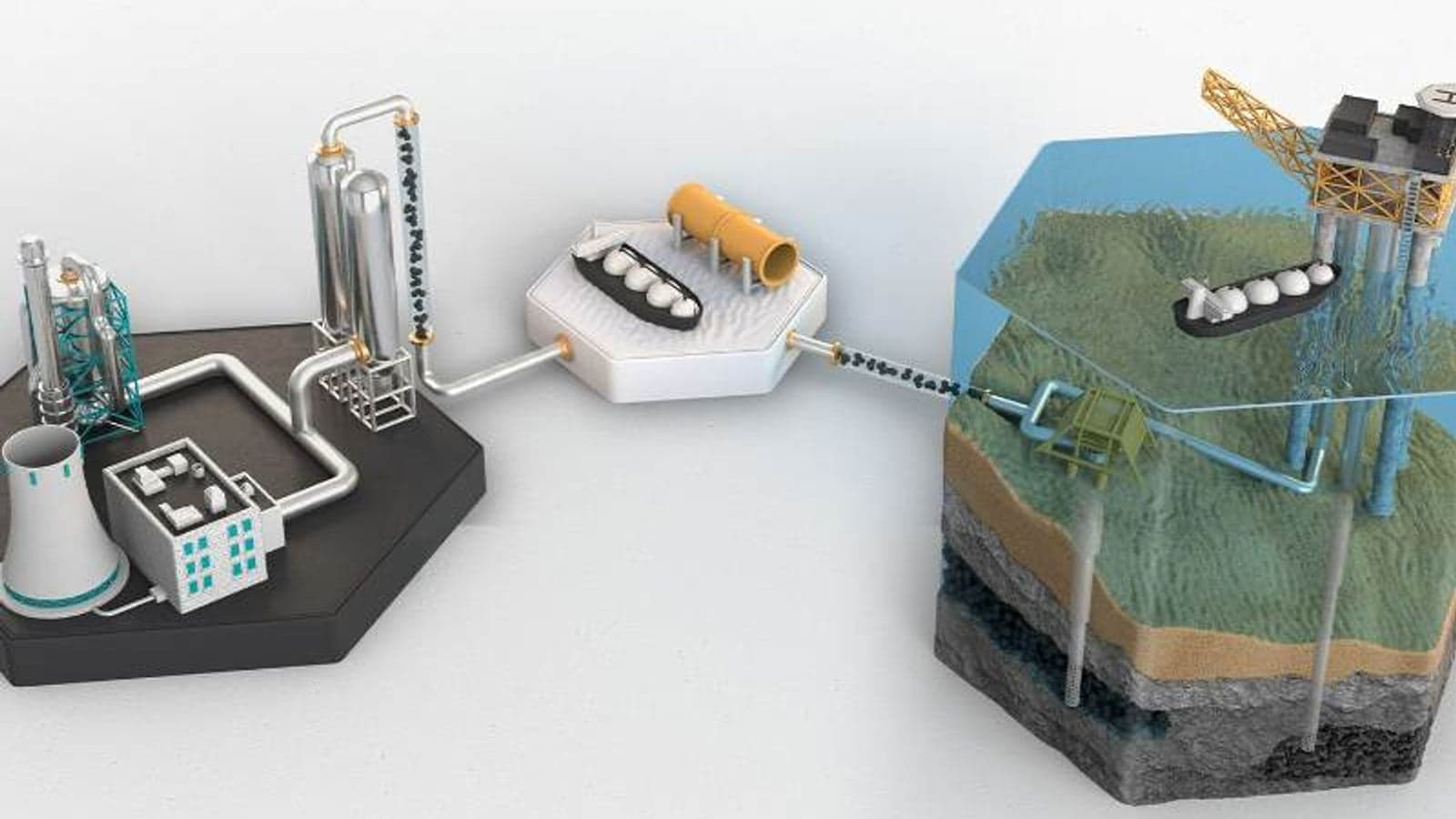
That scale of carbon capture, utilisation and storage (CCUS) will require some 100 reservoirs, more than 7,500 kilometres of new pipelines and dozens of onshore emissions capturing and gathering sites.
Entitled Forecasting the North Sea CCUS infrastructure to 2050, the report was produced in partnership with offshore engineering firm Subsea7, and is designed to be used as a tool for assessing the relative cost efficiency of CCUS projects and when they would become viable.
Through a detailed analysis, Xodus assessed 560 potential storage sites, existing North Sea gas pipelines and potential new infrastructure to rank the cost efficiency of different CCUS initiatives.
Europe is the only leading economic region that has its largest hydrocarbon basin at the heart of its economy. About 40% of European industrial emissions are generated within 500km of the North Sea, a strategic advantage in reducing the cost of developing CCUS projects.
Have you read?
A moment of truth for the oil and gas energy transition
Carbon capture planned for German waste-to-energy plant
In the coming decade, Xodus forecasts that up to 100% of European CCUS projects will be anchored in the North Sea, though over time this share will reduce. Based on the high-case estimates for emissions reduction, by 2050 the North Sea would retain a 60% market share of a 500 megatonnes per annum (MTPA) market.
Emissions will be imported by vessels and long-distance pipelines but to what extent depends on various factors, including transportation costs, competing storage sites and societal attitudes towards onshore storage.
Steve Swindell, CEO of Xodus said: “If we’re to get to net zero in an orderly and timely manner, pioneering technologies like CCUS are a necessity, not an option. Fortunately, the North Sea’s world-class oil and gas industry provides the perfect foundation for the rollout of carbon capture, with the potential to repurpose and build around existing infrastructure.
“But the outlook for this crucial technology is somewhat vague with many question marks around timing, volume and prime locations for locking away emissions. Our study analyses many of these uncertainties by examining the infrastructure needed to enable deployment at scale.
“We have developed this tool to generate scenario-based forecasts of how Europe’s CCUS sector will mature up to 2050, a major asset in helping developers to make educated and accurate investment decisions.”
By the end of the decade, Xodus expects there to be eight operational CCUS projects in Europe, including Northern Lights in Norway, and the Viking and Acorn clusters in the UK. All carbon stores will be situated near or linked to high emitting regions, offering a decarbonisation solution for vast swathes of heavy industry.
Developments will likely be supported by direct government subsidies, alongside contracts tied to the ETS and UKTS emissions schemes.
James McAreavey, head of CCUS at Xodus said: “It will require a Herculean effort to deliver CCUS projects at the scale Europe needs, but the enormous benefits of doing so are obvious. There is the chance to make the most of existing synergies with the offshore oil and gas industry and reuse miles of existing pipelines that may otherwise need to be removed from the North Sea.
“As the transition progresses, it is inevitable that CCUS projects will be competing for seabed area with other low carbon technologies, but that could drive collaboration between industries and lead to the creation of a basin-wide integrated energy system.”
Xodus’ work also finds that, with the right approach, between 50% and 70% of North Sea CO2 storage could re-use infrastructure, delivering significant cost savings and environmental benefits.
But this hinges on a strategic national and cross border infrastructure build-out strategy to ensure key infrastructure is kept in place.
Listen to this episode of the Energy Transitions Podcast with Ruth Herbert, CEO of CCSA, to learn more about the value of carbon capture and storage in reaching our decarbonisation goals.