Rolls-Royce to demonstrate micro-reactor for power on the Moon
Jonathan Spencer Jones
Posted on: 20 March 2023
Rolls-Royce has been awarded £2.9 million (US$3.5 million) to deliver an initial demonstration of a UK lunar modular nuclear micro-reactor.
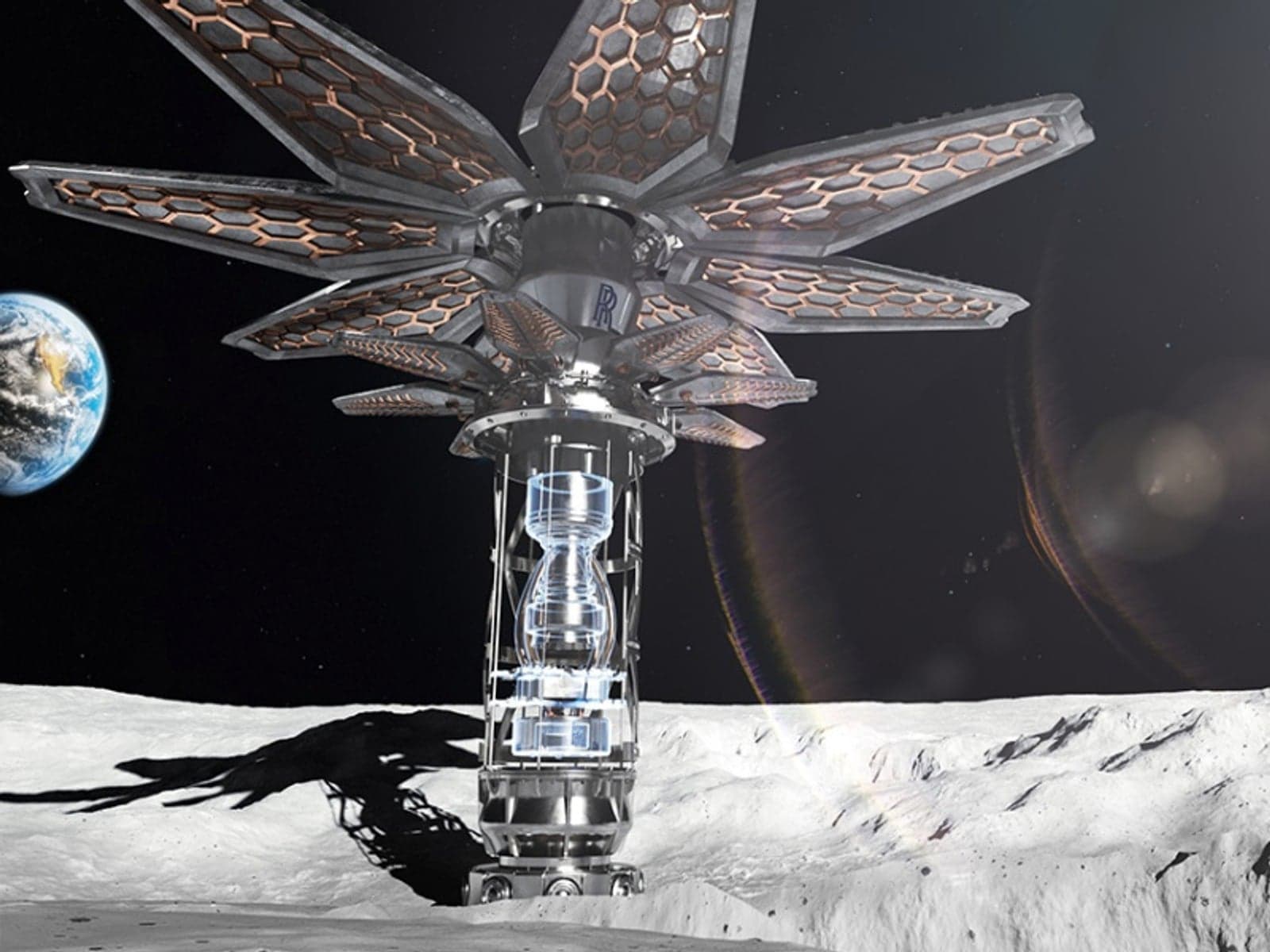
Rolls-Royce has been awarded £2.9 million (US$3.5 million) to deliver an initial demonstration of a UK lunar modular nuclear micro-reactor.
The funding from the UK Space Agency, which follows a March 2022 award of £249,000 for a study on nuclear as an option for space use, will support the continued development of Rolls-Royce’s micro-reactor programme for power and propulsion to the Moon and beyond.
With the majority of the technology similar to that that can be used on Earth, the programme also should lead to advances in the development on micro-reactors for local use, for example for mobile power as an alternative to generators.
“The new tranche of funding from the UK Space Agency means so much for the Rolls-Royce micro-reactor programme,” says Abi Clayton, director of Future Programmes for Rolls-Royce.
Have you read?
Powering a Moon village
Rolls-Royce’s low-carbon power solutions for net-zero emissions
“This funding will bring us further down the road in making the micro-reactor a reality, with the technology bringing immense benefits for both space and Earth. The technology will deliver the capability to support commercial and defence use cases alongside providing a solution to decarbonise industry and provide clean, safe and reliable energy.”
In delivering the programme, Rolls-Royce will be working alongside a variety of collaborators including the University of Oxford, University of Bangor, University of Brighton, University of Sheffield’s Advanced Manufacturing Research Centre (AMRC) and Nuclear AMRC.
The focus will be on three key features of the micro-reactor: the fuel used to generate heat, the method of heat transfer and technology to convert that heat into electricity.
Nuclear for space travel
Nuclear is considered ideal for use in space as a self-contained solution for both propulsion of rockets and power generation for creating the water, oxygen, heating and lighting necessary for living and working on bases on the Moon and Mars.
Unlike traditional rocket engines which are large and require large quantities of fuel, the micro-reactor would be relatively small and lightweight – about the size of a car – and requires only a few grams of fuel.
This advantage offers the potential both for faster space travel and for rockets to carry a larger payload, both of which are advantageous for those who are travelling to and establishing bases, especially to Mars for which the current travel time is about seven months.
In addition to the micro-reactor, which Rolls-Royce aims to have ready to go to the Moon by 2029, the company is working on other space applications.
These include gas turbines for hypersonic planes to take payloads into low earth and the harnessing of the heat in the natural decay of nuclear materials to power scientific and communications equipment.
Alongside the micro-reactor programme, Rolls-Royce is also working on a UK government supported small modular reactor development, which is expected to come into operation in the early 2030s.
Nuclear for space exploration
The Rolls-Royce award follows funding earlier in March of £1.6 million to eight projects to investigate space exploration using lunar resources and nuclear power.
Among these, the University of Southampton has been awarded funding for an all-in-one resource utilisation system for Mars missions using non-thermal plasmas for removing biological and chemical contaminants in extracted water from Mars and generating oxygen and rocket fuel from the Martian atmosphere.
In a second project the University is focussed on the development of a design concept of a nuclear fission power system integrated with high-power electric propulsion technology to power and enable large scale activity in space.
Bangor University will demonstrate additive manufacturing of metallic and ceramic zirconium-containing nuclear fuels and assess their performance for space propulsion.
The Open University in one of two projects funded intends to extend the development of microwave heating for construction and the extraction of resources such as oxygen and water from the soil on the Moon.