Saving energy through behavioural change: The experience of Viken county in Norway
Guest/partner contributor
Posted on: 19 June 2024
The Norwegian county of Viken worked closely with municipalities, as part of the ENCHANT project, to engage citizens in energy saving through a campaign aimed at inciting widespread changes in energy consumption habits.
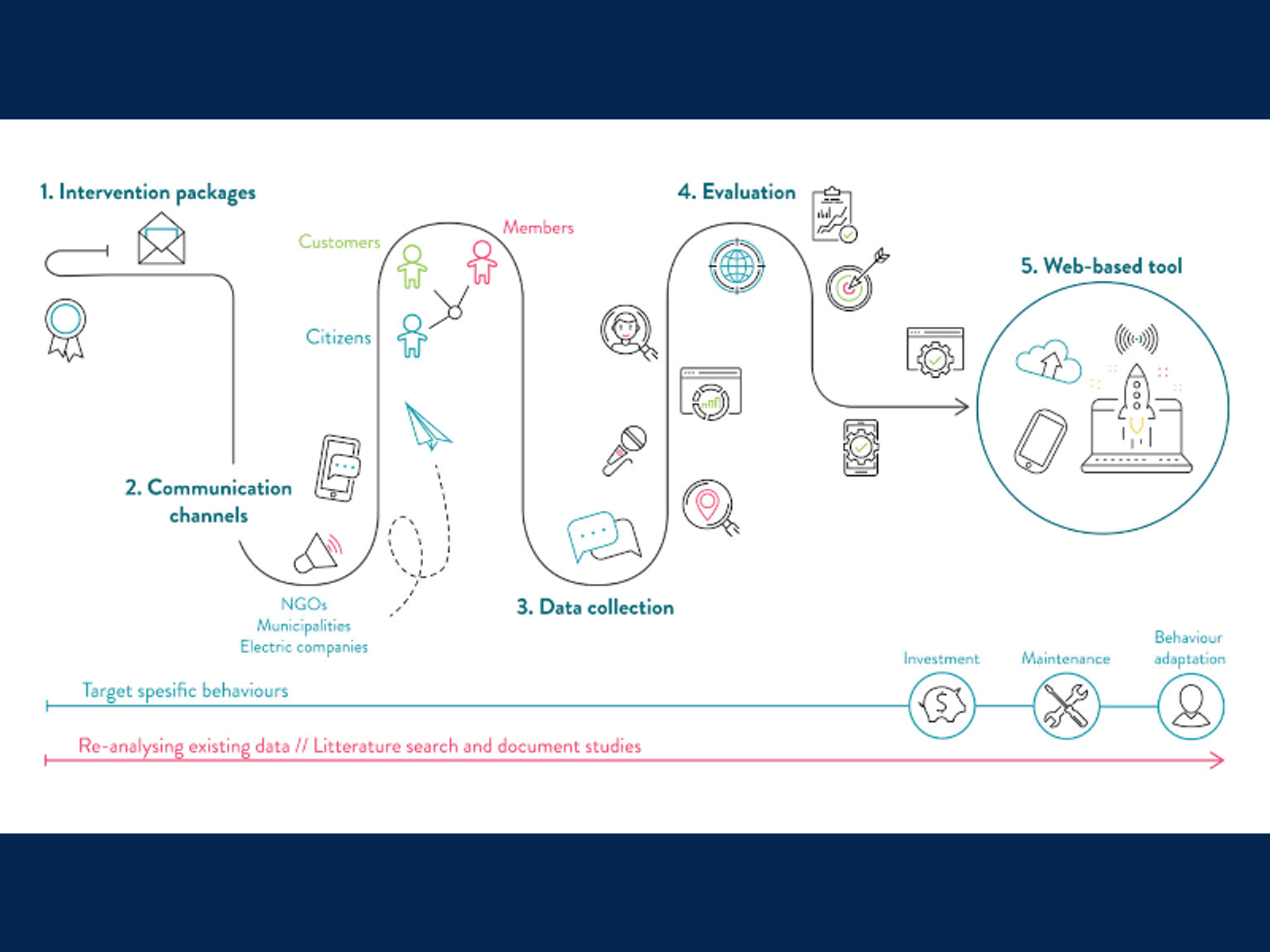
The Norwegian county of Viken worked closely with municipalities, as part of the ENCHANT project, to engage citizens in energy saving through a campaign aimed at inciting widespread changes in energy consumption habits.
To save energy beyond municipality infrastructure, it is crucial to engage the general population and encourage changes in their energy consumption habits. However, changing behaviour on a large scale is no easy feat. To have broader reach and impact, regional authorities and local authorities can team up to collaborate on campaigns geared toward raising awareness and inciting behavioural change.
This is exactly what Viken County in Norway did when they launched a campaign as part of the ENCHANT project. They worked closely with Viken’s municipalities to encourage citizens to save energy, testing different tools to change their consumption habits.
Read more about:
EU-Funded energy projects
Decentralised energy
Energy communities
Engaging citizens via campaigns
The ENCHANT campaign in Viken had the objective of involving every resident in the area who relies on electricity, primarily households. It was a comprehensive effort that sought to tackle the energy consumption challenge on multiple fronts. The campaign called on residents directly to participate and test different energy saving tools and tactics, to then share results publicly on different channels. To be more engaging, the campaign was framed as a sort of competition, with the possibility of winning prizes for more citizens to play the game.
To directly reach and engage citizens, Viken County, as coordinator of the ENCHANT campaign in a large part of Norway, worked with all its 51 municipalities, who carried out the campaign with their communities locally via their channels. Viken was in charge of developing the campaign materials and coordinating with the municipalities. But at the end of the day, the municipalities appropriated the campaign as their own. This was crucial to the campaign’s success: residents, feeling closer to their local government and trusting of the information shared with them, felt more compelled to get involved.
“Households lack knowledge on the best actions to save energy,” explains Bente Støa, Climate advisor, Asker municipality.
“Access to information is mainly available from suppliers and artisans with mixed interest and competence. Energy measures are often big investments and detailed and reliable information are important barriers. The municipality is a trustworthy source for independent information and advice. In Norway the electrification of society has already come a long way, especially in the transport sector. Therefore, Asker municipality has a goal of not increasing net energy consumption in households from 2019 to 2030. The advisory service plays an important role in reaching that goal.”
The campaign ran for 4 months, from January to April 2023, and counted with an active participation of 889 inhabitants throughout Viken region. In a context of energy crisis, the campaign had increased relevance, as people were already aware of the importance of saving energy and motivated to try new ways to decrease their consumption.
Encouraging Behavioural Change
The campaign divided participants into different groups to try out six different intervention tools either on their own or combined.
The primary objective of the ENCHANT project is to assess the effectiveness of intervention tools that have demonstrated success in smaller-scale trials and adapt them for practical application on a larger-scale, in collaboration with user partners like municipalities, county administrations, electricity companies, and NGOs, spanning across six European countries.
The different tools that were systematically tried are:
- offering energy-saving advice,
- providing feedback on others' successful experiences,
- offering feedback on one's own electricity consumption trends over weeks,
- seeking commitments to undertake energy-saving efforts,
- initiating competitive elements among participants,
- encouraging a shift from an individual perspective to a collective one (e.g., emphasizing "we in Norway" can conserve electricity instead of "I can save electricity"). In the six countries part of the project, these tools were tested either individually or in combination with one another.
In Viken, the campaign showed that the most effective tool in changing behaviours was the energy-saving tips. Participants who received energy-saving tips managed to save an average of 18.8 kWh per week per household member, compared to control groups. For a family of four, this equates to around 300 kWh saved per month (in winter months).
Another tool that proved to have impact in Norway was the social element: as participants were made aware of the energy savings achieved by their peers, their motivation to conserve increased, leading to additional savings of 11.3 kWh per person per week.
Integrating behavioural change in energy and climate action
Such a campaign has much to contribute to Viken County's energy and climate objectives, as the county’s Sustainable Energy and Climate Action Plan (SECAP) outlines a clear commitment to reducing energy consumption.
To cast a wider net with consumption reduction and inspire the population to make meaningful changes, it is critical to first and foremost understand the energy consumption patterns of Viken's residents. The campaign period became an opportunity for registered participants to gain invaluable insights into their own electricity usage and how they could reduce it. Through active participation, residents not only received practical tips but also real-time feedback, empowering them to make informed choices that not only benefitted individual citizens but also contributed positively to our climate goals.
“We wanted to learn as much as possible about the residents of Viken's energy consumption,” explains Viken County Councilor for Planning, Climate, and Environment, Annette Lindahl Raakil (Sp).
“Without this knowledge, we would not be able to motivate the population to make important changes. Changes that is positive both for the individual citizen, but also for the climate.”
Seeing these benefits, the municipality of Asker decided to finance the campaign with their municipality’s own budget as part of their broader climate and energy strategy. From these efforts, they found that in-home visits by energy advisors had the most significant impact. This approach was particularly effective because many households lack knowledge about the energy efficiency of their homes, and physical inspections often unveiled more energy-saving opportunities than general information or consultations could provide.
“The energy advisory service ties well with Askers long term climate ambitions,” says Støa.
“Asker has adopted a climate plan that contains six priority areas, one of which being “Future-oriented buildings and constructions.” This focus area includes a strategy about reducing energy consumption in our own buildings as well as being a driving force for energy reductions in private buildings. The advisory service ties directly to this strategy. By promoting energy efficiency, the service ties directly to reducing greenhouse gas emissions and advancing the municipality´s climate goals. It also fosters a culture of sustainability and empowers citizens to take an active part in combating climate change.”
Latest content
+6
DEDALUS: Empowering citizens to shape the future of energy
The DEDALUS project is redefining residential energy demand response by putting end-users at the heart of sustainable energy solutions. Through advanced technology and a user-centred approach, this Horizon project empowers residents to actively manage their energy consumption as part of the green transition, fostering a future where people and technology work together for a resilient energy ecosystem.
- Guest/partner contributor
- 03/02/2025