Home
/
Siemens Energy: New head of Europe reveals energy market opportunities across the region
Siemens Energy: New head of Europe reveals energy market opportunities across the region
Jonathan Spencer Jones
Posted on: 18 July 2024
-
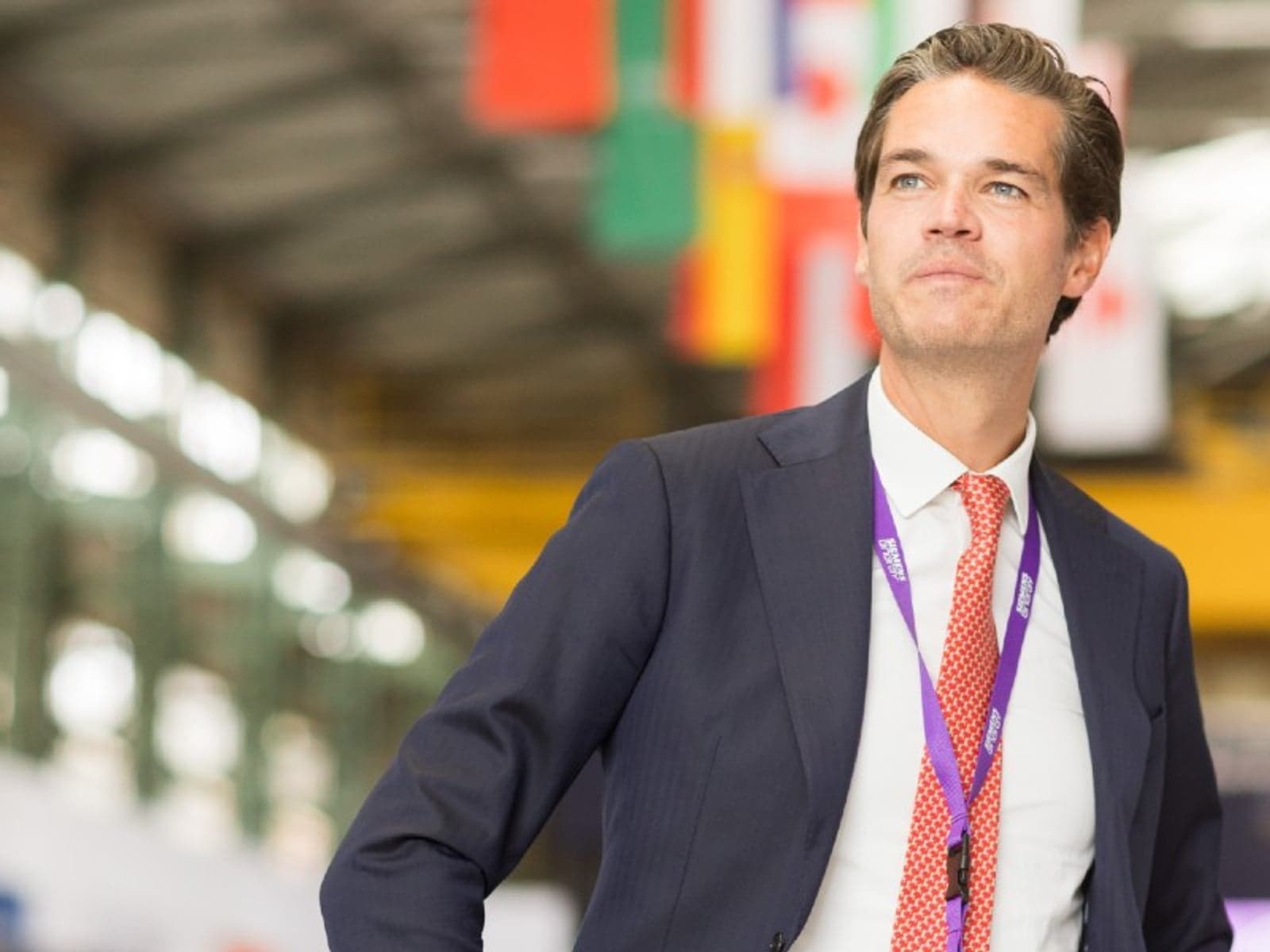
The new Senior Vice President for Siemens Energy’s European team reveals the energy market opportunities he sees for the region.
As global electricity demand is expected to rise at a much faster rate over the next three years, Siemens Energy is ramping up its grid technologies division. The energy technology company is expanding its global manufacturing capacity – including in Europe.
Dr Frederik Doyé, who became Senior Vice President of Hub Europe at Siemens Energy on July 1, discusses the new announcements and why there can be no transition without transmission.
In his first interview since taking up his new role, he also highlights the opportunities and challenges of the energy trilemma, including where he sees the region being able to develop and deploy a wide range of solutions in the global race to net zero.
What are the key opportunities in the European market?
For Europe, it’s clear that the energy transition only works by resolving the energy trilemma: of security, affordability and sustainability of energy supply.
For many of our customers, the topic of affordability has become very critical. We know many European countries have a competitive disadvantage because the price of energy is significantly higher than, for example, in North America or Asia, which is something that we need to deal with.
Several countries, particularly in Eastern Europe, are still heavily reliant on coal. From a sustainability point of view, this is something we want to change together with our customers and partners in the respective countries. So, depending on where you are, the opportunities and challenges of the European energy market are very different.
Across Europe, countries have different starting points, demands and financial resources and will consequently progress at various speeds. As a global energy technology company, we get this and we’re stepping up to support customers in their very own energy transition at whatever speed required. From technology for decarbonisation and partnerships that drive innovation, all the way to the people who can deliver this responsibly for generations to come.
It is also very clear that certain shocks can change the situation dramatically. We experienced this when the war in Ukraine started and a lot of countries, including Germany and the UK, found themselves in a critical situation in terms of energy security that was previously not thought about.
What about the grid challenges and delivering on the climate targets?
The scale of the energy transition cannot be overstated. It’s not just about making the switch to renewables; it’s about making every aspect of the energy we use more efficient and sustainable. Consider this: global electricity demand is expected to rise at a faster rate over the next three years, growing by an average of 3.4%, according to the International Energy Agency.
Now is not the time to slow down, we must rise to the challenge. That’s why, this month, we announced we’re investing in our Grid Technologies division. In Europe this includes the expansion of our renewables and traction business in Weiz, Austria; the expansion of our large power transformers site in Zagreb, Croatia; and the relocation and expansion of our converter electronics factory in Nuremberg.
The world's power grid must be expanded to 152 million km by 2050 to meet net zero – a doubling of today's power grid length. To illustrate the magnitude of what we are talking about, Germany will need to add up to 7,500km of transmission lines. The UK’s target requires it to build five times more power lines and pylons in the next seven years, as they’ve built in the last 30.
As we continue to propel into the future of sustainable energy, it's crucial to recognise the pivotal role of transmission grids in achieving our ambitious net-zero emissions goal by 2050. Without modernising and expanding global transmission grids, the energy transition simply cannot happen.
We need grids that will not only serve a particular country’s needs but will also link supply and demand within a region or across regions. We’re already making great progress with this. In Italy, we have just been awarded the Adriatic link which will help to stabilise the grid and help transfer electricity from the south, where renewable energy is very strong, to the north where most of the consumption is.
We’ve also just helped complete the longest land and subsea interconnector ‘Viking Link’. This 765km-long cable acts like a superhighway enabling the sharing of excess green energy between the grids. At full capacity, it will provide enough power for millions of homes in the UK or Denmark, depending on the demand.
What is the scope and focus of your new role?
The European team is incredibly diverse, spanning 39 countries, across north, south, east and west Europe. As a region, we have a strong foundation from which I’d like to build upon. For me, our strength is not only in our broad portfolio of offerings but in our ability to work together.
We have a matrix-type organisation in Siemens Energy, with four key business areas – wind power, gas services, grid technologies and the transformation of industries. As a region, we want to provide the best solutions to our customers combining the best offerings across all business areas. We will also focus on strategically building up key customer segments, like data centres where we see a lot of growth going forward. We also want to provide the right ecosystem and establish partnerships for innovation and portfolio-related topics.
What is your vision and priorities for this role?
Europe is a very exciting region, we have a lot of different topics going on at the same time, coupled with the country’s diversity, each with different needs and demands.
We are also exploring new trends in the energy market. As part of this, we want to identify the countries where we might have additional potential that we can explore or that we haven't explored yet. As mentioned, the growth in data centres is a significant example of driving energy demand. Not only are they huge consumers of energy, but they also create a lot of heat which can be wasted, or it can be used properly. Today they already account for up to two percent of global electricity requirements. But this could double to more than 1,000TWh in 2026, according to the IEA.
It is also important to highlight that the scarcity of talent within the energy sector is getting bigger every day, and we need to make sure that we make the most of our talents globally. We want to give people the opportunity to jump from one business area to another, one country to another, to have a good cross-exchange and to foster learning between the different countries and business areas.
At Siemens Energy, it is our people and their passion for innovation who make a difference by energizing society. A long heritage in engineering and innovation inspires us to focus on our top priorities: combating climate change and addressing increasing energy demands. We are experts from different fields with a ‘can-do’ spirit that drives us to make the future of energy different, starting today.
What areas do you see for further R&D and innovation?
It’s estimated that 35% of all emissions savings in 2050 will come from technologies that have not yet reached the market. We are constantly looking at the market and talking to our customers, and where we see a big need in the future is storage. Battery storage is one area that is becoming critical but there are others like long-term storage, and this is something we are looking at.
We also see the important role hydrogen will play in the energy mix. Firstly, the market is delayed. In Europe, governments need to put regulations in place that make investments attractive for companies, similar to the start with wind and solar power in the past. At Siemens Energy, we are already playing our part to accelerate this shift together with strong partners like Air Liquide. Our gigawatt electrolyser factory in Berlin, up and running as of last year, will be able to supply at least 3GW of electrolysis capacity per year from 2025.
One of the main use cases where hydrogen will play a big role is in industries such as chemicals and cement, which are hard to abate and cannot be fully electrified. The other main use case is for efuels, for example, for planes and large ships, which similarly cannot be fully electrified. When there is enough hydrogen in the system we can use it in existing gas turbines, which are able to burn up to 70-80% hydrogen and will provide a way to extend their lifetimes and make them sustainable.
This comes back to the energy trilemma and the energy transition in Europe. We have seen that the energy demand has been growing in the last years and our expectation is it will continue to grow going forward. This is an exciting time to be in the energy sector. At Siemens Energy, working with our partners, we have the passion and drive to succeed.
You might be interested in:
The North Sea – a clean energy hotspot for Europe
Siemens Energy France’s MD reveals French energy transition challenges
Meet the woman who sees the energy transition in 3D
About Dr Frederik Doyé
With a career starting at the German industrial services company Ferrostaal, and various roles within Siemens Energy, most recently as VP Europe & Africa for Steam Turbines and Generators at Siemens Energy, Frederik Doyé has taken up the position of Senior VP Hub Europe at Siemens Energy, overseeing activities across 39 countries focused in eight sub-regions, including Germany and the UK.
Frederik has extensive experience in the energy and industrial services sectors, supporting businesses both at home in Germany, regionally and internationally – including Denmark, Spain, Brazil, China, India, the United States and Venezuela. He has held senior roles at Siemens AG since 2011 and has been part of the Siemens Energy team since 2020.
Throughout his career, Frederik has worked in commercial, operations, corporate strategy and project management. His last role was as Vice President of Global Service Operations, Steam Turbines and Generators.