Smarter grids, safer supply: Digital twins in the Iberian Peninsula
Guest/partner contributor
Posted on: 30 September 2025
The digital twin solutions developed in the context of the Iberian demonstrator of the Horizon Europe project, TwinEU, are providing system operators real-time tools to predict, prevent and stabilise the grid when it matters most, offering new ways to secure supply and strengthen system stability.
The digital twin solutions developed in the context of the Iberian demonstrator of the Horizon Europe project, TwinEU, are providing system operators real-time tools to predict, prevent and stabilise the grid when it matters most, offering new ways to secure supply and strengthen system stability.
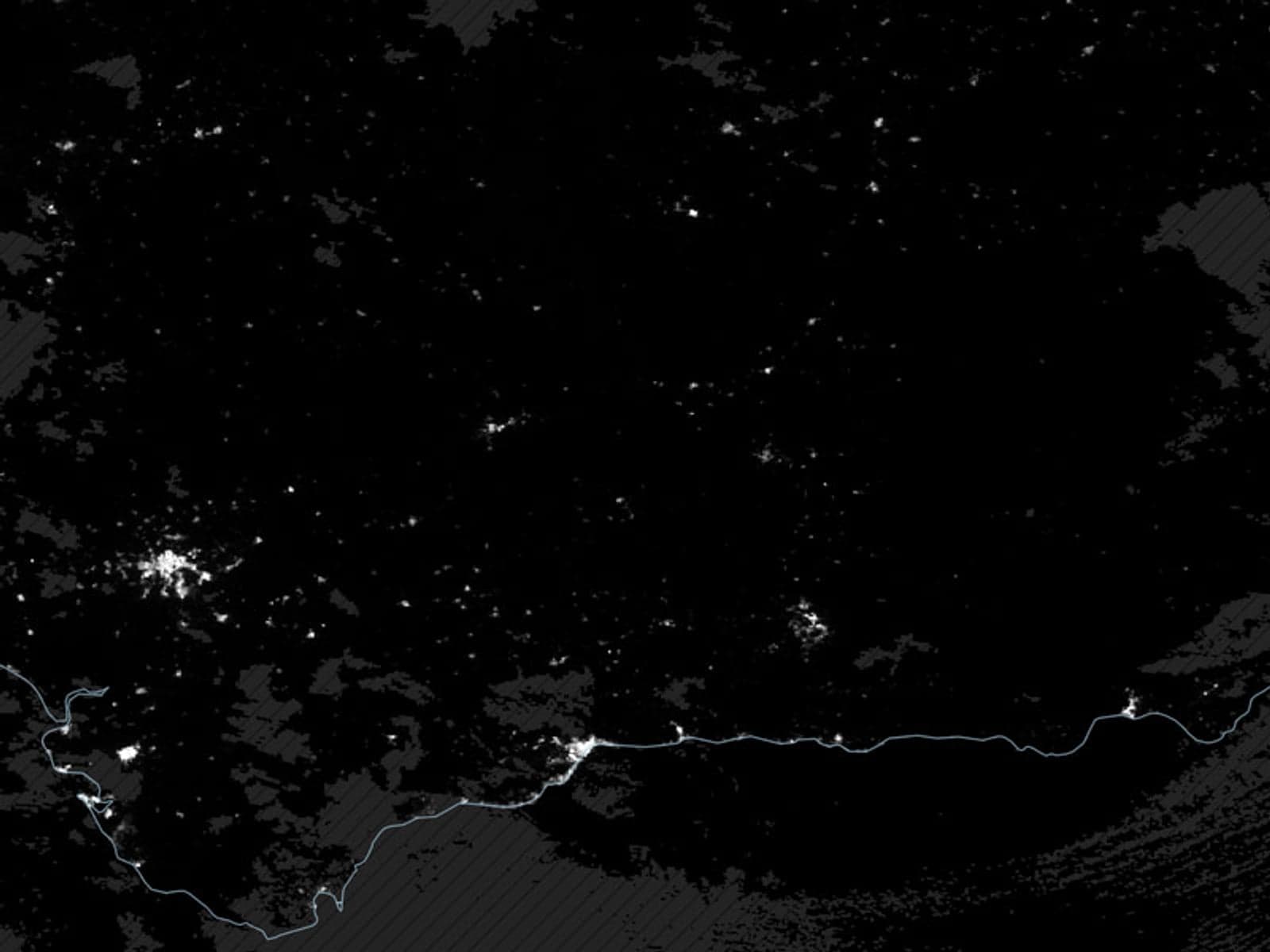
The blackout that hit the Iberian Peninsula in April 2025 was a clear sign: even modern power systems can falter under stress.
TwinEU is developing a Pan-European digital twin of the electricity system by federating local digital twins across the EU. Through eight pilot projects in eleven countries, TwinEU is testing a wide range of use cases to ensure the scalability and replicability of its solutions across diverse market and geographic contexts.
Among these, the Iberian pilot focuses on enhancing the security and resilience of the electricity system –from generation and transmission to distribution, markets and end-users. The main objectives for this focus of the pilot are enhancing grid planning capabilities for grid operators and increasing the resilience of the grid.
The Iberian system is undergoing a rapid transformation, driven by a growing share of renewable energy and an increasingly diverse set of stakeholders. This shift toward a more decentralised and dynamic energy landscape presents new challenges for grid and market operators, who must now manage greater complexity and variability.
To address the growing complexity of modern electricity systems, TwinEU introduces a suite of digital twin-based technologies that support grid and market operators in enhancing system management and operational resilience. Technologically, the Iberian pilot is composed by six main digital twins: those of the two transmission grids that vertebrate the regional electricity system, those of the two distribution networks, the digital twin of the market services available in the region and a high-level digital twin of the Iberian system focused on dynamic frequency modelling.
At the transmission level, the digital twin helps system operators manage the uncertainty introduced by high shares of non-dispatchable renewable energy. By simulating grid behaviour under various conditions, the digital twin recommends remedial actions to maintain power flows and voltage within operational limits. On the Spanish side, these recommendations are powered by an AI agent capable of analysing large datasets and multiple scenarios in real time. On the Portuguese side, the digital twin of the Iberian grid enables probabilistic interconnection capacity allocation for the market.
Unlocking flexibility through digital tools
Concerning TSO-DSO coordination, the digital twin promotes market coordination among TSOs, DSOs, market operators and prosumers, enabling the optimisation of the use of distributed energy resources in the resolution of grid constraints after the intraday market. Furthermore, the digital twin allows to improve short-circuit modelling for operational planning and the TSO-DSO interface.
At the distribution level, TwinEU enables federated coordination between the DSO and the local flexibility market operator. Their respective digital twins assess how flexible connection points can increase grid hosting capacity. By running the local flexibility market under normal conditions, active consumers are empowered to adjust their energy production or consumption while maintaining grid stability.
Additionally, the project valorises the local digital twin simulation capacities to enhance operations forecast towards planned maintenance activities over grid elements such as transformers or lines. This enables much higher control over the behaviour of the grid during tensioned periods with some of the infrastructure unavailable.
At the dynamic regional level, TwinEU tackles the challenge of reduced synchronous inertia caused by the integration of converter-based renewable energy sources. This issue is particularly critical in weakly interconnected systems like the Iberian Peninsula, where stability regarding large disturbances may become an issue of concern. To mitigate this, a regional digital twin models the dynamic behaviour of the Iberian system and its interconnection with Central Europe. This allows operators to evaluate system robustness and manage renewable penetration levels to ensure secure operation, as well to identify the needs of additional ancillary services, like fast frequency response, and study the cross-border flexibility and pre-qualification for fast frequency response.
Digital twin and AI to integrate renewables
The Iberian pilot of TwinEU demonstrates how digital twins can transform power system operations in the face of growing renewable energy integration. These tools significantly enhance the ability of system operators to anticipate, evaluate and respond to operational challenges in real time.
Providing smarter grid operations: On the Spanish side, AI-powered digital twins provide recommendations to ensure reliable system operation under high shares of variable renewable energy. This supports a more stable and secure electricity grid, even during periods of high uncertainty.
Accelerating RES integration at local level: The coordinated use of digital twins by DSOs and local flexibility market operators enables a safer and more efficient integration of renewables at medium and low voltage levels. This not only increases hosting capacity but also boosts the value of flexibility services from the outset of local flexibility market deployment in the Iberian system.
Monitoring dynamic behaviour for TSOs: At the transmission level, digital twins deliver critical stability indicators – such as rate of change of frequency (RoCoF), frequency nadir/zenith – to the TSO dispatch centre. These metrics allow operators to assess system robustness after disturbances and adjust renewable penetration levels accordingly, or mobilise new fast ancillary services.
Supporting proactive decision-making for system security: By identifying vulnerability thresholds and enabling preventive actions (e.g. increasing synchronous generation to boost inertia), the digital twin acts as a powerful decision-support tool. This ensures that the Iberian Peninsula can maintain frequency stability even in weakly interconnected conditions.
As the TwinEU project approaches its final phase, with completion expected in December 2026, the Iberian pilot stands out as a key contributor to shaping the future of Europe’s electricity system. By integrating advanced digital twin technologies and enhanced decision support tools, driven by AI in the Spanish case, the pilot is paving the way for more secure, flexible and resilient grid operations.
The final results of the demonstration activities will provide concrete evidence of how these innovations can be scaled across different regions and market structures. Ultimately, TwinEU is not only addressing today’s operational challenges – it is laying the digital foundation for a resilient, decarbonised and interconnected European energy future.
For more on the Iberian Peninsula demo, view the video interview:
About the author

Esteban Pastor Calatayudis is a Project Manager at ETRA I+D working for the Department of Technology and Innovation. He is an Energy Engineer from the Polytechnic University of Valencia and holds an MSc in Renewable Energy from EIT – KIC InnoEnergy. He has been participating in different EU-funded projects including TwinEU, eLITHE, STREAM, WiseGRID, CROSSBOW and X-FLEX.
Other project partners contributing to the article: Pablo Bort Gómez (Grupo ETRA), Nuno Pinho da Silva (RD Nester), João Peças Lopes, Rui Sousa (INESC TEC), Jordi Granes, Pere Herraiz Pujol (Anell), Alberto Escalera Blasco, Oscar Romanillos Villalba (Elewit), Gema Millan Ballesteros, Natalia Lapuente Gracia, Izan Sanz Colas (Circe), Rui Pestana (REN).
Related tags
Most popular
Join the community for freeAnd get access to all content
Related projects
TwinEU
2 January 2024 - 31 December 2026
View project